The idea of "first-line troops" meeting again on the border issue between China and India after the Dong Lang confrontation incident has attracted much attention.

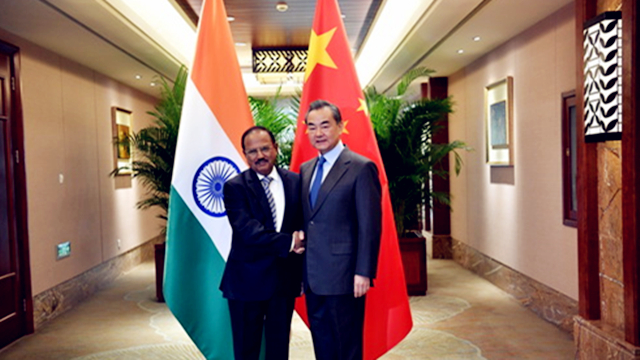
       The 21st meeting of the Special Representative for China-India Border Issues was recently held in Chengdu, Sichuan. Wang Yi, the Chinese special representative on the Sino-Indian border issue, exchanged views with Dorval, the Indian special representative and Indian national security adviser, on major issues of bilateral relations and international and regional issues of common concern.

       Wang Yi pointed out that China and India are both ancient civilizations, the two largest developing countries in the world, and the most dynamic representatives of emerging economies, with broad common interests and broad space for cooperation. Strengthening cooperation between the two countries will not only accelerate the development of bilateral relations, but also make new contributions to world peace. To achieve this goal, the key is to properly control the border issue, which is also the historical responsibility of both China and India.

       We have noticed that since the end of Dong Lang’s confrontation at the end of August 2017, the frequent interaction between leaders of China and India and the continuous warming of cooperation in various fields have provided important strategic opportunities for the stable and healthy development of bilateral relations. China hopes that this meeting will create a better start for the development of China-India relations in a new stage on the basis of the achievements already made.

one

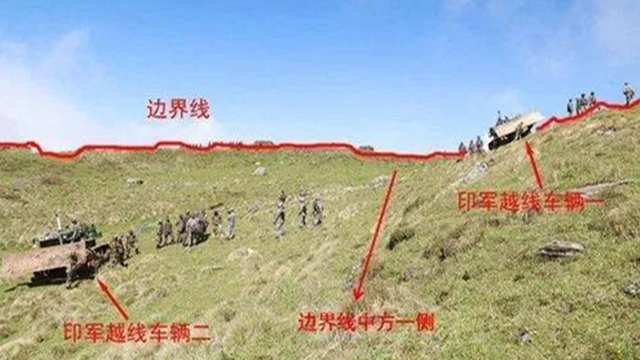
Indian army cross-border incident data map

       In fact, the China-India Special Conference on Border Issues has held 20 meetings since its establishment in 2003, and has become an important institutional platform for China and India to discuss border and regional hot issues. In April this year, the leaders of China and India reached a consensus at an informal meeting in Wuhan. On the basis of respecting each other’s concerns and aspirations, they should handle their differences through peaceful consultations in a mature and wise way, seek a fair and reasonable solution to the border issue acceptable to both sides, and strive to ensure that the border issue will not affect the overall situation of China-India cooperation.

       This time, Wang Yi, State Councilor and Foreign Minister, also participated in the 21st meeting of special representatives of China and India on the border issue for the first time as a representative of China. He said that at present, China-India relations have shown a strong momentum of all-round improvement and development, and the special congress should also keep up with the development trend and show a new atmosphere of cooperation and development.

one

State Councilor and Foreign Minister Wang Yi (right) and Indian National Security Adviser Dorval (left)

       Wang Yi made a wonderful speech on Sino-Indian relations at the press conference of the First Session of the 13th National People’s Congress on March 8th this year. At that time, in response to the "Indo-Pacific Strategy" of strengthening cooperation among the United States, Japan, India and Australia, Wang Yi said: "Some scholars and the media played up the so-called ‘ Indo-Pacific strategy ’ It was to contain China, but the officials of the four countries immediately indicated that they had no intention of targeting any country. I hope they are telling the truth, and I hope they can match their words with their deeds. In today’s era, it is out of date to provoke the Cold War again, and there is no market for engaging in small-circle confrontation. " As for how to develop Sino-Indian relations, Wang Yi put forward an image metaphor that "China and India 1+1 is not only equal to 2, but also equal to 11". He said that the urgent problem between China and India is mutual trust. Establishing political mutual trust, the Himalayas can’t stop mutual friendly exchanges. Without mutual trust, it is difficult for Ma Pingchuan to bring the two sides together.

       This meeting, through the relevant news published on the website of the Indian Ministry of Foreign Affairs, can be said to have achieved many brand-new achievements, which just echoes Foreign Minister Wang Yi’s previous statement on China-China relations.

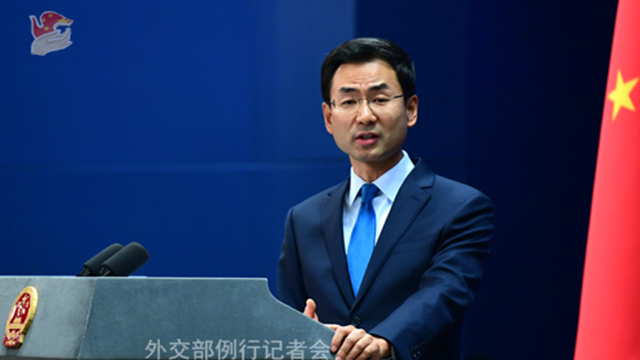
       On November 26th, Geng Shuang, spokesperson of the Ministry of Foreign Affairs, held a regular press conference. When asked about the situation and achievements of this meeting, Geng Shuang responded very rarely and directly with "very good talks". He also said, "I want to remind everyone in particular that during the meeting, the two sides put forward a series of forward-looking and operational opinions and suggestions on promoting border negotiations, maintaining peace and stability in border areas and promoting cooperation in border areas. It should be said that the ideas and ideas of the two sides in many fields are generally consistent. "

one

Foreign Ministry Spokesperson Geng Shuang

       At the same time, in the briefing on this meeting published on the website of the Ministry of Foreign Affairs of China, the "important consensus" was mentioned at least four times, and the reference to "frontline troops" attracted people’s attention, which can be said to be the biggest highlight of many consensuses. The original words are as follows: "The two sides agreed to effectively implement the important consensus of the leaders of the two countries at all levels, including frontline troops, further improve the construction of trust measures in border areas, and continue to strengthen communication and coordination between border-related departments." This is a very pragmatic and grounded expression. Reminiscent of the Sino-Indian border confrontation incident last year, what role these four words will play, I believe everyone is looking forward to it.

       In addition, at the regular press conference of the Ministry of Foreign Affairs on November 26, a reporter asked: There are some interesting statements in the news draft of this special meeting between China and India. The Indian press release said that the two sides would "redouble their efforts" to reach a solution, and the Chinese press release also said that it would "promote" this process. Are the two sides accelerating the process of resolving the border issue?

       Geng Shuang responded that what I want to emphasize here is that since the leaders of China and India met in Wuhan this year, China-India relations have made comprehensive and positive progress and entered a new stage of development. Under the current international situation, the strategic significance of China-India relations is more prominent. The two sides will strengthen strategic communication, enhance political mutual trust and promote cooperation in various fields in accordance with the important consensus reached by the leaders of the two countries. At the same time, it will jointly promote the process of solving border issues and safeguard peace and tranquility in border areas.

       How China-India relations will develop in the future, let us wait and see! (Text/Liu Shan)

Regulations on natural disaster relief

decree of the state council of the people’s republic of china


No.577


  Regulations on Natural Disaster Relief, adopted at the 117th executive meeting of the State Council on June 30, 2010, is hereby promulgated and shall come into force as of September 1, 2010.
                    

                              General manager Wen Jiabao
                              July 8, 2010

Regulations on natural disaster relief

Chapter I General Principles


  the first  These Regulations are formulated in order to standardize the natural disaster relief work and ensure the basic livelihood of the affected people.

  the second Natural disaster relief work follows the principles of people-oriented, government-led, hierarchical management, social mutual assistance and self-help for victims.

  Article Natural disaster relief work implements the administrative leadership responsibility system of the people’s governments at all levels.

  The National Disaster Reduction Committee is responsible for organizing and leading the national natural disaster relief work and coordinating major natural disaster relief activities. The civil affairs department of the State Council is responsible for the national natural disaster relief work and undertakes the specific work of the National Disaster Reduction Committee. The relevant departments of the State Council do a good job in the national natural disaster relief work according to their respective responsibilities.

  The local people’s governments at or above the county level or the comprehensive emergency coordination agencies of the people’s governments shall organize and coordinate the natural disaster relief work in their respective administrative areas. The civil affairs departments of local people’s governments at or above the county level shall be responsible for the natural disaster relief work in their respective administrative areas. The relevant departments of the local people’s governments at or above the county level shall, in accordance with their respective responsibilities, do a good job in natural disaster relief in their respective administrative areas.

  Article 4 The people’s governments at or above the county level shall incorporate natural disaster relief into the national economic and social development plan, establish and improve the fund and material guarantee mechanism that is compatible with the needs of natural disaster relief, and incorporate the natural disaster relief funds and natural disaster relief funds arranged by the people’s government into the fiscal budget.

  Article 5 Villagers’ committees, residents’ committees and social organizations such as the Red Cross, charities and public offering foundations shall assist the people’s governments in carrying out natural disaster relief work according to law.

  The state encourages and guides units and individuals to participate in activities such as natural disaster relief, donation and voluntary service.

  Article 6 People’s governments at all levels should strengthen publicity and education on disaster prevention and mitigation, and improve citizens’ awareness of disaster prevention and avoidance and their ability of self-help and mutual assistance.

  Villagers’ committees, residents’ committees, enterprises and institutions shall, in accordance with the requirements of the local people’s governments and in light of their actual conditions, carry out publicity and popularization activities on emergency knowledge of disaster prevention and mitigation.

  Article 7 Units and individuals that have made outstanding contributions to natural disaster relief shall be commended and rewarded in accordance with relevant state regulations.


Chapter II Rescue Preparation


  Article 8 The local people’s governments at or above the county level and their relevant departments shall, according to the relevant laws, regulations and rules, the emergency plans of the people’s governments at higher levels and their relevant departments, and the natural disaster risk investigation in their respective administrative areas, formulate corresponding emergency plans for natural disaster relief.

  The emergency plan for natural disaster relief shall include the following contents:

  (a) natural disaster relief emergency organization and command system and its responsibilities;

  (2) Emergency teams for natural disaster relief;

  (3) Emergency funds, materials and equipment for natural disaster relief;

  (4) Early warning and forecasting of natural disasters and reporting and processing of disaster information;

  (five) the level of emergency response to natural disaster relief and corresponding measures;

  (6) Measures for post-disaster emergency rescue and residents’ housing restoration and reconstruction.

  Article 9 The people’s governments at or above the county level shall establish and improve the technical support system for emergency command of natural disaster relief, and provide necessary transportation, communication and other equipment for natural disaster relief work.

  Article 10 The state establishes a natural disaster relief material reserve system, and the civil affairs department of the State Council shall, jointly with the finance department and the development and reform department of the State Council, formulate a national natural disaster relief material reserve plan and a reserve bank plan, and organize their implementation.

  The people’s governments at or above the municipal level and the people’s governments at or above the county level in areas prone to natural disasters shall, according to the characteristics of natural disasters, the number and distribution of residents, and in accordance with the principle of reasonable layout and moderate scale, set up a natural disaster relief material reserve.

  Article 11 The local people’s governments at or above the county level shall, according to the number and distribution of local residents, make use of public facilities such as parks, squares, stadiums, etc., make overall plans to set up emergency shelters, and set up obvious signs.

  If it is necessary to inform residents to go to the emergency shelter to start the early warning response or emergency response of natural disasters, the local people’s governments at or above the county level or the comprehensive coordination agencies for natural disaster relief and emergency response of the people’s governments shall timely announce the specific address and arrival path of the emergency shelter through radio, television, SMS, electronic display screen and Internet.

  Article 12 Local people’s governments at or above the county level shall strengthen the team building and professional training of natural disaster relief personnel, and villagers’ committees, residents’ committees and enterprises and institutions shall set up full-time or part-time natural disaster information officers.


Chapter III Emergency Relief


  Article 13 The people’s governments at or above the county level or the comprehensive coordination institutions for natural disaster relief and emergency response of the people’s governments shall start the early warning response according to the early warning and forecast of natural disasters and take one or more of the following measures:

  (a) issued a warning to the society to avoid the risk of natural disasters, to publicize the common sense and skills of avoiding risks, and to remind the public to prepare for self-help and mutual assistance;

  (2) Open emergency shelters, evacuate and transfer people and property vulnerable to natural disasters, and implement organized evacuation in case of emergency;

  (three) to strengthen the security of villages, communities and public places vulnerable to natural disasters;

  (four) instructed the civil affairs departments to make preparations for basic living assistance.

  Article 14 If a natural disaster occurs and reaches the starting conditions of the emergency plan for natural disaster relief, the people’s government at or above the county level or the comprehensive coordination agency for natural disaster relief emergency of the people’s government shall promptly start the emergency response for natural disaster relief and take one or more of the following measures:

  (a) immediately release the government response measures and public preventive measures to the society;

  (two) emergency transfer and resettlement of the affected people;

  (3) Emergency allocation and transportation of emergency funds and materials for natural disaster relief, timely provision of food, drinking water, clothing, heating, temporary shelter, medical and epidemic prevention and other emergency relief to the affected people, and protection of their basic livelihood;

  (four) to comfort the victims and deal with the aftermath of the victims;

  (five) to organize the affected people to carry out self-help and mutual rescue;

  (six) analysis and evaluation of disaster trends and the needs of disaster areas, and take corresponding natural disaster relief measures;

  (7) Organizing natural disaster relief and donation activities.

  For emergency relief materials, the competent transportation departments shall organize priority transportation.

  Article 15 During the emergency period of natural disaster relief, the local people’s governments at or above the county level or the comprehensive coordination agencies of natural disaster relief and emergency of the people’s governments may urgently requisition materials, equipment, means of transportation and venues within their respective administrative areas, and shall return them in time after the emergency work of natural disaster relief is completed, and make compensation in accordance with relevant state regulations.

  Article 16 If natural disasters cause casualties or large property losses, the civil affairs department of the people’s government at the county level in the affected area shall immediately report to the people’s government at the same level and the civil affairs department of the people’s government at the next higher level.

  Natural disasters cause particularly serious or heavy casualties and property losses, and the civil affairs departments of the people’s governments at the county level in the affected areas shall report in a timely manner in accordance with the procedures stipulated in relevant laws, administrative regulations and emergency plans in the State Council, and may directly report to the State Council when necessary.

  Article 17 Before the disaster is stabilized, the civil affairs departments of the people’s governments in the affected areas shall report daily the casualties, property losses and the dynamics of natural disaster relief work caused by natural disasters, and release them to the public in a timely manner.

  After the disaster situation is stable, the people’s governments at or above the county level in the affected areas or the comprehensive coordination agencies for natural disaster relief and emergency response of the people’s governments shall assess, verify and publish the natural disaster losses.


Chapter IV Post-disaster Relief


  Article 18 The people’s governments in the disaster-stricken areas shall, on the premise of ensuring safety, take a combination of local resettlement and off-site resettlement, government resettlement and self-resettlement, and make transitional resettlement for the affected people.

  Local resettlement should be in a place with convenient transportation and convenient resumption of production and life, and avoid areas where secondary natural disasters may occur, and try not to occupy or occupy less cultivated land.

  The people’s governments in the affected areas shall encourage and organize the affected people to help themselves and each other, and restore and rebuild.

  Article 19 After the danger of natural disasters is eliminated, the people’s governments in the affected areas should make overall research and formulate plans and preferential policies for the restoration and reconstruction of residents’ houses, organize the reconstruction or repair of residents’ houses damaged by disasters, and give key assistance to families with real difficulties in restoration and reconstruction.

  The restoration and reconstruction of residents’ housing should be adapted to local conditions, economical and practical, and ensure that the quality of housing construction meets the requirements of disaster prevention and mitigation.

  The civil affairs departments of the people’s governments in the disaster-stricken areas shall issue subsidy funds and materials to the residents’ housing recovery and reconstruction subsidy objects confirmed by the audit, and the housing and urban-rural construction departments shall provide necessary technical support for the reconstruction or repair of residents’ housing damaged by the disaster.

  Article 20 Residents’ housing restoration and reconstruction subsidies are applied by the affected persons themselves or nominated by villagers’ groups and residents’ groups. After democratic appraisal by villagers’ committees and residents’ committees, those who meet the conditions for assistance shall be publicized in natural villages and communities; If there is no objection or the democratic appraisal objection of villagers’ committees and residents’ committees is not established, the villagers’ committees and residents’ committees will submit the appraisal opinions and relevant materials to the township people’s government and the subdistrict office for examination and approval, and report them to the civil affairs departments of the people’s government at the county level for examination and approval.

  Article 21 In the winter of the year and the spring of the following year after the occurrence of natural disasters, the people’s governments in the affected areas shall provide basic living assistance for the affected people with difficulties in life.

  The civil affairs department of the people’s government at the county level in the disaster-stricken areas shall, before the end of October each year, make statistics and assess the basic living difficulties and needs of the victims in their respective administrative areas in the winter of that year and the spring of the following year, verify the relief objects, prepare work ledgers, formulate rescue work plans, organize their implementation after approval by the people’s government at the same level, and report them to the civil affairs department of the people’s government at the next higher level for the record.


Chapter V Management of Relief Funds and Articles


  Article 22 The financial departments and civil affairs departments of the people’s governments at or above the county level are responsible for the allocation, management and supervision of the use of natural disaster relief funds.

  The civil affairs departments of the people’s governments at or above the county level are responsible for allocating, distributing and managing natural disaster relief materials.

  Article 23 The people’s government purchases goods, projects and services for natural disaster relief preparation and post-disaster recovery and reconstruction, and organizes the implementation in accordance with the relevant laws and regulations on government procurement and bidding. Emergency procurement activities involving emergency rescue, emergency relocation and temporary assistance in natural disaster emergency rescue and post-disaster recovery and reconstruction shall be implemented in accordance with relevant state regulations.

  Article 24 Natural disaster relief funds and materials are used exclusively and free of charge.

  Directional donations of money and materials shall be used according to the wishes of the donors. Money and materials accepted by government departments without designated intention by donors shall be used for natural disaster relief by the civil affairs departments of people’s governments at or above the county level as a whole; Money and materials accepted by social organizations that donors have no designated intention shall be used for natural disaster relief by social organizations in accordance with relevant regulations.

  Article 25 Natural disaster relief funds and materials should be used for emergency relocation and resettlement of the affected people, basic living assistance, medical assistance, restoration and reconstruction of public service facilities and houses such as education and medical care, procurement, storage and transportation of natural disaster relief materials, and comfort of relatives of victims of disasters.

  Article 26 Civil affairs, finance and other departments of the people’s government in the disaster-stricken areas and relevant social organizations shall voluntarily disclose to the public the sources, quantities and usage of the accepted natural disaster relief funds and donations through newspapers, radio, television and Internet.

  Villagers’ committees and residents’ committees in disaster-stricken areas shall announce the objects of assistance and the amount and use of the money and materials they receive.

  Article 27 People’s governments at all levels shall establish and improve the supervision and inspection system of natural disaster relief funds and donations, and promptly accept complaints and reports.

  Article 28 The supervisory organs and auditing organs of the people’s governments at or above the county level shall supervise and inspect the management and use of natural disaster relief funds and donations according to law, and civil affairs, finance and other departments and relevant social organizations shall cooperate.


Chapter VI Legal Liability


  Article 29 Any functionary of an administrative organ who, in violation of the provisions of this Ordinance, commits any of the following acts shall be punished by the appointment and removal organ or the supervisory organ in accordance with laws and regulations; If the case constitutes a crime, criminal responsibility shall be investigated according to law:

  (a) late reporting, false reporting, concealment of natural disaster losses, resulting in consequences;

  (2) Failing to organize the transfer and resettlement of the affected people in time, or failing to work effectively in the process of providing basic living assistance and organizing recovery and reconstruction, resulting in consequences;

  (3) withholding, misappropriating or privately dividing natural disaster relief funds or donations;

  (4) Failing to return the requisitioned property in time, or failing to make compensation in accordance with regulations;

  (five) there are other acts of abuse of power, dereliction of duty, favoritism.

  Article 30 Take false reports, concealment, forgery and other means to defraud natural disaster relief funds or donations, and the civil affairs departments of the people’s governments at or above the county level shall order them to return the illegally obtained funds and materials within a time limit; If a crime is constituted, criminal responsibility shall be investigated according to law.

  Article 31 Whoever robs or gathers people to plunder natural disaster relief funds or donations shall be ordered by the civil affairs department of the people’s government at or above the county level to stop the illegal act; If it constitutes a violation of public security administration, it shall be punished by the public security organ according to law; If a crime is constituted, criminal responsibility shall be investigated according to law.

  Article 32 Those who obstruct natural disaster relief workers from performing their duties according to law by violence or threat, which constitutes a violation of public security administration, shall be punished by public security organs according to law; If a crime is constituted, criminal responsibility shall be investigated according to law.


Chapter VII Supplementary Provisions


  Article 33 Accidents, public health incidents, social security incidents and other emergencies need to be carried out by the civil affairs departments of the people’s governments at or above the county level, with reference to these regulations.

  Article 34 Where there are other provisions in laws and administrative regulations on disaster prevention, resilience and relief, those provisions shall prevail.

  Article 35 These Regulations shall come into force as of September 1, 2010.
Focus on high-quality development, Guangdong: strongly stimulate the new kinetic energy of blue economy to the chart

  Xinhuanet Guangzhou, June 8 (Li Qingzhao) In Zhanjiang, the mangrove area of Jinniu Island is full of full of green, egrets and Qi Fei, and an ecological and harmonious scene; In Zhuhai, Xiangluwan beach is full of tourists, which is one of the top ten examples of the first ecological restoration of land space in Guangdong; In Raoping, Chaozhou, hundreds of female parents of Lateolabrax japonicus roam among them, and a provincial-level seed farm of Lateolabrax japonicus &hellip will be built here. … These are the epitome of Guangdong’s booming marine economy.

  Because of the prosperity of the sea, the total marine production value of Guangdong Province in 2022 was 1.8 trillion yuan, a year-on-year increase of 5.4%. The "blue economy" has become the engine and kinetic energy of Guangdong’s high-quality development. Qu Jiashu, member and deputy director of the Guangdong Provincial Department of Natural Resources and director of the Provincial Oceanic Administration, said that Guangdong will focus on the primary task of high-quality development and the strategic task of building a new development pattern, actively expand new space for marine development, accelerate the high-quality development of the marine economy, and fully promote the construction of a strong marine province.

  Constructing modern marine industrial system and activating blue economic kinetic energy

  In 2023, the work report of the Guangdong provincial government put forward: "Make the marine economy bigger and stronger, speed up the construction of a strong marine province" and "vigorously develop marine pastures and far-reaching marine aquaculture".

  Guangdong is rich in marine resources and has a complete range of marine industries, covering all categories of 28 marine industries, with broad development space.

  Qu Jiashu introduced that Guangdong, based on the province’s marine resource endowment, takes the six major industries of offshore wind power, marine engineering equipment, marine electronic information, natural gas hydrate, marine life and marine public services as the starting point to promote the quality change, benefit change and power change of the marine economy.

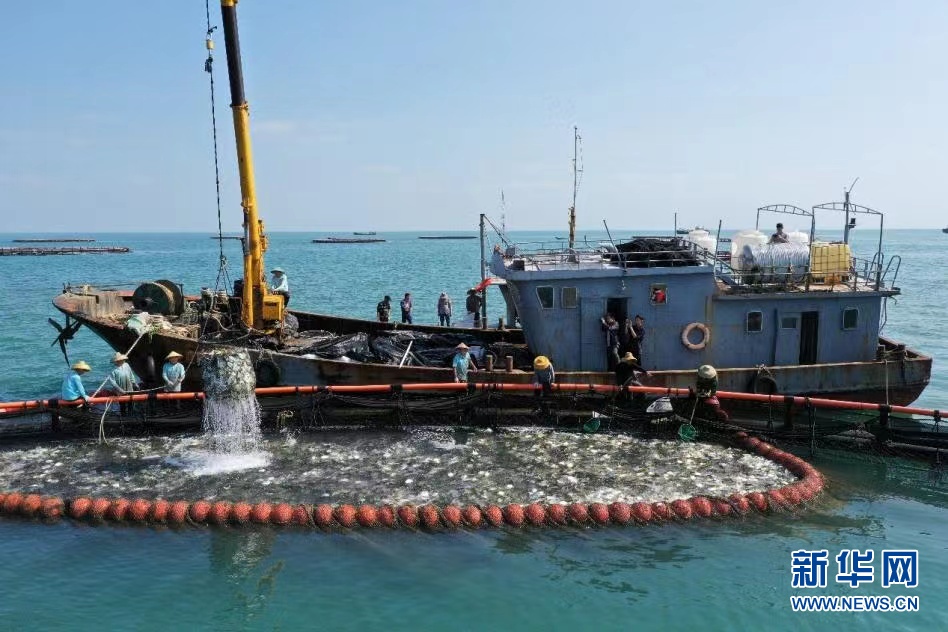
  Zhanjiang is a big aquatic product city, and Zhanjiang Economic and Technological Development Zone is a national marine economic development demonstration zone with more than 3,500 deep-sea cages. It has the reputation of "Golden Pomfret Capital of China" and "Shrimp Capital of China" and is one of the important aquaculture, processing and export bases in China. Every autumn, fat golden pomfret from deep-sea cages enter the harvest period.

  Guangdong fishermen fish at sea. Xinhuanet Wu Jiayu photo

  "We must promote the improvement and efficiency of traditional marine industries." Qu Jiashu said that Guangdong will firmly establish the concept of big food, accelerate the promotion of marine pasture and deep-sea aquaculture, and explore the construction of a modern marine pasture industry chain from seed industry, breeding, equipment to deep processing.

  In addition, Guangdong is also accelerating the development of new marine materials, marine equipment and other emerging industries, giving full play to the main role of enterprises, enhancing the leading power and competitiveness of "chain owners" of marine industries, and cultivating and expanding trillion-dollar industrial clusters of marine oil and gas chemicals and marine tourism, and hundreds of billions of marine industrial clusters such as marine clean energy, marine ships and marine engineering equipment.

  Strengthen the innovation of marine science and technology and build a blue science and technology engine

  "Sun Yat-sen University", an internship ship for marine comprehensive scientific research, "unlocked" the mystery of deep blue in the journey of the sea of stars; The far-reaching offshore floating wind power equipment "Fuyong", which settled in Luodousha sea area of Xuwen, Zhanjiang, realized the localization of first-class components; The number of patents granted in the fields of marine medicine, marine renewable energy, marine oil and gas and seabed mineral development and utilization industry has increased … … As the "main battlefield" of the new round of scientific and technological revolution, the ocean is the first driving force for the high-quality development of social economy.

  Statistics show that by the end of 2022, there were 145 offshore platforms at or above the provincial level covering marine biotechnology, marine disaster prevention and mitigation, marine medicine, marine environment and other fields, including one national key laboratory.

  Qu Jiashu said that Guangdong has deeply implemented the innovation-driven development strategy, strengthened the construction of innovation system, concentrated high-quality resources to strengthen the construction of major scientific and technological innovation platforms, and promoted the deep integration of Industry-University-Research, which has provided strong support for the development of marine economy. In the future, Guangdong will also intensify the transformation of scientific and technological achievements, foster new growth points and form new kinetic energy.

  Strengthen marine ecological protection, repair and build a blue ecological barrier

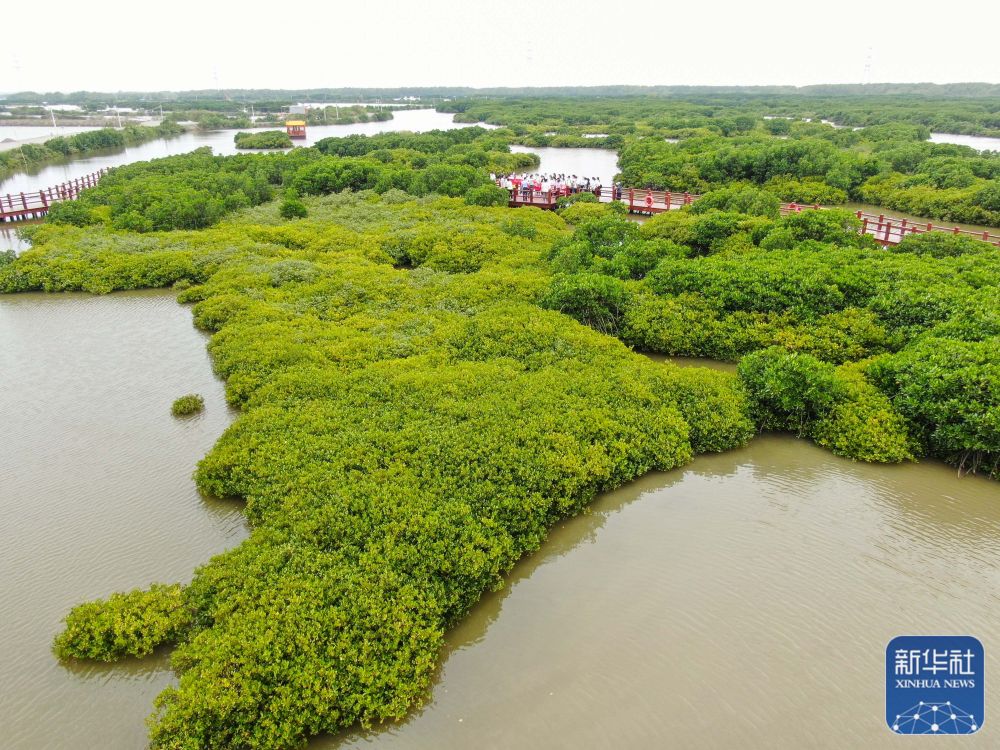
  Mangroves are known as "coastal guards" and "marine green lungs". Mangroves play an important role in purifying seawater, preventing wind and waves, and maintaining biodiversity. They are green coastal treasures. On the coastlines of Zhanjiang and Huizhou, continuous mangroves guard the rich ecology of wetlands.

  This is a mangrove (drone photo) taken in Jinniu Island, Zhanjiang City on May 24th. Xinhua News Agency reporter Deng Hua photo

  While Guangdong’s marine economy has entered the "fast lane" of high-quality development, the ecological construction of Green Beauty Guangdong has been accelerated, and the blue ecological security barrier has been further built. At present, under the guidance of planning, Guangdong has promoted a new way of combining planting and breeding, focusing on the construction of four 10,000-mu mangroves in Taishan Town Bay of Jiangmen, Leizhou Coast of Zhanjiang, the northeast sea area of Xuwen of Zhanjiang and Kauzhou Ocean of Huidong of Huizhou.

  By the end of 2022, Guangdong coastal cities had built 4 wetlands of international importance, 2 wetlands of national importance and 13 national wetland parks. In 2020-2022, 1,219 hectares of mangroves were newly built and 322 hectares were restored in Guangdong Province.

  In addition, Guangdong vigorously develops advanced nuclear energy, offshore wind power and other marine clean energy sources, promotes the development of offshore wind power industry, accelerates the construction of the entire industrial chain of Yangjiang offshore wind power, and the construction of offshore engineering, operation and maintenance and supporting assembly bases in eastern Guangdong, fosters the development of blue carbon sink industry, and explores ways to realize the value of marine ecological products.

  Qu Jiashu said that next, Guangdong will develop and utilize marine resources with high quality by taking the coastal zone as the main battlefield and the coastal economic belt as the main engine, promote the extension of the land economic system to the ocean, expand the space for maritime development, and release the "blue potential" to build a new Guangdong at sea.

At the critical moment of the anti-epidemic, the spread of "super fungi" in the United States caused three deaths.

  BEIJING, July 23 (Xinhua)-On the 22nd, local time, director of the Centers for Disease Control and Prevention (CDC) Valensky once again issued an urgent appeal to the current epidemic in the United States, warning that the United States has not completely escaped from the epidemic. On the other hand, the spread of "super fungi" in the United States has caused three deaths.

  Delta variant virus is rampant

  America’s fight against epidemic meets "critical moment"

  On the 22nd local time, CDC director Valensky said that Delta variant virus is one of the most infectious respiratory viruses that scientists have ever seen.

  She stressed that the Delta strain is more aggressive and contagious than the previous (COVID-19) strain. "This is one of the most infectious respiratory viruses that we know at present and that I have seen since I was in business for 20 years."

  Delta variant virus is currently spreading rapidly in the United States. As of this week, 83% of the sequenced cases have been infected with this variant virus; At the beginning of July, this figure was only 50%.

  Valensky also warned about the epidemic in the United States on the same day. She said that Delta variant virus is spreading widely in areas with low vaccination rate, which is another "critical moment" for the United States to fight the epidemic.

  Valensky implored those who had not been vaccinated to "take the Delta variant seriously". She stressed, "This virus will not give up automatically. It will constantly search for vulnerable people and infect them. Please consider vaccination and pay attention to epidemic prevention before. "

  The New York Times pointed out that this is in sharp contrast to the attitude of the White House a few weeks ago. During Independence Day, US President Biden held a grand party on the South Lawn of the White House, announcing that the United States was "independent from the epidemic".

  According to the report, Valensky’s latest statement shows that officials are increasingly worried that the achievements already made are being lost, and the current surge in cases may overwhelm local health systems with low vaccine penetration rate and high hospitalization rate.

  There is a "super fungus" spread in the United States.

  Three people have died and there is no cure.

  On the other hand, US health officials said on the 22nd that there is evidence that an "incurable" fungus has spread in two hospitals and a nursing home, causing three deaths.

  According to the CDC report, a nursing home in Washington, D.C. and two hospitals in Dallas, Texas, broke out with "super fungus" infection. A few patients have invasive fungal infections, and the three main drugs are ineffective against these infections.

  "This is indeed the first time that we have started to see cases of drug resistance aggregation," said Dr. Megan Lyman of CDC, in which patients are obviously infected with each other.

  For many years, health officials have been warning about the possibility of this super fungus after discovering that some commonly used drugs are almost ineffective against fungal infection.

  In 2019, doctors diagnosed three cases in new york, and these cases were also resistant to a class of drugs called echinocandin, which is considered as the last line of defense against fungal infection. But in the case of new york, there is no evidence that the infection has spread between patients. The scientists concluded that drug resistance was formed during the treatment.

  However, the CDC concluded from the latest cases that these fungal infections did spread.

  In Washington, D.C., there were 101 cases of Candida auricula infection in a nursing home for seriously ill patients, of which 3 cases were resistant to all three antifungal drugs. There are 22 infected people in two hospitals in Dallas, and two of them have this drug resistance.

  According to the CDC, these cases occurred from January to April 2021. Of the five people who were completely ineffective in treatment, three died, two of them were hospital patients in Texas and the other was in Washington.

  Lyman said that cases in both places have continued to erupt, and other infections have been found since April. However, new cases have not been reported.

  Investigators looked at medical records and found no evidence that patients in these clusters had used antifungal drugs before. Health officials say this means that they will spread from person to person.

The Morning Post is super-expected. Huang Xiaoming, Zhao Liying, Zhu Yilong and others pray for Jackie Chan and Yang Yang’s new work "Depth Charge" for the first time.

The fresh news morning call is all in the morning paper.


Hello, good morning, everyone. Recently, there was an earthquake in Sichuan, China. Compatriots all over the country are praying for the people of Sichuan. With the efforts and rescue of many parties, the number of casualties has been determined. Sister Liu is here to pray for our compatriots in Sichuan. I wish you all peace and no more casualties. Come on, Sichuan!

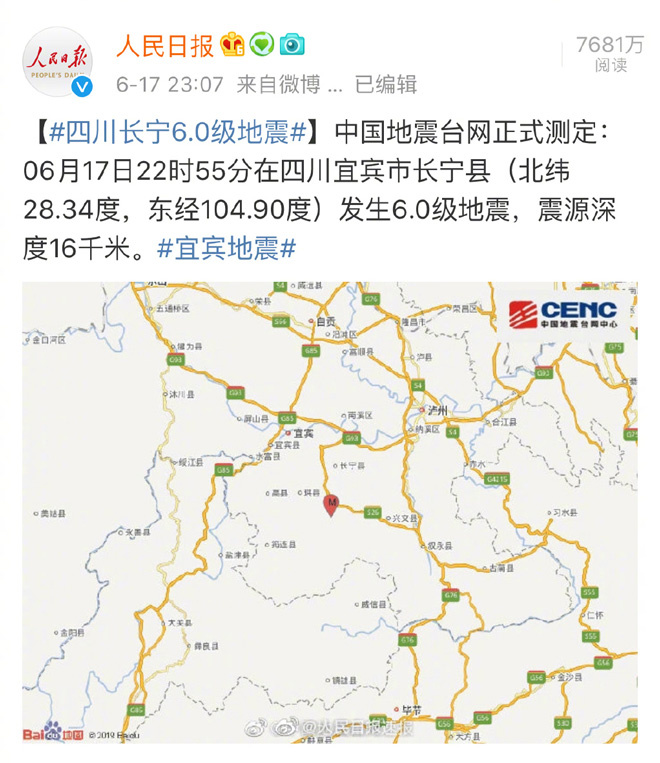
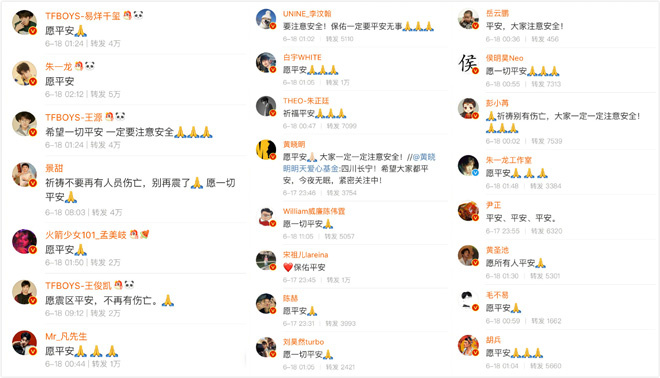
What happened to the star? Huang Xiaoming, Jing Tian, Zhao Liying and others voiced their prayers for the disaster area in Changning, Sichuan, with a magnitude of 6.0.


On the evening of 17th, there was a continuous earthquake in Changning County, Yibin City, Sichuan Province, which touched the hearts of people all over the country. Including Jackson Yee, Zhu Yilong, Roy, Jing Tian, Wu Yifan, Zhao Liying, Meng Mei Qi, Huang Xiaoming, Zhou Dongyu, Yao Chen, Liu Haoran, Chen Weiting, Liu Tao, Han Geng, Jing Boran, Lin Yun, Wen Qi, Xu Dongdong, Chen Linong, Song Zuer, Li Qin, Hou Minghao, Tan Weiwei and Jiang Yiyan.

Angelababy reported peace after the earthquake, and it was thrilling to run 20 floors in one breath. At 10: 25 that evening, before the earthquake, Angelababy had just issued a Weibo: punching in Chengdu. After the earthquake, the sense of earthquake in Chengdu was also obvious, so most fans were worried, so Angelababy reported peace in Weibo for the first time. I hope everyone is safe.

Pre-announcement to see what Zifeng Zhang and Youhao Zhang interpret the first exposure of young Jackie Chan and Yang Yang’s new works.


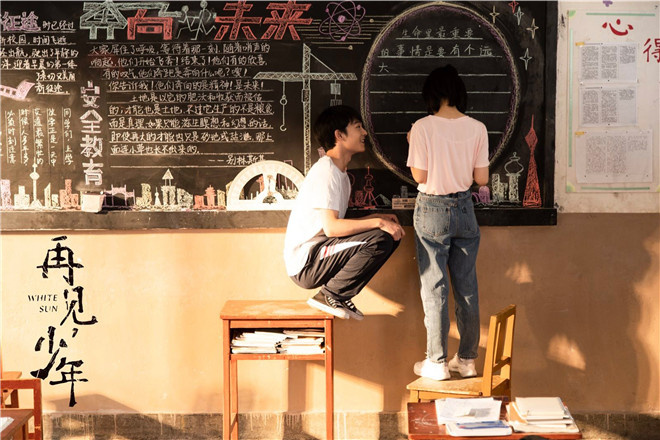
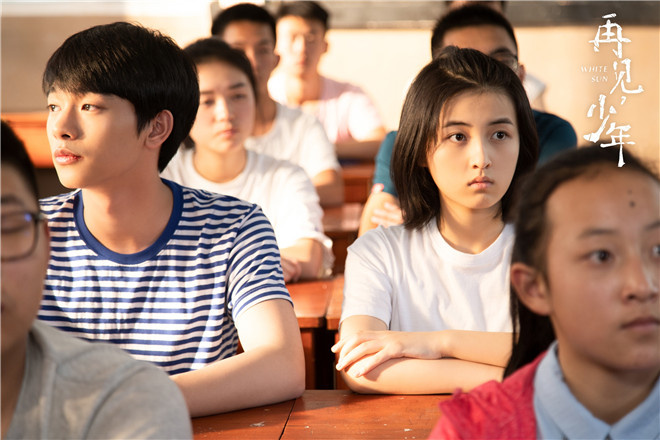
The youth film "Goodbye, Teenager" starring Peggy Chiao, Yin Ruoxin and the new generation of actors Zifeng Zhang and Youhao Zhang appeared in Shanghai. During this trip to Shanghai, new classroom stills were exposed at the same time. The warm classroom in the picture reflected the worries of boys and girls, and it was as quiet as if you could hear the rustling of chalk rubbing against the blackboard. The college entrance examination in 2019 has just ended, and this group of stills has brought us back to the memorable high school campus.

On the day of the event, "Goodbye, Teenager" also brought two new stills with "classroom" atmosphere, showing the different spatial relationship between Li Fei and Zhang Chenhao — — Sometimes it is infinitely close, and sometimes it is full of worries and watching. The warm and nostalgic tone of the stills quickly sets off the age texture of the play and reminds the audience of their high school days. The film "Goodbye, Teenager" tells the story of a young friendship that once approached infinitely but drifted away in a southern town under the background of social transformation in the Millennium (2000). SO, I look forward to Zifeng’s sister and Youhao Zhang bringing us different youth stories ~

Directed by Tang Jili and starring Jackie Chan, Yang Yang, Allen, Miya and THEO, Depth Charge, a transnational security action blockbuster, recently released its international version for the first time. This is the first time that director Tang Jili has challenged the global anti-terrorism theme, and it is also the ninth collaboration between director Tang Jili and Jackie Chan after the series and other classic international action movies. The works they have worked together in the past have been unanimously recognized by the domestic and foreign markets and become the golden partners for the quality assurance of action movies in the hearts of the audience.

The film tells the story of "Depth Charge" team led by Jackie Chan, Yang Yang and others, who was ordered in a crisis, "desperately" pursued, fought against terrorist organizations across the country, staged a thrilling war by land, sea and air, and finally successfully rescued the hostages of China enterprises. This film is based on the theme of international security. Yang Yang challenges the retired soldiers with high cold for the first time, and inch plate plays the captain of the "Depth Charge" squad. Allen, who often shows people in comedy on the screen, played an automobile expert with superb driving skills this time; Sexy female Miya, this time challenged the fighting master with soft appearance and tough and introverted personality; THEO, a popular idol, first touched the theme of international action and played a genius inventor with high IQ. In the film, Depth Charge’s players try their best to fight against terrorist organizations and finally break through the dilemma. Let’s look forward to the wonderful performance of the Depth Charge players ~

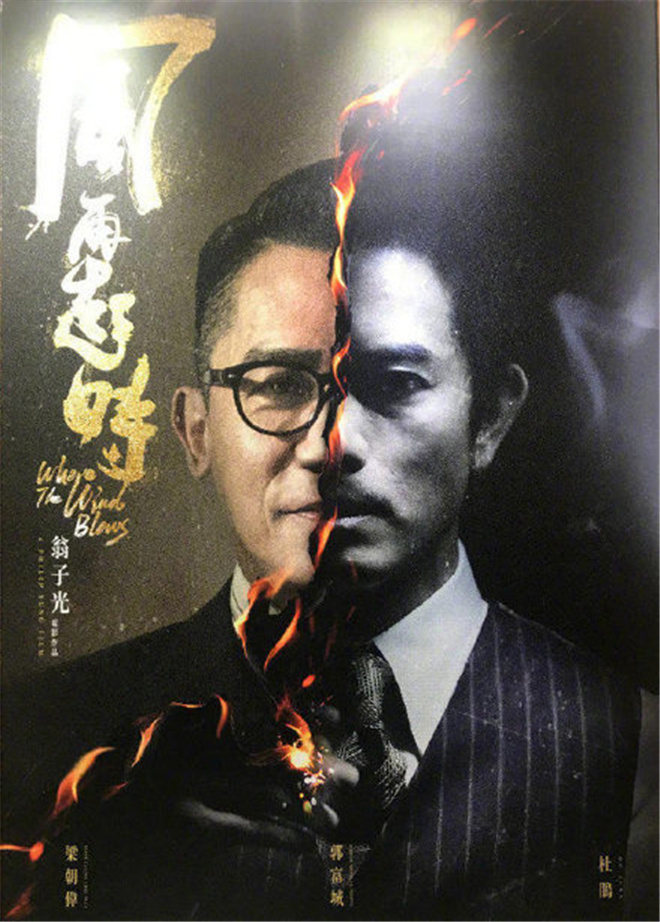
After watching Tang Jili’s ninth joint work "Depth Charge", let’s take a look at Tony Leung Chiu Wai Aaron Kwok’s new film. Recently, at the activity of Dadi Group, the second largest cinema in the Mainland, Tony Leung Chiu Wai, Aaron Kwok, Du Fu, etc. made their debut as the platform for their work "When the Wind Comes Again". Director Weng Ziguang also revealed at the event that the film is locked in the second half of 2019.

In the film, two policemen, played by Tony Leung Chiu Wai and Aaron Kwok, work together to establish a police corruption system and take the position of Chief Inspector. Earlier, a poster denying that the photos of the two were burned and put together was also reminiscent of Aaron Kwok and Chow Yun Fat’s confusing two-man main play in 2018. I don’t know what kind of surprise this cooperation between the two will bring to everyone, just wait for the film to be finalized!

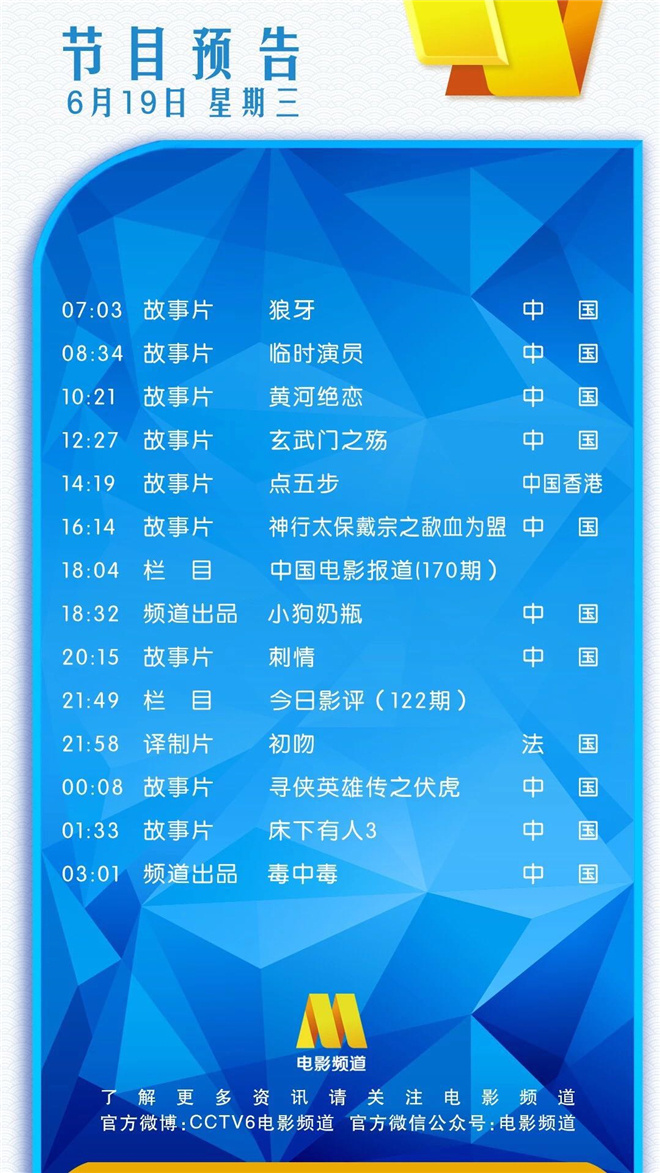
The movie calendar premiered in Beijing


(The specific broadcast content is subject to TV)


Want to get more fresh movie information, love beans, exclusive live video, don’t hurry to download CCTV6 movie channel app, there are girls waiting for you!

The Application of Numbers in Ancient Poems in Primary Chinese Textbooks

  In the first volume of the first grade of the Chinese textbook, there is a "digital poetry" that is almost a nursery rhyme:

  One tablet, two tablets, three or four tablets, five tablets, six tablets, seven or eight tablets. Nine pieces, ten pieces, countless pieces, all missing when flying into the water.

  In the form of rhyme, this poem organizes some basic numbers together, which is both interesting and catchy, and gives people a sense of image that the snow is getting bigger and bigger, which is of great help to first-year students in learning basic numerical Chinese characters.

  Number is one of the most common abstract concepts in daily life, which is used to calculate quantity and reference order and undertakes the function of accurately transmitting information. Putting numbers into poetry can turn decay into magic and make boring numbers have poetic beauty. This can be seen from the ancient poems selected in the unified Chinese textbooks.

  Cardinality and ordinal number

  The basic function of numbers is to express quantity, and a considerable part of numbers in ancient Chinese poetry undertake this function. Some table cardinality, such as "one" in "I know where my brothers climb, and one person is missing all over the dogwood", "two orioles sing green willows, and a row of egrets go up to the sky", "Three thousand" and "nine" in "Flying down three thousands of feet, it is suspected that the Milky Way has fallen for nine days"; There are also some table ordinal numbers, such as "two" in "the grass grows in February, and the willows are drunk with spring smoke", and "three" in "Poor September third night, dew is like a real pearl and the moon is like a bow".

  When expressing cardinality, some simply express quantity, while others express frequency. For example, Bai Juyi’s "Farewell to the Ancient Grass", "boundless grasses over the plain, come and go with every season", the original grass, once a year, green and then withered, withered and green, year after year, maintaining the same rhythm, life flows silently and never stops. There are also several concepts, such as Sanqiu, Three Springs, Four Seasons, Four Seas, Five Hous, Eight Famines and Kyushu, which have appeared in the ancient poems selected in the text, and most of them have been solidified into words to express special meanings. For example, the "three spring" in Meng Jiao’s "Ode to a Wandering Son" and "but how much love has the inch-long grass gets three spring rays" refers to the sunny spring, which is named after the three months of spring, namely Meng Chun, Zhongchun and Ji Chun. Another example is "Kyushu" in Lu You’s "Show Your Son", "Everything is empty when you die, but you can’t see Kyushu with sorrow", which was originally the collective name of the nine States divided by China in ancient times (this statement is different, and the prevailing statement comes from "Book Yugong", respectively "Ji, Yan, Qing, Xu, Yang, Jing, Yu, Liang and Yong "), later used to refer to the whole world and China. Lu You is a famous patriotic poet. His poems use the term "Kyushu" to emphasize the unified concept of Kyushu since ancient times, which fully shows the poet’s sincere love for the country.

  There are cardinal words that express quantity, as well as the difference between definite and general reference. For example, Wang Wei’s "on the mountain holiday thinking of my brothers in shandong" said: "If you know where your brother climbs, there will be one less person everywhere." Who is the one who is less? Naturally, it is the "I" in a foreign land, and this "one" has a definite direction. Brothers planted dogwood all over the place and went to climb in droves; "I", however, tasted the loneliness alone. In contrast, the joy of my brothers reflected the bitterness of "I". For example, Han Yu’s "Early Spring Presents Zhang Eighteen Members of the Ministry of Water Affairs": "The most important benefit is the spring of one year, which is absolutely better than the smoke and willow." It is uncertain which year the "year" here refers to, and it refers to every year and any year. Other examples, such as "Say goodbye to the colorful clouds of the White Emperor, and return it in a day in Jiangling" and "Plant a millet in spring and reap ten thousand seeds in autumn", in which "one" does not point to a specific day or seed. The general figures often have a general meaning.

  Exact number and approximate number

  Numbers also have exact numbers and approximate numbers. In ancient times, there were many ways to express approximate numbers, such as "three", "thousands" and "ten thousand", or numbers plus "several", "several" and "remainder", or two connected numbers (such as "three or four" and "five or six flowers"). Some simply express quantity without additional meaning, and there are no ready-made examples in the ancient poems selected in the textbook (it can also be seen that the numbers entered into the poems are basically meaningful). Take an example of classical Chinese, such as "Reading at Night with Sacks of Fireflies", in which "dozens" means many things. The approximate words in ancient poems are more related to poetic images and have rhetorical colors, thus adding affection and meaning.

  Some estimates are very few. For example, Su Shi’s "The Night Scene of the Spring River in Hui Chong": "There are three or two peach blossoms outside the bamboo, and the duck prophet in the spring river." It’s about the early spring, when it’s warm and cold, the peach blossoms haven’t bloomed brilliantly, only a few branches bloom sporadically. "Three or two branches" describes a small number, which conforms to the seasonal characteristics of early spring and also contains the vitality of spurting out. Another example is "Three Roads in the Road": "The green shade does not reduce the road, but it adds four or five sounds of orioles." Four or five orioles chirping, coming from the green shade from time to time, are crisp and loud, bringing the poets in the mountains a heavenly enjoyment. If it is a variety of cries, such as cicada noise, connected together, it will only bring trouble to people, and will never feel relaxed and comfortable. Another example is the poem "The River and the Han Dynasty are clear and shallow, and there are many differences" in "The Far Altair", and the emotion and meaning are more obvious. The poet said: The Milky Way is clear and shallow. How far apart can it be? "How much" is a question, but it expresses a declarative and affirmative meaning, which means "not far, not much distance". However, it is such a "full of water" that lovers are separated from each other, but they can’t talk to each other. How sad it is! Similarly, there is William Wang’s "Liangzhou Ci": "Don’t laugh when you are drunk in the sand. How many times have you fought in ancient times?" "Several people" in the poemIt means very few people.

  Some estimates talk a lot, and there are more examples like this. For example, Li Bai’s "Looking at Lushan Waterfall" "Flying straight down three thousands of feet, it is suspected that the Milky Way has set for nine days", in which the "three thousands of feet" has exaggerated meaning, writing the momentum of Lushan Waterfall flying down the mountain. Another example is Lin Jie’s "Qiaoqiao", "Every family looks at the autumn moon and wears tens of thousands of red silk". The poem depicts the custom of women threading needles on the moon during the Qixi Festival. Because every family is qiaoqiao, there are tens of thousands of red silk naturally passing through the needle nose. Other figures, such as "A dangerous building is a hundred feet high, and one can pick the stars with one’s hands", "a hundred mountains and no bird and a thousand paths without a footprint", "Apes on both sides of the strait can’t stop crying, and canoes have passed Chung Shan Man" and "Thousands of families always change new peaches for old ones", are also of this kind, and the number is naturally not accurately calculated, which is used to describe the height of the building, the height of the waves, the number of mountains and the number of doors.

  (Zhu Yuguo is the deputy director of the Chinese Language Office of People’s Education Publishing House and the core editor of the unified Chinese textbook)

Experts talk about | Why should we carry out thematic education?

  On April 3rd, the education conference on studying and implementing the theme of Socialism with Chinese characteristics Thought of the Supreme Leader in the new era was held in Beijing. General Secretary of the Supreme Leader attended the conference and delivered an important speech. From the strategic height of the overall development of the cause of the party and the country in the new era and new journey, the important speech of the Supreme Leader General Secretary profoundly expounded the great significance and target requirements of carrying out theme education, made comprehensive arrangements for all the work of theme education, and provided fundamental follow-up for the whole party to carry out theme education. Based on the spirit of the important speech delivered by the Supreme Leader General Secretary at the theme education work conference, this paper will analyze and explain why theme education should be carried out and its purpose and practice.

  First, attaching importance to theoretical arms is an important experience for Marxist political parties to win.

  Why should we carry out thematic education? This issue needs to be understood from the nature of our party and its experience.

  Marxism holds that the birth of proletarian political parties is the key to the transformation of the proletariat from spontaneous to conscious. Organizationally, through the establishment of proletarian political parties, the proletariat has its own political organization, so that the proletariat can be organized. Ideologically, through the propaganda of proletarian political parties, Marxist theory can be spread among the proletariat and the proletariat can realize its mission. Therefore, Marxism has promoted the formation of highly conscious and organized actors through the organization and propaganda of political parties, so that ideological theory can be transformed into action force and practical results.

  Therefore, after the establishment of the Communist Party of China (CPC), it has continuously promoted the modernization of Marxism in China, and through organization, mobilization, publicity and education, the whole party and the people of the whole country have mastered scientific theories and cognitive tools, made clear the historical mission and central tasks, and made clear the line, principles and specific policies. Among them, party member, especially the party’s leading cadres, is required to systematically master Marxist theory and the party’s line, principles and policies, so as to lay a theoretical foundation and provide capacity guarantee for the party to assume leadership responsibilities, thus becoming one of the important experiences for our party to win in each historical period.

  Therefore, the cadre education in party member has become an important basic work of Party building, and it has been promoted through the combination of daily education and centralized education. Among them, centralized education is divided into two ways: one is to send party member cadres to Party schools for systematic training, and the other is to focus on a certain topic for a period of time to carry out education throughout the Party.

  As an activity of a political organization, inner-party learning is for application and inner-party education is for practice. Therefore, every time we carry out theme education, our party attaches importance to both theoretical learning and practical transformation. Through systematic theoretical study, the theoretical level of all party member and cadres will be promoted to a higher level, and through targeted practice transformation, the achievements of the modernization of Marxism in China will be continuously transformed into the action force of party member cadres, and a certain key issue within the Party will be solved.

  Second, the completion of the new era, new journey, mission and task requires the guidance and arms of the party’s innovative theory.

  After understanding why our party should carry out theme education, the next question is: "Why is this theme education to study and implement Socialism with Chinese characteristics Thought of the Supreme Leader in the New Era?" To answer this question, we need to grasp it from the historical logic, theoretical logic and practical logic of socialist modernization and the modernization of Marxism in China.

  After the Opium War, the Chinese nation suffered an unprecedented disaster. After arduous exploration by countless people with lofty ideals, the people of China chose the Communist Party of China (CPC) as the leading force and Marxism as the guiding ideology. Under the leadership of the Communist Party of China, under the guidance of Marxism and through the efforts of the people of China, we have completed the central task of each historical period, achieved the goal of the first century, and started a new journey of comprehensively promoting the great rejuvenation of the Chinese nation with Chinese modernization.

  Our great cause was achieved under the guidance of Marxism, and an important experience of our victory is to constantly promote the modernization of Marxism in China. Through the combination of the basic principles of Marxism with China’s concrete practice and Chinese excellent traditional culture, we will constantly enrich Marxism with China’s experience in revolution, construction and reform, so that it can effectively guide China’s practice at every stage. In the process of revolution, construction and reform, and in the process of promoting the modernization of Marxism in China, our party formed Mao Zedong Thought, Deng Xiaoping Theory, Theory of Three Represents and Scientific Outlook on Development.

  With Socialism with Chinese characteristics entering a new era, under the leadership of the CPC Central Committee with the Supreme Leader as the core, we have carried out great struggles with many new historical characteristics, made great achievements and great changes in the new era for ten years, opened up a new realm of the modernization of Marxism in China, and formed Socialism with Chinese characteristics Thought of the Supreme Leader in the new era, a contemporary China Marxism and a 21st century Marxism.

  With the completion of the goal of the first century, "from now on, the central task of the Communist Party of China (CPC) is to unite and lead the people of all ethnic groups in the country to build a socialist modernization power in an all-round way, realize the goal of the second century, and comprehensively promote the great rejuvenation of the Chinese nation with Chinese modernization." According to the successful experience of our party, to successfully complete the mission of the new journey, we must arm the whole party with Socialism with Chinese characteristics Thought of the Supreme Leader in the New Era, which is the latest achievement of the modernization of Marxism in China. Therefore, it is necessary to carry out the theme education of studying and implementing Socialism with Chinese characteristics Thought of the Supreme Leader in the New Era.

  As General Secretary of the Supreme Leader pointed out, "The grand goal of building a strong country and national rejuvenation is inspiring and inspiring, and our generation of communist party people has a glorious mission and a great responsibility. We should take this theme education as an opportunity to strengthen the party’s innovative theory, constantly improve the Marxist level of the whole party, continuously improve the party’s ruling ability and leadership level, gather together for the new journey of forging ahead, work hard and courageously, and unite and struggle for building a socialist modern country in an all-round way and comprehensively promoting the great rejuvenation of the Chinese nation. "

  Third, the theme education is an important means to transform the Supreme Leader’s Socialism with Chinese characteristics Thought into a powerful force in the new era.

  When we understand "why this theme education is to study and implement Socialism with Chinese characteristics Thought of the Supreme Leader in the New Era", we must also know what is the fundamental task of this theme education?

  At the conference on studying and implementing the theme education of Supreme Leader Socialism with Chinese characteristics Thought in the new era, General Secretary of Supreme Leader gave a clear answer, that is, "To carry out this theme education, the fundamental task is to adhere to the integration of learning, thinking and application, and to unify knowledge, belief and practice, and to transform Socialism with Chinese characteristics Thought in the new era into a powerful force to strengthen ideals, temper party spirit, guide practice and promote work, so that the whole party can always maintain a unified thought, firm will, coordinated actions and strong combat effectiveness, and strive to build souls through learning and increase their strength through learning. While pointing out the fundamental task of this theme education, the General Secretary of the Supreme Leader particularly emphasized that this theme education should achieve "five essentials", namely, to build a solid foundation with a firm heart, to temper character, to strengthen loyalty, to work hard to promote development, to practice the purpose of benefiting the people, and to establish a new atmosphere of honesty and integrity.

  After understanding the fundamental task of this theme education, we can draw the following conclusions: It is an important means to transform Socialism with Chinese characteristics Thought of the Supreme Leader in the new era into a powerful force by focusing on leading cadres at or above the county level, and it is also an important measure to implement the spirit of the 20th Party Congress, which is of great significance for unifying the Party’s thinking, solving outstanding problems within the Party, maintaining the flesh-and-blood ties between the Party and the people, and promoting the development of the cause of the Party and the country.

  Fourth, the theme education should firmly grasp the general requirements of "learning ideas, strengthening party spirit, emphasizing practice and making new contributions"

  The next important question is, how should this theme education be carried out?

  At the work conference on studying and implementing the theme education of Socialism with Chinese characteristics Thought in the new era of the Supreme Leader, the General Secretary of the Supreme Leader emphasized that this theme education should firmly grasp the general requirements of "learning ideas, strengthening party spirit, emphasizing practice and making new contributions". First, we should comprehensively study and understand Socialism with Chinese characteristics Thought in the new era; second, we should consciously transform the subjective world with Socialism with Chinese characteristics Thought in the new era; third, we should consciously practice Socialism with Chinese characteristics Thought in the new era; fourth, we should learn the wisdom and strength to forge ahead from Socialism with Chinese characteristics Thought in the new era.

  With regard to specific steps and practices, General Secretary of the Supreme Leader emphasized that this theme education should be integrated with theoretical study, investigation and research, promotion of development, inspection and rectification, and promoted organically and integrally. Of course, in practical work, we must also pay attention to the targeted work of establishing rules and regulations in order to be able to form a normalization effect on the achievements of this theme education. As this theme education is a major event that has a bearing on the overall situation, the time is tight, the task is heavy and the requirements are high. To this end, the General Secretary of the Supreme Leader requires party committees (party groups) at all levels to shoulder the main responsibility and plan, organize and implement the theme education well. (The author is the director of the Research Center for Party Building and National Development of Fudan University, a think tank of Shanghai universities, and a professor at the School of International Relations and Public Affairs of Fudan University.)

How does the policy "combination boxing" strengthen supervision and promote development? Measures proposed in four policy documents of CSRC

On March 15th, the CSRC issued four documents, namely, Opinions on Improving the Quality of Listed Companies from the Source (Trial), Opinions on Strengthening the Supervision of Listed Companies (Trial), Opinions on Strengthening the Supervision of Securities Companies and Public Offering of Fund to Accelerate the Construction of First-class Investment Banks and Investment Institutions (Trial) and Opinions on Implementing the Standards of Excellent Political Ability, Excellent Work Style and Comprehensively Strengthening the Construction of the CSRC System. Li Chao, vice chairman of the China Securities Regulatory Commission, said that these four documents are an organic whole, and systematically put forward policy measures from the aspects of issuance access, continuous supervision of listed companies, supervision of intermediary institutions, etc., highlighting "strengthening the foundation and strengthening the foundation" and "strict supervision and management".

What is the significance of issuing four policy documents in a centralized manner? How can the policy "combination boxing" strengthen supervision and promote development? What are the difficulties in cracking down on new corruption in the capital market? Let’s watch together.

Eight policies and measures strictly control the access to issuance and listing.

First of all, pay attention to the relevant contents of the four policies issued by the CSRC. In the "Opinions on Improving the Quality of Listed Companies from the Source by Strictly Controlling the Access of Issuance and Listing (Trial)" issued by the China Securities Regulatory Commission on the 15th, eight policy measures were put forward with a view to improving the quality of listed companies from the source.

First, strictly declare the quality of enterprises to be listed.

The second is to compact the janitor’s responsibility of intermediary agencies.

The third is to highlight the main responsibility of the exchange audit.

The fourth is to strengthen the supervision responsibility of the dispatched offices of the CSRC.

Fifth, resolutely fulfill the responsibility of coordinating the whole chain of the CSRC organs.

The sixth is to optimize the functional convergence of multi-level capital markets.

Seventh, standardize and guide the healthy development of capital.

Eighth, improve the whole chain supervision and accountability system.

Constructing a comprehensive punishment and prevention system to combat financial fraud

The relevant person in charge of the China Securities Regulatory Commission said that in the future, it will focus on cracking down on five types of behaviors, including long-term systematic fraud, third-party cooperation fraud and fraudulent issuance of stocks and bonds. China Securities Regulatory Commission will work with various regions and departments to build a comprehensive punishment and prevention system to combat financial fraud.

Guo Ruiming, Director of Supervision Department of Listed Companies of China Securities Regulatory CommissionIn the criminal aspect, we should make good use of the institutional advantages of the public security and procuratorial organs stationed in the CSRC to jointly investigate and deal with a number of typical malignant cases. On the civil side, it is mainly to enable investors who have suffered losses from fraud to get compensation, which will greatly increase the illegal cost of fraud, such as paying in advance, supporting investors to sue, and the parties to administrative law enforcement promise these systems, and we will launch more cases. For those who are mainly responsible, the market is firmly banned. Financial fraud, which touches the standard of mandatory delisting of major violations of law, will be resolutely delisted.

According to the principle that substance is more important than form, comprehensively prevent detour reduction

In view of the illegal curve reduction of listed companies after high-priced issuance, which is widely concerned by the market, the relevant person in charge of the China Securities Regulatory Commission said that the system of reduction rules will be comprehensively improved, and in accordance with the principle that substance is more important than form, various measures will be taken to comprehensively prevent detour reduction.

Consolidate and restore market confidence and crack down on illegal activities

At the press conference on March 15, the CSRC stated that it should adhere to the goal orientation and problem orientation, firmly grasp the main line of strong supervision, risk prevention and high-quality development, and implement the requirements of "long teeth and thorns" and "strong foundation" and "strict supervision and strict management". What is the significance of issuing four policy documents in a centralized manner? How does the CSRC’s policy "combination boxing" strengthen supervision and promote development? Let’s listen to Wu Xiaoqiu, Dean of the National Finance Research Institute of Renmin University of China.

Wu Xiaoqiu, Dean of the National Finance Research Institute of Renmin University of ChinaChina Securities Regulatory Commission issued a series of policies on March 15th. The most important function of this policy is to realize the spirit of openness, fairness and justice. At present, our market is still facing to continue to consolidate and restore market confidence, which is very important at present. But it is very important to purify the environment so that investors can have expectations and confidence. Therefore, we are still in this IPO link, and we must strictly control the entrance. We should crack down on those enterprises that fraudulently go public. We should implement such a basic principle of declaration and responsibility. It also urges intermediaries to perform their duties, maintain their functions, and ensure that IPO enterprises conform to the market principle. At the same time, it also makes clear provisions on reducing their holdings, including refinancing. These are very important, that is, to restore market confidence, which is in the first place. I think in the future, we will still stick to short-term market stability and long-term institutional reform, and the future is our two very important tasks.

Combating new corruption and hidden corruption in the capital market

The last of these four documents issued by CSRC is about self-construction. Li Chao, vice chairman of China Securities Regulatory Commission, said that China Securities Regulatory Commission will make continuous efforts from three aspects: not daring to corrupt, not wanting to corrupt.

Li Chao said that the issue audit field is a high-incidence area of corruption, and the market is highly concerned. The China Securities Regulatory Commission resolutely cracked down on new and hidden corruption problems in the capital market, such as neglecting regulatory duties, undermining regulatory order, creating financial risks, and infringing on the rights and interests of small and medium investors.

Li Chao, Vice Chairman of China Securities Regulatory CommissionTo deepen the binding force of "incorruptibility", the key lies in the system. In view of the new characteristics of corrupt behaviors such as "option corruption" and "shadow shareholders" reflected in the case, we should improve the supervision system from multiple dimensions such as strengthening the supply of the system and strengthening the penetration supervision, strengthen the construction of supervision transparency, persist in promoting supervision and standardization through publicity, and eliminate the rent-seeking space of power from the source.

The word "strict" comes first in the four policy documents.

According to reports, although the focus of the four policy documents released this time is different, they all highlight the word "strict". Comprehensive coverage of major market entities such as listed companies, listed companies, securities fund operating institutions, accounting firms and private equity institutions, as well as organs of the CSRC, agencies and exchanges, with strict words as the first priority and strict to the end. This time, the Opinions on Implementing the Standards of Excellent Politics, Excellent Ability and Excellent Style and Comprehensively Strengthening the Self-construction of the Securities Regulatory Commission System is even more prominent, with strict words, facing problems directly and cutting edges inward.

American expert: How long can Covid-19 live on common goods?

  During the epidemic, many people put on masks and gloves in order to ensure that they are "invulnerable". Press the elevator button at ordinary times, touch the door handle that is scary and common, and polish it with disinfectant every day. Many people can’t help asking, how long can Covid-19 survive on these common items?

  A few days ago, a joint team of top international scientific research institutions, such as National Institutes of Health, National Center for Immune and Respiratory Diseases, Princeton University and UCLA, published a pre-printed article in Medrxiv, specifically studying Covid-19’s viability on aerosol and material surfaces.

  The experimental results show that under normal air humidity and temperature conditions, Covid-19 can survive for at least 4 hours on copper surface, 24 hours on cardboard, and 72 hours on polypropylene plastic and stainless steel surface. Covid-19 can also survive for more than 3 hours in an aerosol environment with higher humidity.

  As a contrast, the article also studies the "vitality" of SARS virus. The results showed that SARS virus could survive for 8 hours on copper surface and cardboard surface, 48 hours on stainless steel surface and 72 hours on polypropylene plastic surface. In aerosol, SARS virus can survive for more than 3 hours.

  In addition, by comparing the "half-lives" of the two viruses on the surfaces of different materials and aerosols, it is found that the half-lives of Covid-19 on cardboard are obviously longer than that of SARS virus, and the other half-lives are similar.

  Therefore, the article thinks that the stability of Covid-19 and SARS virus in different environments is very similar. It is unlikely that Covid-19’s stronger spread comes from its stronger viability in the environment, but there are other potential factors.

Share the opportunity of Chinese modernization and build a better world.

  From April 18th to 20th, a special forum on "Understanding China Bay Area Dialogue" was held in Guangzhou Yuexiu International Conference Center. Focusing on the theme of "Chinese-style modernization and new opportunities in the world", the participants discussed the profound connotation of Chinese-style modernization and the new opportunities that China’s development has brought to the world. They believed that China has embarked on a new journey of building a socialist modernized country in an all-round way, embraced the world with an open attitude, benefited the world with a broad mind, and injected new kinetic energy into global development with its own development, and will continue to make new contributions to promoting the building of a community of human destiny.

  "This is a development path that conforms to China’s national conditions."

  To understand China, we must understand Chinese modernization. From adhering to the Communist Party of China (CPC)’s leadership to adhering to the people-centered development thought, from taking the development road in line with China’s national conditions to developing people’s democracy in the whole process, Chinese-style modernization has aroused heated discussion among participants.

  Zheng Bijian, president of China National Innovation and Development Strategy Research Association, said in his opening speech that since the 18th National Congress of the Communist Party of China, China’s reform, opening-up and socialist modernization have been further promoted, which has written a new chapter in two miracles: rapid economic development and long-term social stability.

  "Why can China and the Communist Party of China (CPC) achieve such achievements? Finding the answer to this question will help us better understand China. " Ivan Meljnikov, First Vice-President of the Russian State Duma, believes that there is no only correct path for all countries to realize modernization. Instead of blindly copying the practices of other countries, China can keep pace with the times according to its own national conditions. "the Communist Party of China (CPC) has always regarded seeking happiness for the people and rejuvenation for the nation as its initial mission. When formulating policies, we should first consider whether it is beneficial to the people."

  Lord Davidson, a member of the House of Lords of the British Labour Party, said that China’s real development achievements show that Chinese modernization was not accidental, but was carefully planned and systematically promoted. "This is a development path that conforms to China’s national conditions and brings great changes to the lives of the people of China." For example, Davidson said that since the signing of the Framework Agreement on Deepening the Cooperation between Guangdong, Hong Kong and Macao and Promoting the Construction of Greater Bay Area for more than five years, Guangdong-Hong Kong-Macao Greater Bay Area has become one of the regions with the highest degree of openness and the strongest economic vitality in China, and solid steps have been taken to build Guangdong-Hong Kong-Macao Greater Bay Area with high quality, which is the result of China’s emphasis on long-term planning.

  Martin jacques, a well-known British scholar and expert on China, believes that the quality of national governance determines the success or failure of national development, and China’s national governance system has a lot to learn from. The Communist Party of China (CPC) can reach a consensus among the people, thus promoting rapid economic development and long-term social stability. The long-term nature of China’s policy, the professionalism of state governance and the people-oriented practicality are all important factors to promote the development of China.

  Senator Parrili of the Argentine Justice Party said that China has achieved economic development and improved people’s living standards, which is the result of adhering to the road of Socialism with Chinese characteristics. "This enlightens us that every country should choose the political system that suits it best, which is closely related to our future."

  "Contribute to regional and global development and prosperity"

  At the forum, the participants talked about China’s contribution to global development in the process of promoting Chinese-style modernization from the perspectives of new development pattern, balanced and inclusive development of the global economy, China’s unification of big market construction and new kinetic energy of global development, and promotion of a higher level of opening up, and firmly believed that Chinese-style modernization would bring new opportunities to the world.

  Robert kuhn, chairman of the American Kuhn Foundation, said that China is the second largest economy in the world, a major trading partner of more than 140 countries and regions, and an important force in promoting economic globalization. "Chinese-style modernization has not only improved the living standards of China people, but also brought benefits to people all over the world."

  Former Belgian Prime Minister Yves Letem said that China has made unprecedented achievements in economic and social development in the past few decades, and the realization of many global development goals has largely benefited from China’s contribution. While realizing its own development, China has also strengthened its trade with many countries in the world, which has promoted the economic and social development of relevant regions. I believe that China has the ability to promote more international cooperation and play a more important role in coping with global challenges in the process of modernization.

  Yusuf Wanandi, senior researcher and co-founder of Indonesian Center for Strategic and International Studies, said that ASEAN and China have accumulated rich experience in development cooperation. Southeast Asian countries pay close attention to the process of Chinese modernization and hope to strengthen cooperation with China. Wanandi said that China has increased its investment in global development cooperation, is committed to narrowing the gap between the North and the South, and firmly supports and helps developing countries to accelerate their development. "Chinese-style modernization will not only benefit the people of China, but also contribute to regional and global development and prosperity."

  Wen Kangnong, the representative of the Food and Agriculture Organization of the United Nations in China, expounded the significance of promoting agricultural and rural modernization in China from the perspectives of food security and agricultural science and technology. "As an increasingly important strategic partner of the United Nations Food and Agriculture Organization, China not only ensures its own food security, but also actively participates in and promotes regional and even global sustainable development." Wen Kangnong said that China has formed a relatively complete agricultural science and technology innovation system, and the United Nations Food and Agriculture Organization and China jointly formulated the Country Planning Framework (2021— 2025), strengthen cooperation in three key areas: implementing the rural revitalization strategy, enhancing the resilience of the grain system, and strengthening international and regional agricultural cooperation, and work together to achieve common prosperity, protect the global environment, and create a better future for mankind.

  "Promote the construction of a community of human destiny with practical actions"

  On the road of modernization, China has always kept the world in mind, and put forward the idea of building a community of human destiny, the "One Belt and One Road" initiative, the global development initiative, the global security initiative and the global civilization initiative, which have contributed China wisdom, China’s plan and China’s strength to solving the common problems facing mankind.

  "In the face of many global challenges, maintaining multilateralism and strengthening international cooperation are the answers to the problems. China issued the right voice and put forward the right initiative. " Letham said. Participants agreed that China’s ideas and actions are in line with the trend of the times and international consensus, and are conducive to promoting cooperation and exchanges in various fields in the international community, effectively coping with global challenges and jointly creating a better future for mankind.

  "China is striving to achieve common prosperity for all people, and is also promoting the building of a community of human destiny with practical actions." Kasuri, former Pakistani Foreign Minister, said that the joint construction of the Belt and Road Initiative has promoted the infrastructure interconnection of countries along the route and provided important opportunities for developing countries.

  Lawrence Tubiana, CEO of the European Climate Foundation, said that only by adhering to multilateralism and win-win cooperation can we effectively deal with climate change. China has become a global leader in clean energy development, with rapid development in electric vehicles and other fields. "The world needs China to continue to play a leading role in achieving the goal of the Paris Agreement on Climate Change."

  Alexander Chernousov, Russian Consul General in Guangzhou, said: "China has advanced along the path of peaceful development, effectively implemented reform and opening up, and promoted the economic growth of itself and many countries. Building a multipolar world conforms to the requirements of the times, the expectations of countries for peaceful development, and the concept of a community of human destiny. China is building a modern socialist country in an all-round way and promoting a higher level of opening up, with the construction of Guangdong-Hong Kong-Macao Greater Bay Area as an important example. A prosperous and developing China will provide an important driving force for achieving world prosperity and stability and building a multi-polar pattern. "

  David Ferguson, a British expert in foreign languages press, China Foreign Languages Bureau, believes that from the Chinese modernization, China is willing to make a big cake of development and share the fruits of development, so as to benefit the people of all countries. "The free flow of people, goods and information is the key to prosperity. Chinese-style modernization is closely linked to promoting the building of a community of human destiny. " Ferguson said that China’s initiative to jointly build the Belt and Road Initiative, which advocates open cooperation and common development, has won the trust and respect of more and more countries. It is expected that all countries in the world will join hands with China to build a better world.