White Pagoda at Zhakou: "Miniature Model" of wuyue Pagoda

In the long history of China’s stupa construction, wuyue brick stupa undoubtedly occupies a place and plays an important role in connecting the past with the future between the Tang and Song Dynasties. The main reason why wuyue stupa is important is that it imitates the wooden decoration style with its masonry tower body, which is also the focus of long-term research on the masonry stupa in wuyue, among which the most exquisite and valuable example is the White Pagoda at Hangzhou Gate.

For a long time, the academic circles have focused on the imitation of wood structure in the study of wuyue brick stupa, and regarded it as an important material to fill the blank in the history of wood construction at the turn of the Tang and Song Dynasties. In this paper, the study of imitation wood structure is downplayed, and the particularity of brick and stone structure itself is emphasized instead, and the complex religious space constructed by it is interrelated with the tower inside and outside the tower. Taking the White Pagoda at Zhakou in Hangzhou as the center, this paper combs the development of wuyue masonry pagodas with time as a clue, and holds that the miniature scale, architectural details and image program of the White Pagoda at Zhakou are the "models" of pagodas in this area. Then, it analyzes how the new masonry pagodas in wuyue systematically combine elements such as architecture, images and relics with the space of ritual buddhas, and establish the most important spatial vocabulary and architectural features of the masonry pagodas in wuyue.

1 ask questions

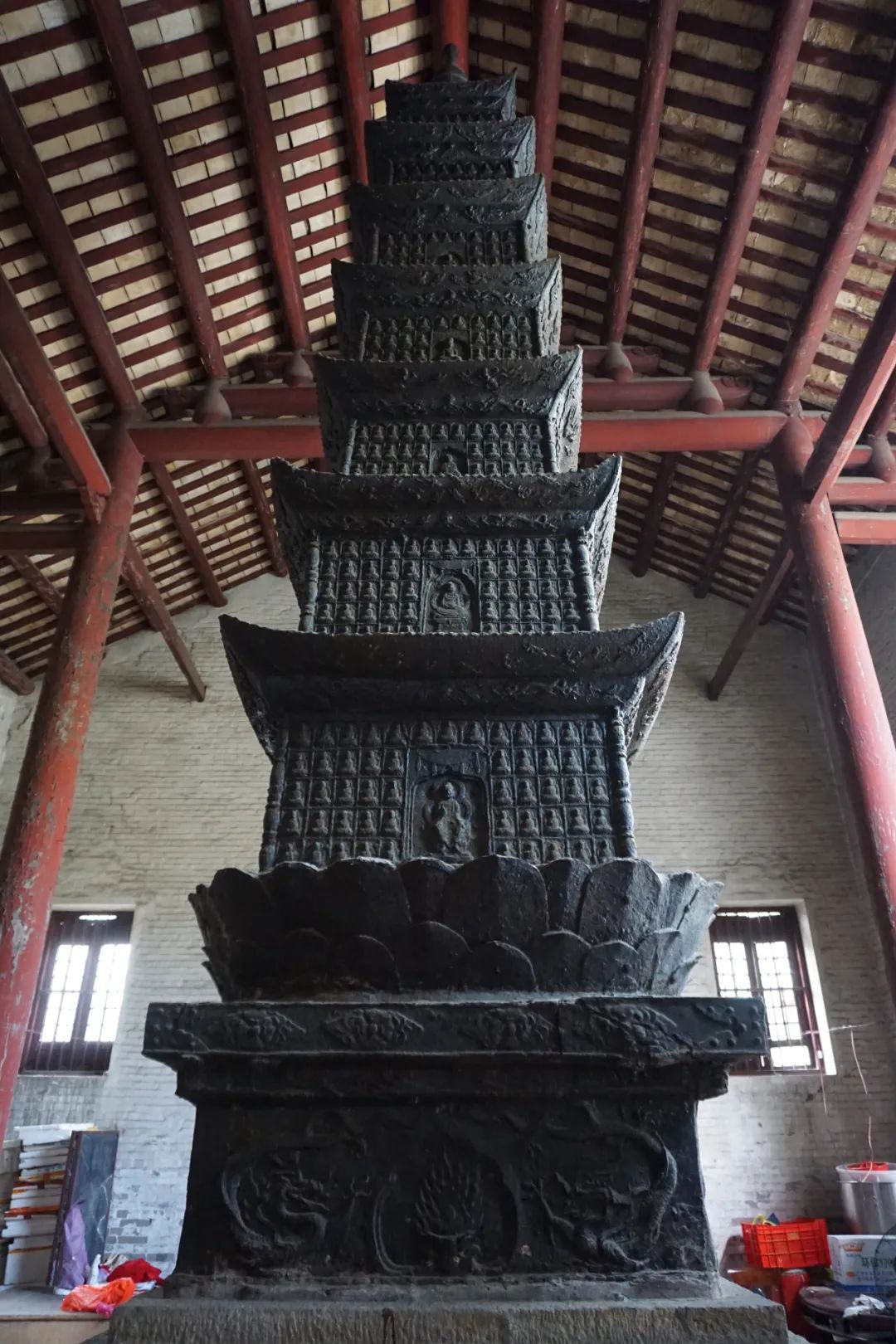
Zhakou Baita (Figure 1) is located on Baitaling, about 150 meters away from the north bank of Qiantang River in Hangzhou. It is a pavilion-like solid stone tower with eight sides and nine levels, and its height is about 14.12 meters. The original affiliated temple has long since disappeared. There are different opinions about the construction date of the White Pagoda at Zhakou, but it is generally agreed that it will not be later than the twin towers of Lingyin Temple (about 960) which are very similar in shape. Wei Zhuting further confirmed the construction time of the White Pagoda at Zhakou as four years of showing virtue (957). Its architectural form, all floors above the ground floor are composed of three parts: tower body, tower eaves and sitting. The stone carving and stacking are more accurate than the brick tower at the same time. Especially for the overhanging part, all components can be calculated according to the size of the wooden structure. Fu Xinian thinks that "this stone tower is probably made by shrinking according to the actual size of the wooden tower". Earlier, Liang Sicheng also said that it was better to call it "a model" than a building.
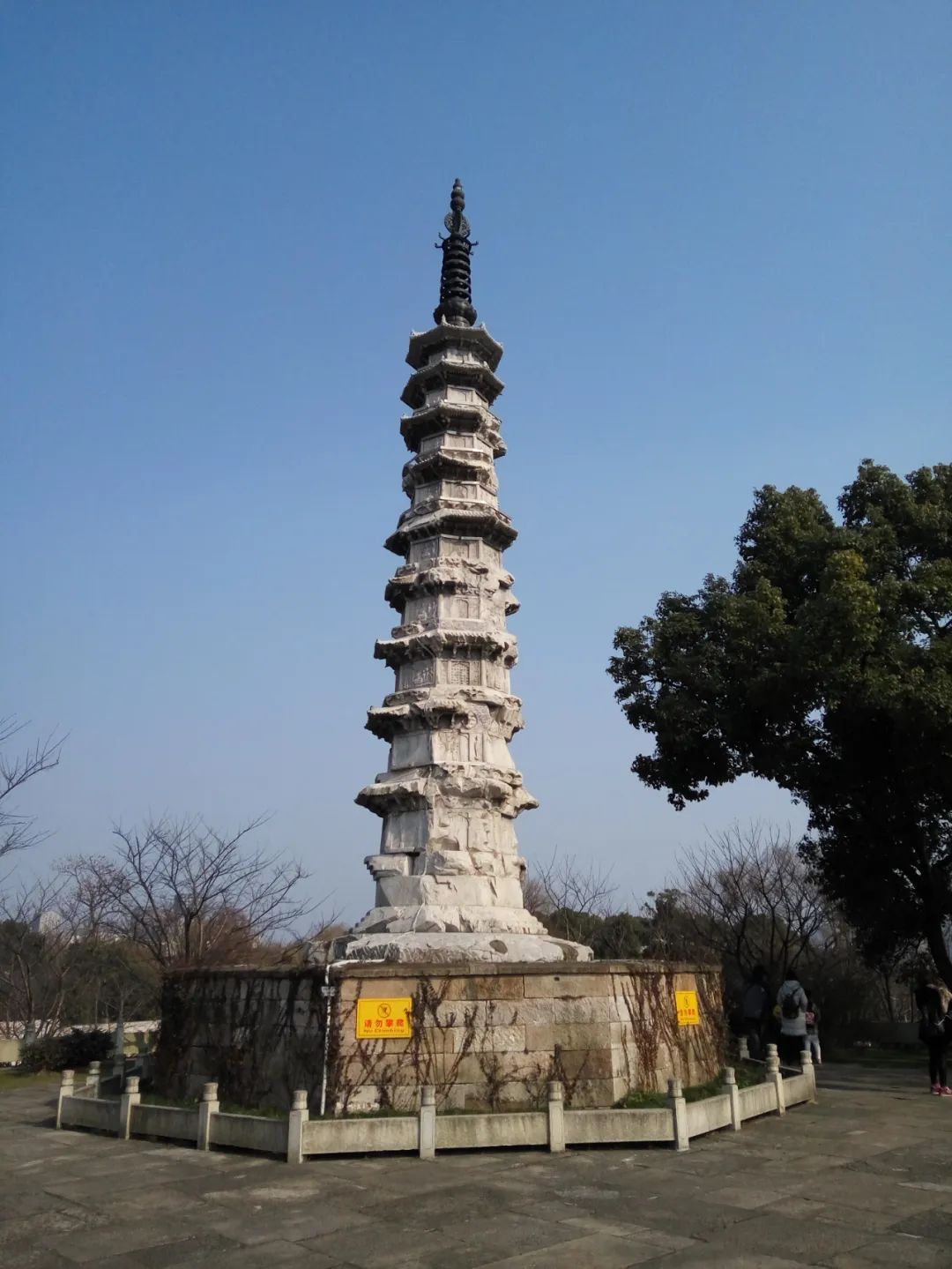
Fig. 1 Photo of the White Pagoda at Zhakou, Hangzhou (957)

Indeed, compared with other existing masonry pagodas in wuyue, Yunyan Temple Pagoda is 47.6 meters, Luohanyuan Twin Towers is 33.3 meters, and Ruiguang Pagoda is 43.2 meters later in the Northern Song Dynasty. The white pagodas at the gate are much smaller, but what is the purpose of "shrinking according to the actual wooden pagodas"? Calling it a "model" is also enlightening, but the height of 14.2 meters is not an absolute miniature.

Liu Dunzhen visited Suzhou in 1936 to inspect ancient buildings, and made a field survey of the twin towers and Yunyan Temple Pagoda of Luohanyuan in wuyue period, as well as Ruiguang Pagoda and Baoen Temple Pagoda in Northern Song Dynasty. In 1937, Liang Sicheng and Lin Huiyin also made a special trip to Hangzhou to inspect the White Pagoda at Zhakou and the Double Stone Pagoda at Lingyin Temple. These two visits initiated the research of wuyue Pagoda architecture by domestic scholars. After the founding of New China, all previous investigations have comprehensively combed the age, architectural form, characteristics and distribution of existing pagodas in wuyue, which not only increased the number of known pagodas in wuyue, but also roughly outlined the historical outline of pagodas in wuyue through the comparison of architectural form and chronological arrangement. In recent years, there are many outstanding research results. On this basis, the academic community’s understanding of wuyue stupa has been continuously enriched and improved. However, on the whole, the focus of the research on wuyue stupa architecture is still not divorced from its masonry-like wood structure characteristics. However, if we only focus on this, we will not be able to fully answer the above question about the scale of the white pagoda at the gate.

For a long time, the research direction and thinking of Zhakou White Pagoda are mostly limited by the existing literature and actual data. As one of the few stone pagodas in wuyue, it still provides a reference and is precious, filling the historical vacancy in the absence of examples of wooden pagodas in the late Tang Dynasty and the Five Dynasties. However, the research from this angle not only formalizes or visualizes the stupa, but also ignores the architectural and structural features of the wuyue stupa, which is different from the previous one. Without a discussion of the religious environment in wuyue period, it is impossible to deeply explore the religious significance of wuyue stupa. For example, when discussing the imitation wooden structure of Zhakou White Pagoda, scholars seldom consider the rich religious images and Darani mantras on the Pagoda.
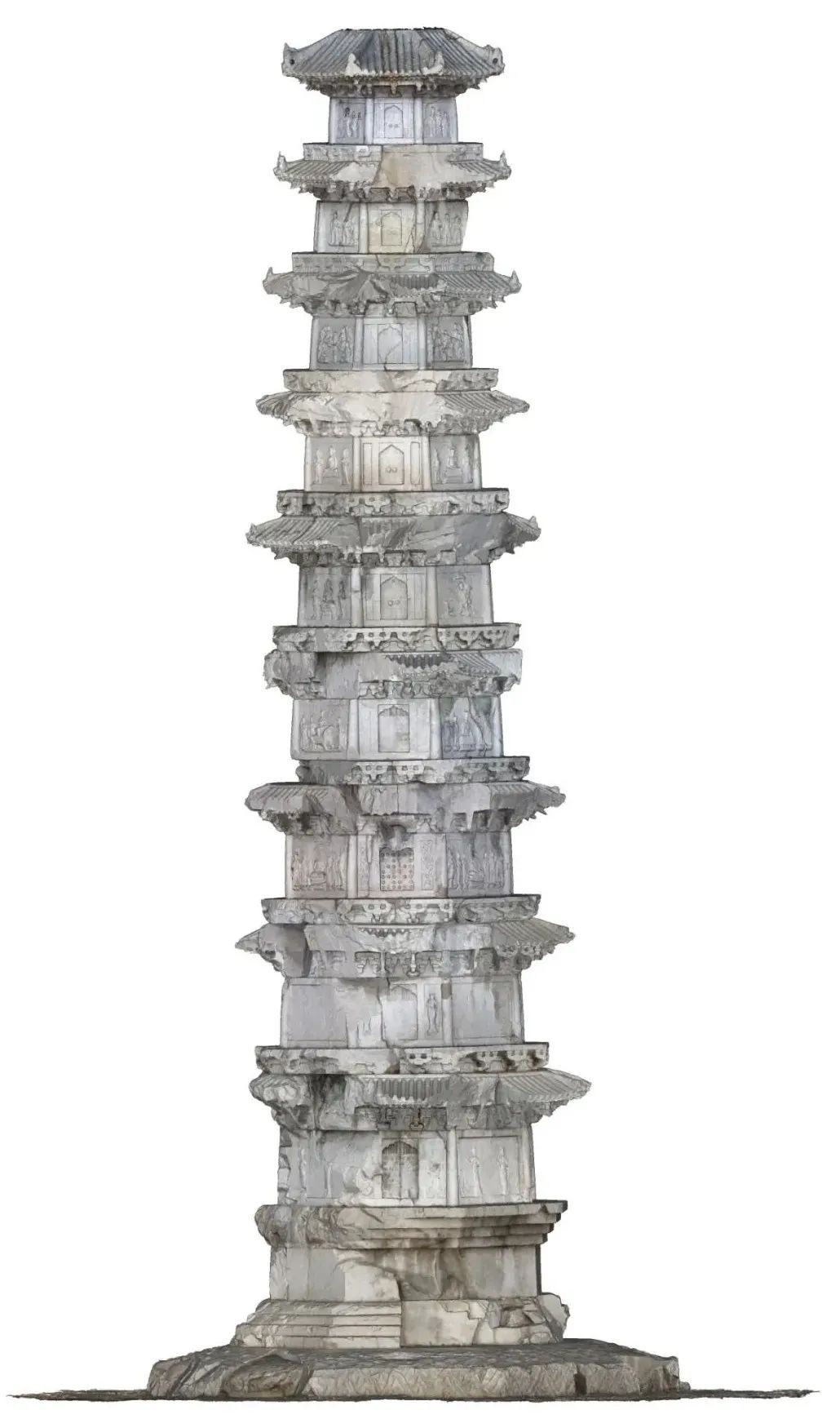
Fig. 2 Three-dimensional scanning model of the white tower at the gate (south)

In recent years, the Institute of Cultural Heritage of Zhejiang University has scanned the three-dimensional image of the Zhakou White Pagoda (Figure 2), which makes us have a further understanding of the image program of the tower body. Based on the content of the image of the pagoda, especially the relationship between the pagoda architecture and the image, this paper holds that although the Zhakou White Pagoda is small in scale and has no internal space, its functions and religious significance are similar to those of the masonry pagodas of the same period, which are the products of the worship of pagodas in the late wuyue area. If we study the White Pagoda at Zhakou, we can’t separate it from the overall development of wuyue Pagoda. Therefore, the discussion in this paper is not limited to the White Pagoda at Zhakou, but from two different research perspectives: first, it focuses on the construction technology and materials, and then it puts the White Pagoda at Zhakou in the historical context where Buddhism, images and religious visual culture alternately influenced each other at that time, and analyzes how the structure and space of the White Pagoda at Zhakou shaped its religious function and significance. It is expected that this research method will play an enlightening role in the study of masonry pagodas in wuyue period.

Wuyue Pavilion-style "Wood-like" Masonry Pagoda

In the introduction of the History of China Pagodas, Zhang Yuhuan clearly pointed out at the beginning: "Any Chinese-style pagoda can’t be built without the wooden structure of China. In other words, the wooden buildings in China are fully reflected in the tower. " This should represent a kind of academic point of view. Some scholars who hold this view believe that the existing brick and stone pagoda in Tang Dynasty is mainly square plane, but after entering the Five Dynasties, it is almost octagonal plane. The reasonable explanation is: "This change is mainly related to the change of wooden pagoda structure." In other words, since the brick tower is an imitation of the wooden tower, the change of the plane of the brick tower in the Tang and Song Dynasties reflects the change of the plane of the wooden tower in this period. The surviving wuyue brick stupa is located between the Tang and Song Dynasties, which witnessed the development of this critical historical period, and its importance is self-evident. But is this the case?

The establishment of the above view requires the following premises: the wooden pavilion tower and the masonry imitation wooden pavilion tower coexist at the same time, and the former serves as the reference prototype of the latter. According to literature and physical statistics, there are 109 known pagodas in wuyue, all of which should be pavilions, of which 69 can be identified as building materials, including 44 brick towers with wooden eaves, 9 imitation wooden towers with masonry and 12 iron towers. There are only four wooden pagodas, accounting for 3.2% of the total number of known pagodas in wuyue. Of course, the small number of existing wooden pagodas can’t be used as a reason to deny that the wooden pagodas are the prototype of masonry pagodas, but if the masonry pagodas in wuyue are indeed based on wooden pagodas, the construction time of the wooden pagodas should be at least 950-960 years earlier. However, at this stage, neither literature nor existing materials can confirm the existence of such prototypes.
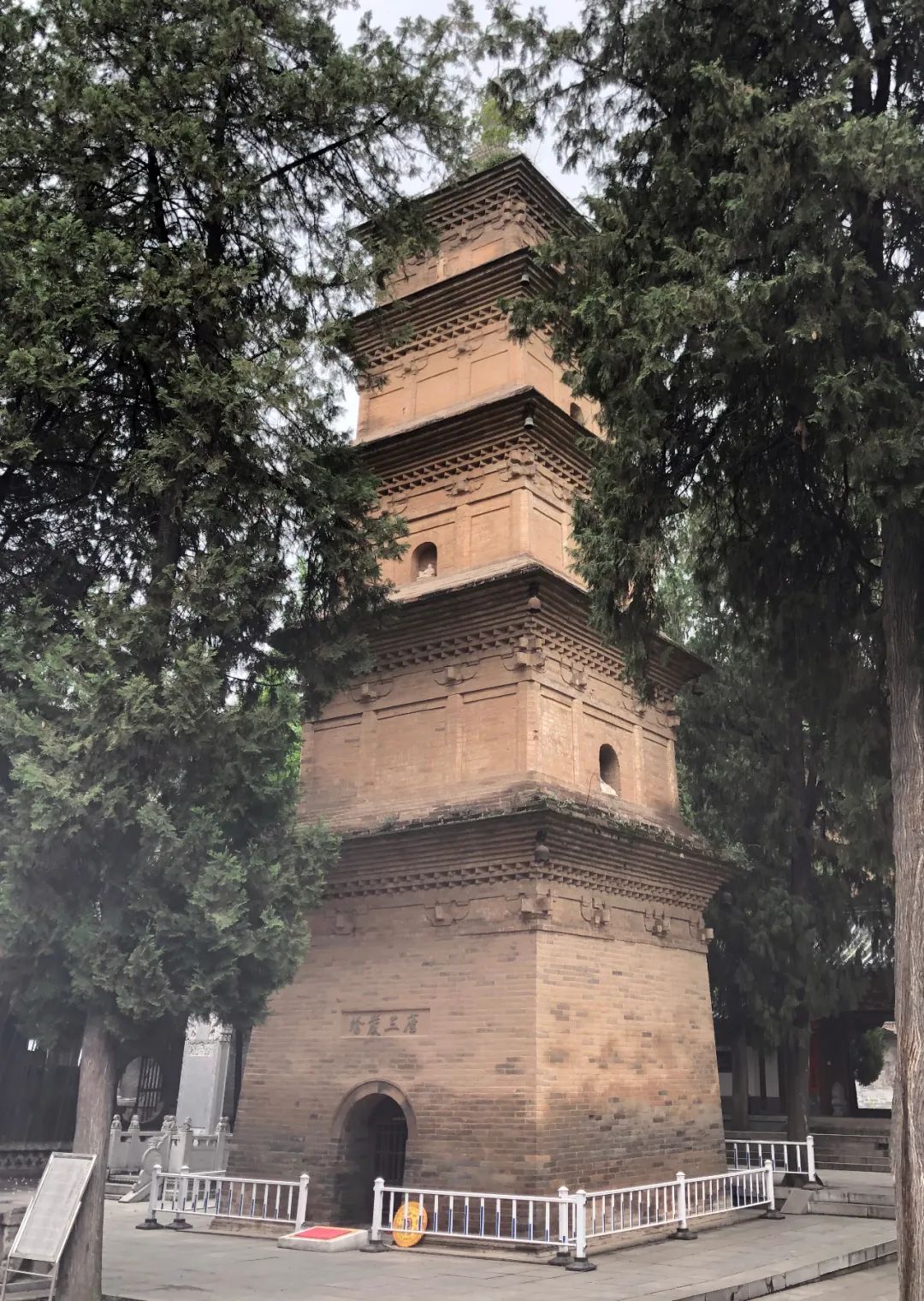
Figure 3 Tomb Tower of Master Xuanzang of Xingjiao Temple in Tang Dynasty in Xi ‘an.
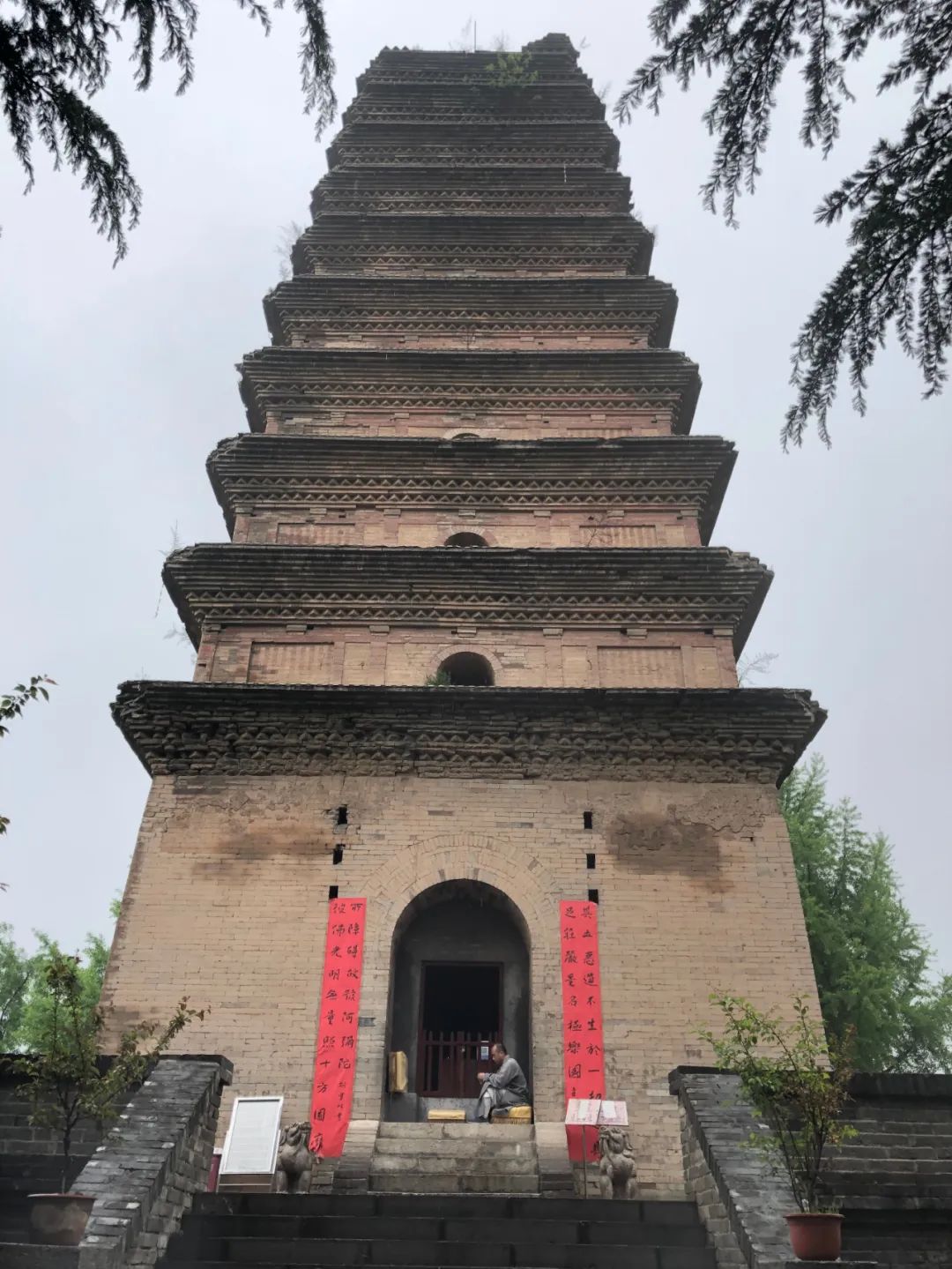
 

Figure 4 xiangji temple Tower in Tang Dynasty in Xi ‘an.

In fact, the assertion that "the wooden tower is the prototype of other material towers" has its origin. Early pagodas were mainly made of wood, and at the latest in the Northern Wei Dynasty, there were sporadic records of "imitation wood" stone pagodas. Sui and Tang Dynasties followed the wind of building pagodas in the Northern Wei Dynasty, and there were several high-rise wooden pagodas in Chang ‘an City, but there were no more detailed records. To find examples of the achievements of high-rise wooden buildings in the Sui and Tang Dynasties, we can only turn to the pavilion-style brick towers of the same period, such as the Da Ci ‘en Temple Tower in Xi ‘an (Wild Goose Pagoda), Master Xuanzang’s Tomb Tower in Xingjiao Temple (Figure 3), or the xiangji temple Tower with dense eaves (Figure 4), and regard them as imitations of the pavilion-style wooden towers at that time. The Five Dynasties, the Song Dynasty and the Liao Dynasty were another historical stage in which Buddhist pagodas flourished, but most of the wooden structures have not been preserved so far, and the remaining masonry pagodas have naturally become the basis for scholars to spy on the shape and style of the pagodas at that time. As Luo Zhewen said: "From the prosperous Tang Dynasty, the structural style of wooden buildings was imitated, which influenced the shape of the Song Tower."

Most of the stone pagodas in the Five Dynasties and the Song Dynasty were made of imitation wood, but as the previous data showed, in wuyue, for example, the number of wooden pagodas was very small, not preserved, but not built, indicating that the material and structure of pagodas gradually changed from wood to brick after the end of the Tang Dynasty. The newly-emerging masonry stupa, although decorated with wooden structure, has the appearance of a wooden pavilion pagoda, but its structure is still designed according to the characteristics of masonry itself, not imitating the existing form. Therefore, the pavilion-style stupa in wuyue should not be regarded as an imitation of wooden stupa, but an important innovation in the history of masonry and stupa architecture, which later influenced the development of masonry stupa in Song and Liao Dynasties. Therefore, from the methodology, we must first shift the research focus from "imitation of wood structure" to the innovation of masonry structure technology in wuyue, from paying attention to the decoration style of wooden structure of tower body to analyzing the creation of internal space of masonry structure, and then find out the reasons for the rise of masonry stupas in wuyue. From this perspective, the study of wuyue stupa architecture should not be limited to the study of the building itself, but need to put the stupa back into its original religious context, and explore how the stupa can meet the new religious needs with architectural methods and material transformation in a specific period, which is also an important prerequisite for this paper to study the White Pagoda at Zhakou.

3 "Double Sleeve" Structure Innovation

Wu Yueguo’s regime was established at the end of the Tang Dynasty, when various regions were divided. Qian Liu (852-932), a native of Lin ‘an, Hangzhou, was appointed as an observer of Suzhou and Hangzhou in the second year of Jingfu, Tang Zhaozong (893), and was a powerful person in the two Zhejiang provinces. In the first year of Kaiping (907), Qian Liu was named King of Wu Yue and officially became the first ruler of Wu Yue State. Wu Yueguo’s rule in Jiangsu and Zhejiang lasted for three years (978), until the last monarch, Qian Chu (929-988), surrendered to the Northern Song regime and returned to the Song Dynasty. After more than 70 years, there were five kings before and after. In its heyday, its territory covered all of Zhejiang, Suzhou, Shanghai and northeastern Fujian. Although the country is not long and its territory is not large, successive monarchs are deeply convinced of Buddhism and print a large number of scriptures. Therefore, the engraving printing technology in Hangzhou is extremely developed, which also reflects the fact that there are many Buddhist temples in wuyue.

3.1 Masonry Pagoda in wuyue Period
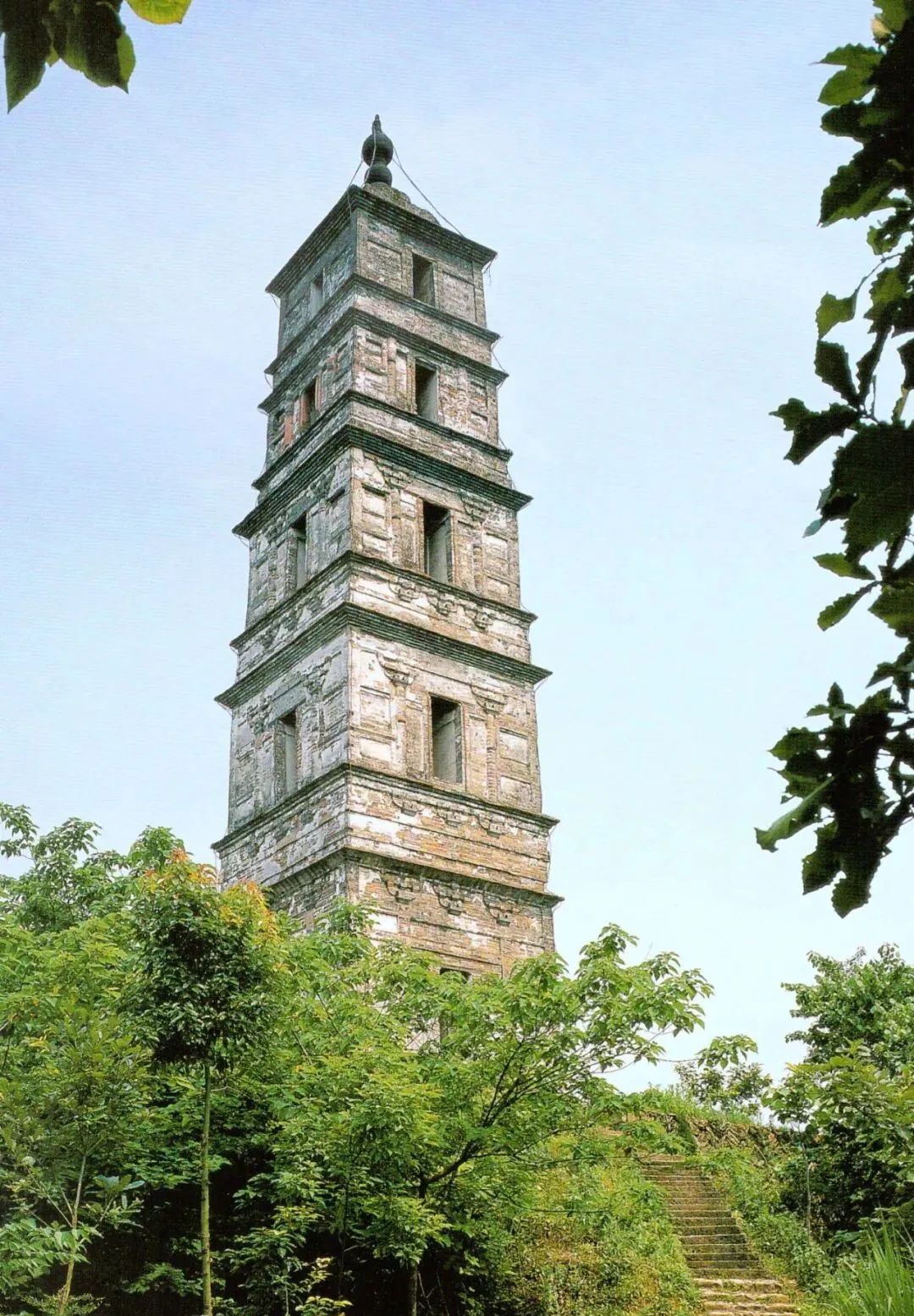
Fig. 5 Gongchen Tower in Lin ‘an, Zhejiang, 915.
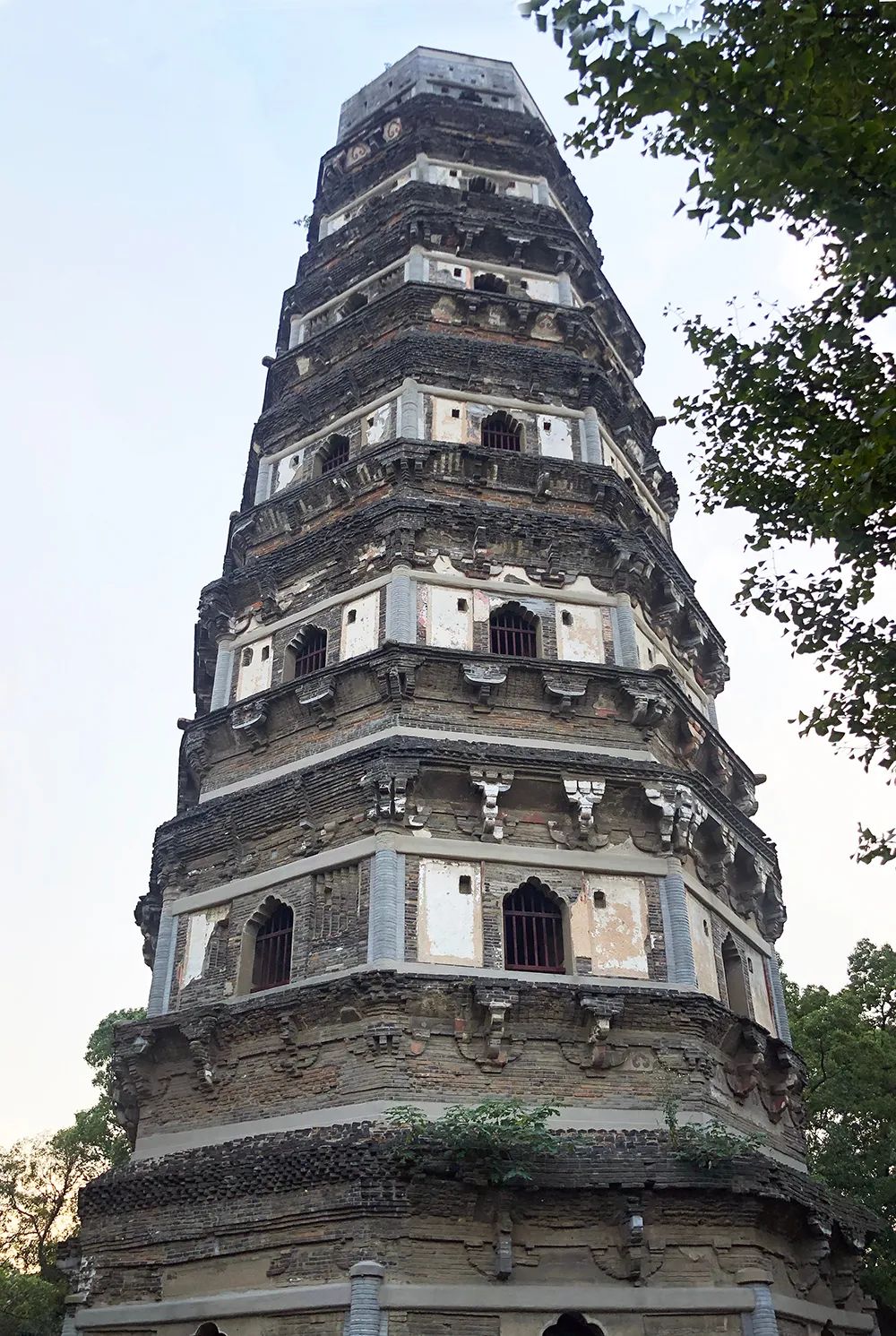
 

Fig. 6 Yunyan Temple Tower in Huqiu, Suzhou, 961.

The earliest existing stupa in wuyue is the Gongchen Pagoda in Lin ‘an, Zhejiang Province (Figure 5), which was built in the first year of Zhenming (915) and was personally presided over by Qian Liu. It can be regarded as the representative of the early stupa in wuyue. The tower is a square five-step single-tube hollow structure, with flat bricks overlapping the waist eaves, and wooden members are built on each floor. Compared with the brick stupa in the Tang Dynasty, the eaves are shallower, but there are more sitting, and the wooden structure is more complicated than the previous one. From the shape and structure, the early stupas in wuyue still inherited the tradition of Guanzhong area in Tang Dynasty.

According to chronological order, after the Gongchen Pagoda is the Yunyan Temple Pagoda in Huqiu, Suzhou (Figure 6), which was built in 961. Yunyan Temple Tower is a wooden eaves tower with eight sides and seven levels of brick body. The original wooden structure on the outer eaves of the brick tower has been damaged, and the brick imitation wood structure is still clearly visible. There are circular leaning columns on the outside of the tower body at the corners of each floor, and there are three columns on each side. The center has a door, and there should be hidden straight windows on both sides, and the floors should be built with buckets. Compared with Gongchen Pagoda, the imitation wood structure of Yunyan Temple Pagoda is not only more complete, but also more prominent in overlapping, and it also makes the waist eaves and flat pavements more three-dimensional. But its most special feature is the structure in the tower.
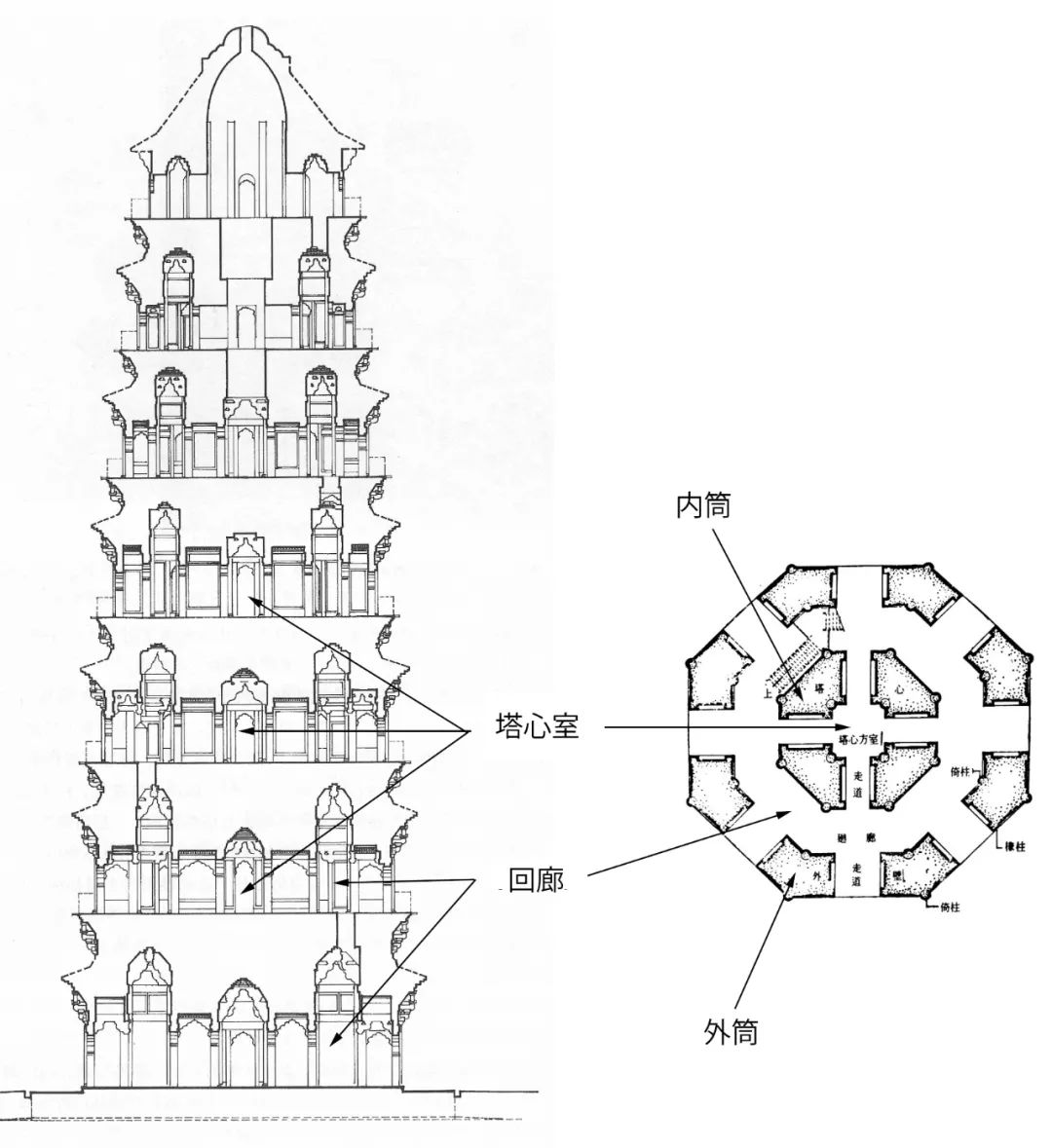
Fig. 7 Cross-sectional view of Yunyan Temple Tower and plan view of the first floor tower foundation.

Chenggong Tower inherited the tradition of single-tube structure in Tang Dynasty, and built a thick wall with bricks according to the shape of the tower, but the inside was hollow, like an empty tube, and then wooden floors and stairs were installed in the tube for climbing the tower. Yunyan Temple Tower is the earliest existing double-sleeve structure, which consists of two layers of tower walls, the inner wall is made into a tower ventricle, and a surrounding corridor is built between the inner and outer walls (Figure 7). The inner and outer walls are connected and supported by each layer of corridor, which enhances the rigidity and stability of the whole tower structure. In addition to the imitation wood outside the tower body, circular leaning columns are also built at the corners on both sides of the cloister inside the tower, and the corners are paved, and the wall is also divided into bays with columns, just like outside the tower. From the inside out, Yunyan Temple Pagoda and Gongchen Pagoda are very different.

In the article Yunyan Temple Pagoda in Huqiu, Suzhou in 1954, Liu Dunzhen thought that the imitation of the wooden structure was significantly improved compared with that of the masonry tower since the Northern Wei Dynasty by adding a wooden waist eaves and a sitting rail to the Yunyan Temple Pagoda. This is also reflected in the unprecedented accuracy of wood-like details. It can be seen that the goal pursued by the builders of wuyue brick stupa is to achieve the effect of resembling a wooden pavilion-like tower in appearance. However, no matter how similar, the main body of Yunyan Temple Tower or the high-rise masonry structure shows its unprecedented features only through its masonry materials and internal space.
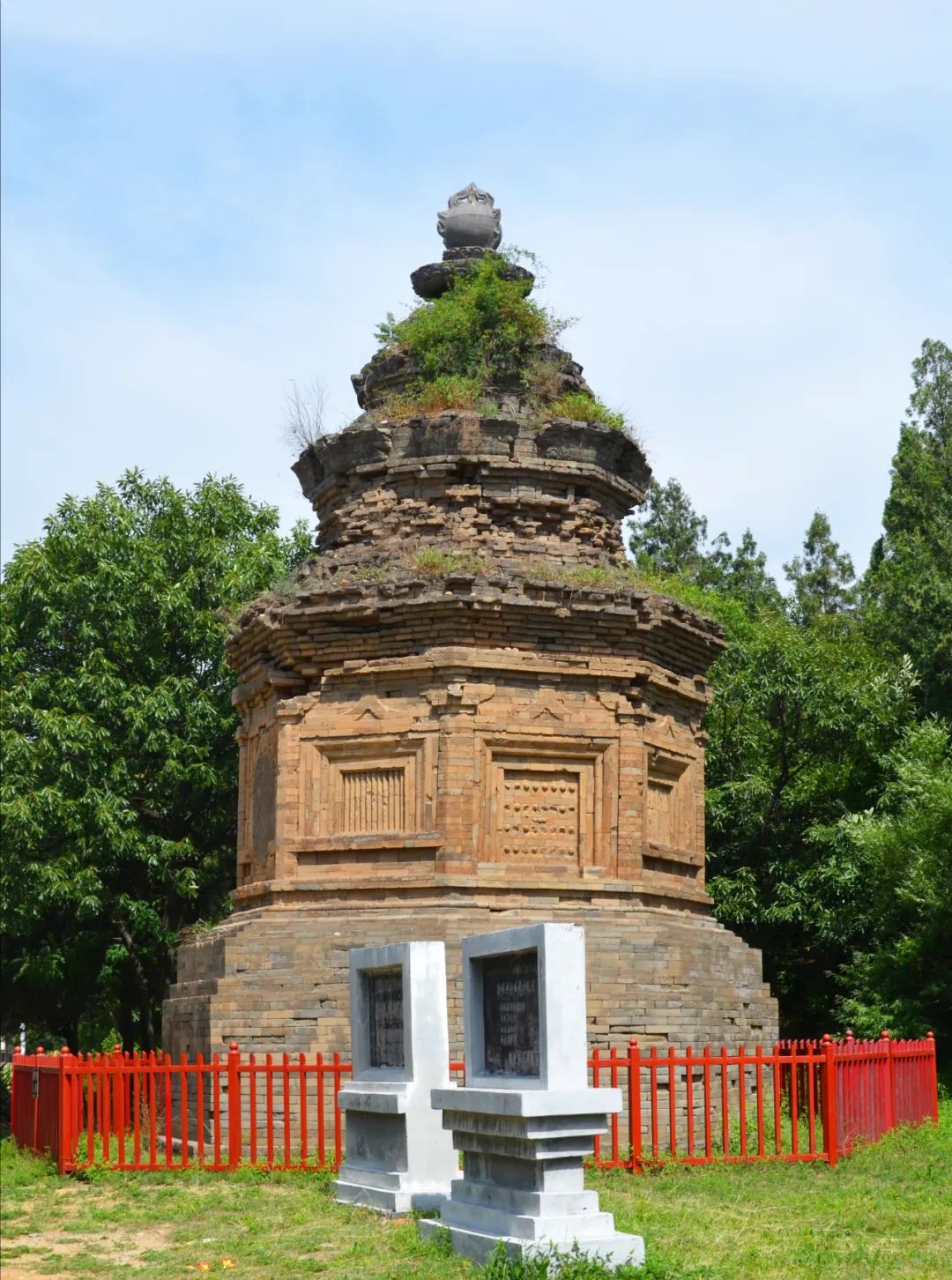
Fig. 8 Brick Pagoda of Zen Master in Jingzang, Huishan Temple, Dengfeng, Henan, 746.

First of all, although there are precedents to follow in the octagonal plane of Yunyan Temple Pagoda, even counting the single-storey stupa, there was only one example in the Tang Dynasty before wuyue, namely the brick pagoda of Zen Master Jingzang in Huishan Temple, Dengfeng, Henan Province in the fifth year of Tianbao (746) (Figure 8). In the Tang Dynasty, when the pagodas were generally square, the shape of the brick pagodas of the Zen master was undoubtedly a breakthrough. The same breakthrough is the tomb tower of Zen master boating in Yuncheng, Shanxi Province in the ninth year of Zhenyuan (793), which is a circular flat brick structure. However, these two styles were isolated cases in the Tang Dynasty, and both were tomb towers. Whether the special plane shape is related to its function needs to be verified. What is certain is that the plane shapes of these two tombs are not required by the structure. The residual height of the two pagodas is about 10 meters, and there are not a few square pagodas higher than 10 meters. For example, the height of Simen Pagoda of Shentong Temple in Licheng, Shandong Province (611) is 15.4 meters, which is significantly higher than these two pagodas. Therefore, it can be seen that the single-storey pagodas do not need to change their structures in order to pursue height.

However, in the further pursuit of height, changing the structure has to become the focus of design. Octagonal shape is more stable in vertical stress than square shape, and it has absolute advantages in building high-rise structures. At the same time, compared with the square, the inner diameter of the octagonal tower is larger, and it is easy to adopt the form of double sleeves. The inner and outer cylinders support each other to form a more stable overall structure, which is the main reason for changing the square into octagonal. The structural mode of Yunyan Temple Pagoda is only the beginning in wuyue. Of the 30 Wuyue Pagoda whose plane form can be determined, 19 are octagonal, accounting for the vast majority. Therefore, since there are no examples and records of wooden pagodas with the same shape before Yunyan Temple Pagoda, it is difficult to establish the imitation statement, and its structural innovation is more likely to be caused by breaking through the past high-rise masonry structure.
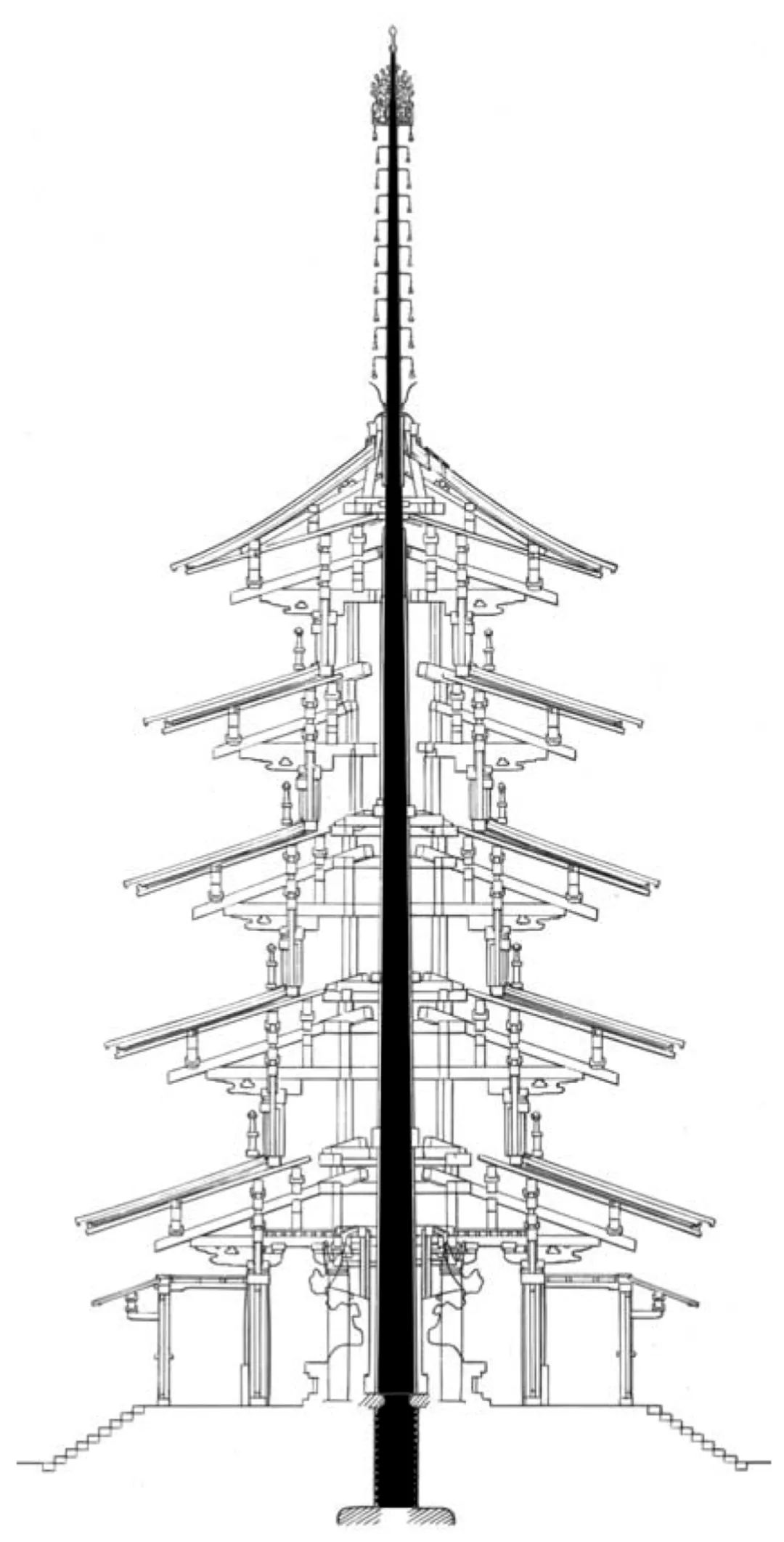
Fig. 9 Horyuji Pentecostal Tower in Nara, Japan.

The need of adopting double-sleeve self-stabilizing structure generally determines the composition of the space in the tower. The space between the inner cylinder and the outer cylinder naturally forms a cloister, and an unprecedented "tower ventricle" is formed in each floor within the inner cylinder. In the early wooden pagodas, there were many tower pillars, which marked the sacred center where the Buddhist relics were located, and were the most critical symbolic components above the ground. From the existing examples of the Horyuji Pentecostal Tower (Figure 9) and the Faqi Temple Tripecostal Tower in Nara, Japan, it can be seen that the tower core column runs through the tower body, occupying a vast space, and goes straight to the top of the tower to cover the bowl and support the tower brake. The first floor is used as a space for Buddha worship. Because there is no usable space on the above floors, there is no floor or stairs for climbing the building. However, after the early Tang Dynasty, in the limited literature about pavilion-style high-rise wooden pagodas, the practice of not seeing the tower-core column was not seen again, and it seems that the square pagodas left in the Tang Dynasty did not use the tower-core column either. The structure of brick towers in Tang Dynasty can be roughly divided into thick-walled hollow (that is, single-tube structure) and solid type, and there are towers at the top. It is not clear whether there is a tower core column in the solid tower, but the hollow type mostly uses the floor to separate the internal floors without the tower core column, as is the case with the early meritorious tower in wuyue. The appearance of the tower ventricle in Yunyan Temple Pagoda, although not completely equivalent to the tower core column, seems to be a conscious return, re-emphasizing the symbolic significance of the center tower column in the stupa, which can be seen from the cross-sectional view (Figure 7).
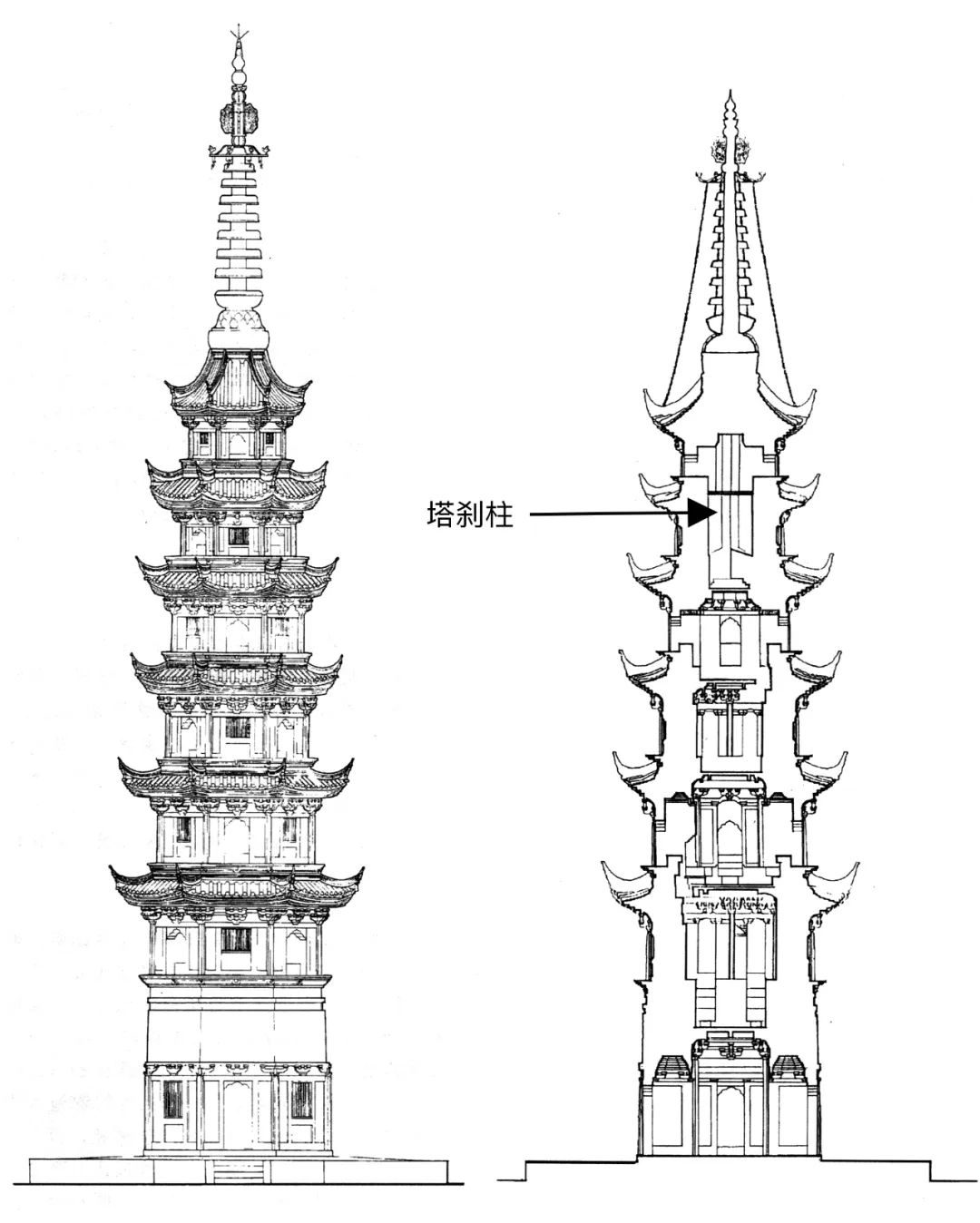
Fig. 10 Front elevation and section view of the twin towers (982) of Luohanyuan in Suzhou.

The ventricles of the tower from the first floor to the fifth floor form the central axis in the tower longitudinally, which fully reflects its importance. The first to fourth floors have thick brick floors, while the fifth, sixth and seventh floors have no partitions, showing a continuous vertical space. When Liu Dunzhen visited the tower, he was puzzled by this, saying that "it was suspected that the wooden board had been destroyed for years". In fact, the brick dome added at the top of the seventh floor conceals the structure of the original placement pagoda, and the position of the original pagoda can also be inferred by comparing with similar pagodas. For example, the Twin Towers of Suzhou Luohanyuan, built in the seventh year of Xingguo, Song Taiping (982), have a huge iron brake. The brake rod passes through the top of the tower and goes straight into the top second floor, becoming a tower brake column, while the following floors form a continuous "tower ventricle" in the center of the tower (Figure 10). The practice of the tower brake of Yunyan Temple should be similar to this. Comparing the setting of the tower center column from the Southern and Northern Dynasties to the early Sui and Tang Dynasties, the practice of Yunyan Temple Tower and Luohanyuan Twin Towers presents another tower center model, which not only embodies the symbolic significance of the original symbol of the sacred center of the tower column, but also provides more worship space in the center of the pagoda. In addition, the cloister formed between the inner and outer walls is provided with stairs on each floor for going up and down, which changes the past situation that only the central tower column can be bypassed on the first floor of the stupa. Believers can surround the pagoda’s ventricles on each floor, step by step, opening a new form of ritual space inside the stupa in wuyue. Around the above characteristics, the history of wuyue stupa began gradually.
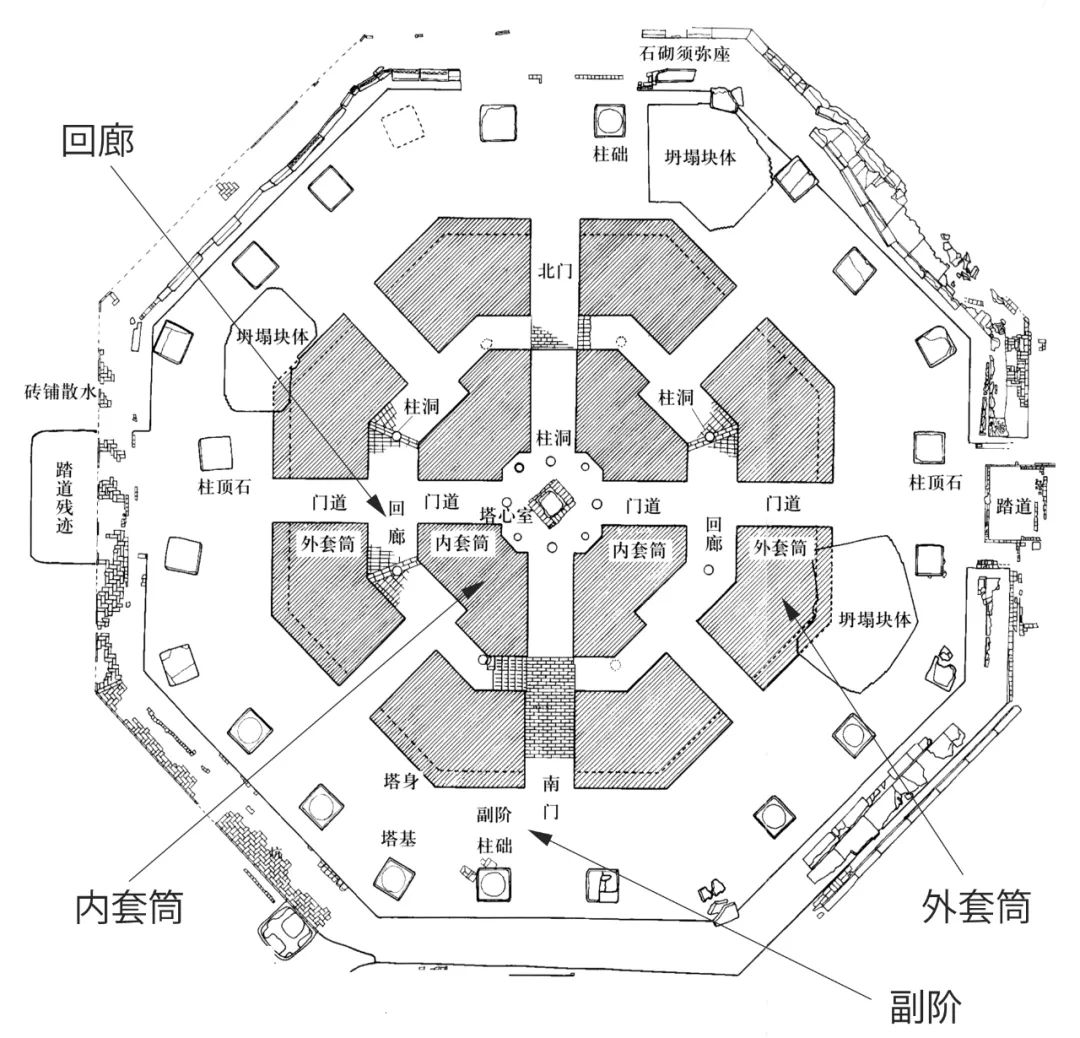
Fig. 11 Tower foundation plan of Hangzhou Leifeng Tower (977)

Leifeng Tower was built in the fifth year of Kaibao (972) and completed in the second year of Taiping Xingguo (977). It is an octagonal five-level wooden eaves brick tower. Unfortunately, in the thirteenth year of the Republic of China (1924), the tower collapsed, and the situation inside was unknown. Judging from the form of the tower foundation (Figure 11), it is also a double-sleeve structure, with doors on all sides leading directly to the tower ventricle. At the same time, there are secondary turns at the bottom of Leifeng Tower, which lengthens the total inner diameter. Seen from the plane, the tower base is in two concentric circles, and the secondary cloister is used by believers to detour before entering the tower, which also highlights the central position of the tower ventricle. The aforementioned Twin Towers of Suzhou Luohanyuan and the Suzhou Lengga Temple Tower (Figure 12), which was built in the third year of Taiping Xingguo (978), are both pavilion-like towers with wooden eaves and brick bodies. Compared with Yunyan Temple Tower and Leifeng Tower, they are smaller in plane and narrower in shape. The single-tube structure can meet the demand, and only one door is opened on each of the four fronts, which leads directly to the ventricles of the tower without corridors. However, the Lengga Temple Tower originally had a secondary step, 2 meters wide, which made up for the lack of corridors inside. Believers can still enter the tower after bypassing the secondary step, and there are stairs in the tower for boarding.
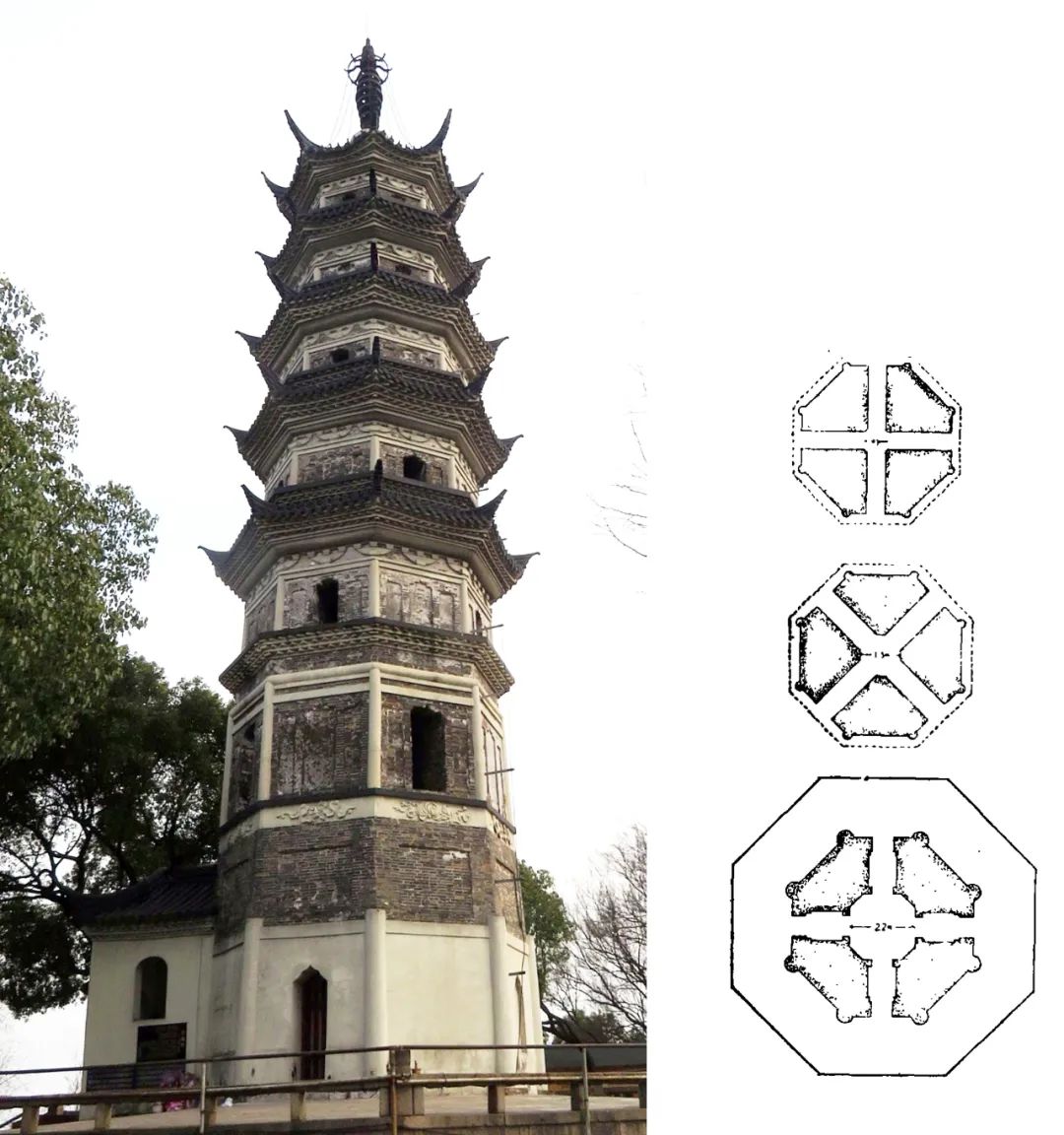
Fig. 12 Photo of the elevation of the Linga Temple Tower in Suzhou (978) and the plan of the bottom three floors.

There was no precedent in the Tang Dynasty to build a secondary order on the bottom of the stupa, and it was not seen in the meritorious tower in the early days of wuyue. It was only in the Qian Chu period that the secondary order was used. In addition to Leifeng Tower, the earlier Huangyan Ruilong Induction Tower (963) and Pingyang Baosheng Temple Twin Towers (965) all have secondary steps, and they are all octagonal planes. The use of the secondary steps in wuyue area is not only related to the innovative masonry towers, but also closely related to the ritual needs of those who enter the towers.

3.2 wuyue old stupa
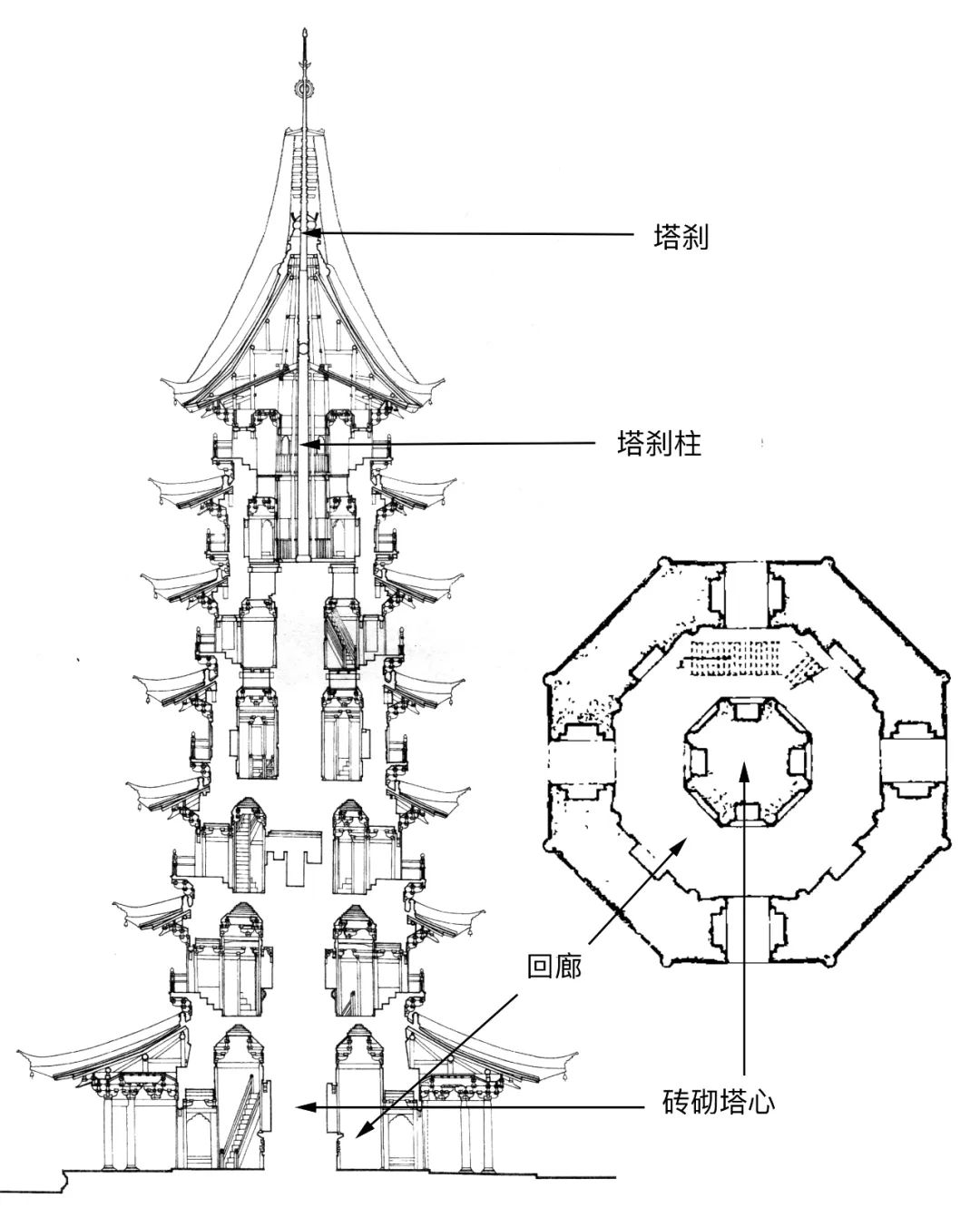
Fig. 13 Section and first floor plan of Suzhou Ruiguang Tower (1004-1030)

After entering the Song Dynasty, the masonry pagodas built in the old place of wuyue have undergone new changes, which can be regarded as the development on the basis of the previous period. Suzhou Ruiguang Tower (Figure 13), built from the first year of Jingdezhen in the Northern Song Dynasty to the eighth year of Tiansheng (1004-1030), is a brick tower with eight sides and seven levels of wood eaves, which belongs to a double-sleeve structure. The first floor of the tower is provided with secondary steps, but the first to fifth floors of the tower are not provided with tower ventricles. Instead, the solid tower center is connected with the outer wall of the tower by bricks to form the ceiling and floor of the cloister. The ventricles of the towers on the sixth and seventh floors are connected vertical spaces, and the central tower brake column supports the tower brake at the top of the tower. Although it is different from the practice of continuous tower ventricles discussed before, the idea of emphasizing the vertical axis of the center of the stupa revealed by the two is in the same strain. Buddhist niches are added to the two walls of the cloister in the Ruiguang Pagoda, which can bypass the worship of Buddha when entering the tower, and go further on the basis of only cloister before.

The masonry structure of the Ruiguang Tower inherits the shape of wuyue, but in appearance, from the secondary steps up, each sitting floor, waist eaves to the wooden tower top presents a more complete wooden pavilion form than in the previous period. Similar examples are Longhua Pagoda in Shanghai (977), Feiying Pagoda in Huzhou (1069-1201) and Baoen Temple Pagoda in Suzhou (1131-1162), all of which can be regarded as the continuation of wuyue Pagoda in different periods.

3.3 Outside the imitation wood structure

Compared with the existing brick pagodas in Tang Dynasty, the three-dimensional style of the imitation wooden building components of wuyue brick pagodas, whether it is a brick body with wooden eaves or a brick imitation wooden structure, is more accurate and true, but it is only limited to the similarity in appearance. Based on this cognition and pursuit, wuyue craftsmen adopt unprecedented means in architecture and structure, which is the innovation of wuyue brick and stone pagoda. Even so, there are two puzzling problems. First of all, since it is a brick tower, why not use a dense eaves tower and stick to imitating wood with brick? The cost of financial resources and labor for brick-and-stone imitation wooden tower is not less than that of dense eaves tower. In other words, what is the purpose of pursuing "similarity"? Secondly, if there is no ready-made wooden pagoda as the prototype, how did wuyue craftsmen initially design the structure of the pagoda and the composition of the internal space? Technical innovation required by high-rise masonry structure is a necessary factor, but architectural technology cannot completely control the use of space inside and outside the tower and the religious significance of shaping the stupa. So, are there other factors? To answer these questions, we must have an understanding of Buddhism in wuyue.

4 the prosperity of Buddhism and the construction of pagodas

According to the data compiled by Wei Zhuting, literature records and the existing Wuyue Tower, there are 99 buildings that can determine the age range. According to the three periods of wuyue, there were 10 places in the early period (893-932), accounting for 10%; 9 in the middle period (932-948), accounting for 9%; 80 in the later period (948-978), accounting for 81%. In the late period of wuyue, that is, the 30-year reign of Qian Chu, the king of Zhongyi, the number of towers built in this period greatly exceeded that in the previous 50 years, which is closely related to Qian Chu’s own belief in Buddhism. In Qian Chu’s epitaph, he said that he "never stopped reciting Shi’s book and kept putting on Shi’s canon". However, all successive kings of wuyue believed in Buddhism, but the tower building of Daxing Buddhist Temple during Qian Chu’s reign was not just a matter of personal belief. First of all, after Zhou Shizong Chai Rong (921-959) carried out the destruction of Buddha in the second year of Xiande (955), and wrote a letter to learn that folk bronzes and Buddha statues were destroyed to make money. Although Buddhism was not completely banned, it was indeed a warning to wuyue, where Buddhism prevailed. At the same time, since Qian Chu succeeded to the throne, the situation of the original separatist regime in the ten southern countries has been constantly changing. In the seventh year of Kaibao (974), when the Northern Song Dynasty imperial court summoned Qian Chu to assist the Southern Tang Dynasty, there were only two southern regimes besides wuyue, the Southern Tang Dynasty and the Northern Han Dynasty. Although wuyue has always been committed to managing the relationship with the forces in the Central Plains, during Qian Chu’s reign, he experienced the most turbulent political period in five dynasties, and revitalizing Buddhism became the best way to protect the country in Qian Chu.

4.1 Gold-coated Pagoda and Treasure-printed Heart Sutra
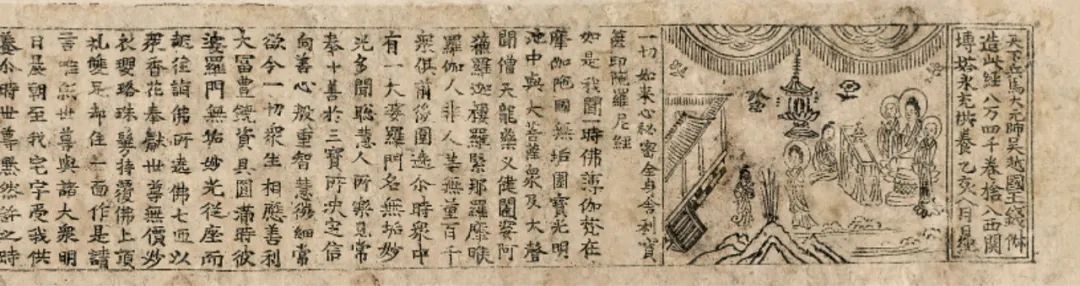
Fig. 14 The Darani Sutra printed by Baoyu in Leifeng Pagoda, 975.

The record of Qian Chu’s revitalization of Buddhism mainly comes from the book "The History of the Buddha" written by Zhipan in the Southern Song Dynasty. In the book, in October of the first year of Jianlong in Song Taizu (960), it was stated: "Qian Chu, King of Wu Yue, worshiped Buddha by nature, longed for Ashoka to build a tower, and built 84,000 towers with gold, copper and fine steel. In the middle of the collection, the "Baoyu Initiation Mantra Sutra" was distributed in the Ministry, and it took ten years to complete the work. " Most of the pagodas made of gold and copper mentioned here are called "golden painted pagodas", which are generally regarded as the purpose of storing the "Bao-Bo Inscription" according to the records of the Buddha’s Annals, but this is somewhat different from the actual practice. Up to now, a total of 19 examples engraved with "King wuyue worships to build pagodas" have been unearthed. According to the inscription, during the reign of Qian Chu, gold painted pagodas were cast twice. The first time was in the second year of Xiande (955), that is, the year when Zhou Shizong destroyed the Buddha, and the second time was in Gande, Song Taizu, for three years (965) ten years later, which is in line with the records of the Buddha’s Chronicles. However, there is only one case of scriptures hidden in the unearthed golden painted pagoda. It seems that the golden painted pagoda was not specially cast for the purpose of hiding treasures and printing scriptures. According to the printing time of Baoyu’s printed scrolls, the three printed copies have been found at present, which were printed in the third year of Zhou Xiande (956), the third year of Gande in the Northern Song Dynasty (965) and the eighth year of Kaibao in the Northern Song Dynasty (975). The first two times are consistent with the casting age of the gold coating tower. The third engraving was late, which was specially printed by Qian Chu for the collection of scriptures in Leifeng Pagoda (Figure 14). Although Qian Chu’s gold painted pagoda may not be specially used for printing scriptures, they are two related and coexisting projects in Qian Chu’s Buddhist cause, which happened at the same time when wuyue Daxing Pagoda was built.This provides an important historical background and religious context for studying the architectural style and structural innovation of wuyue stupa.

Judging from the existing unearthed objects, I’m afraid that the reason why the brick stupa was built in wuyue’s later period was also to collect the "Bao You Yin Xin Mantra" and the Golden Pagoda, although they have different functions. The full name of Baodi Initiation Mantra Sutra is Darani Sutra, which was translated by Tang Bukong. In the sutra, it says, "Those who placed this Darani and the tower statue, we, the ten buddhas, will always follow it wherever it is, and we will bless and protect our thoughts with magical powers and vows." Qian Chu’s operation is based on what is described in the Sutra, and imitates the practice of Asoka (268-232 BC), an Indian peacock dynasty, to build 84,000 pagodas throughout the country to worship Buddhist relics, to cast 84,000 gold painted pagodas, and to build pagodas all over wuyue to place treasures and seal the Darani Sutra. As the scripture says, as long as there is this Darani in the tower, where the tower is located, "everything is protected by the Buddha’s divine power", I hope to bring good news for Wu Yueguo in this way.

Jintu Pagoda is also called Ashoka Pagoda. The story of Ashoka’s tower building has been circulated for a long time, and it has been recorded in the literature since the Western Jin Dynasty. Later, it is said that among the 84,000 pagodas built by Ashoka, 19 were distributed in China, and one of them was found in Huiji (now Ningbo, Zhejiang) in the Western Jin Dynasty, which is why wuyue has a special liking for Ashoka Pagoda. According to "Fayuan Zhulin", in the second year of Taikang in the Western Jin Dynasty (281), there was a Liu Sahe in Lishi (now Lvliang, Shanxi Province), and the monk’s name was Huida. In his dream, he saw a Hu monk ordering him to look for the Ashoka Tower, so he went south to Huiji:

Suddenly in the middle of the night, I heard the bell ringing in the soil, that is, I moved to remember that the wood was used as a brake. During the three days, pagodas and relics suddenly burst out of the ground. The Lingta looks like a stone rather than a stone. It is one foot four inches high and seven inches square. The five-story exposed plate looks like it was made in Khotan, a western region. When the bell rings, I doubt this chime. Around the tower, there are not miscellaneous statues of Buddhas, Bodhisattvas, King Kong, Saints and Monks, which are extremely subtle and eye-catching, but there are hundreds of statues, and their faces, hands and feet are salty. It can be said that the miraculous miracle is beyond the reach of non-human wisdom, and it is now in the big wooden tower.
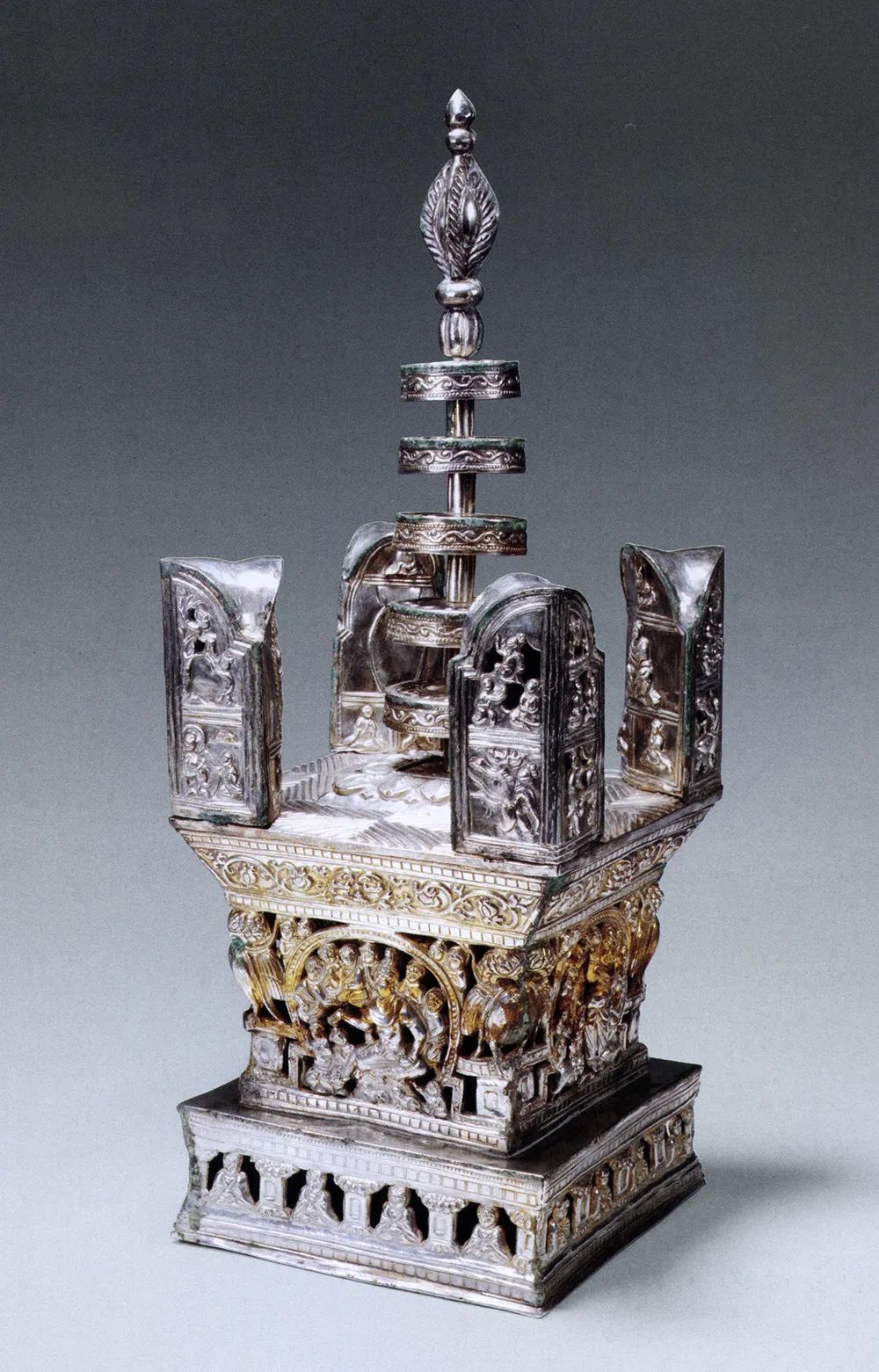
Fig. 15 The underground palace of Leifeng Pagoda is gilded with pure silver Ashoka Pagoda.

In this paper, the material, shape, size and image of Ashoka Tower are similar to the known gold-coated tower. Take the gold-plated pure silver Ashoka Tower built in the underground palace of Leifeng Tower in Qian Chu as an example (Figure 15). The tower has a square body, four mountain flower banana leaves at the four corners of the tower, a neutral brake and a five-phase wheel. The tower is carved with images on all sides, and all the characters are indeed "salty in face, hands and feet." Although the content of the image is not "images of various buddhas, bodhisattvas, King Kong, saints and monks" as mentioned in Fa Yuan Zhu Lin, it seems too much to say that Qian Chu’s golden pagoda is modeled on the legendary Ashoka pagoda. More importantly, at the end of the article, it is said that the Ashoka Pagoda discovered by Liu Sahe was later enshrined in the "Big Wooden Pagoda", and the tower was called the Qixian Pagoda. There is also a record about the tower in the Daoxuan "Guang Hong Ming Ji", also known as Ashoka Tower, which was finally supported in the "wooden tower". For Qian Chu, who imitates Ashoka, it seems that he intends to imitate the records in the literature, and chooses the wooden pavilion tower in the Southern and Northern Dynasties as the final hiding place for casting Ashoka Tower, and at the same time replaces the wood material with masonry, so as to make the pagoda permanent. This issue will be discussed later.

4.2 Underground Palace and Tiangong

At the end of wuyue, the construction of stupa was closely related to the collection of Ashoka Pagoda and Baodi seal sutra. As for their arrangement in the pagoda, the literature did not mention it, but the unearthed situation provided the answer. According to Li Yuxin’s research, the Ashoka Tower built in Qian Chu mostly comes from the underground palace of the stupa and the heavenly palace of the tower body (or tower top).
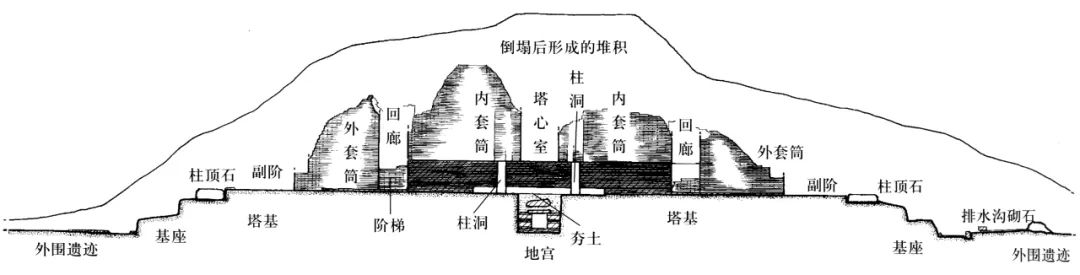
Fig. 16 Section of Leifeng Tower Underground Palace Foundation

The stupa underground palace appeared in the Eastern Wei Dynasty and the Northern Qi Dynasty. At the beginning, the underground palace was just a vertical hole pit for burying relic containers. After the early Tang Dynasty, the underground palace gradually changed into a horizontal hole, which was close to the underground tomb at the same time. In addition to relic containers, other offerings and utensils were found in the underground palace, which formed the ritual space under the tower. During the Five Dynasties, the system of the Tang Dynasty was basically inherited, and the underground palace with horizontal holes was mainly based on the tower foundation. Only in wuyue area, the underground palace with vertical holes before the Sui and Tang Dynasties was restored, and the most famous underground palace was Leifeng Tower. The underground palace is a flat square single room (Figure 16), which is located directly below the tower’s ventricle, and its four walls and bottom are made of bricks. The inner wall is 0.6 meters long and 0.72 meters deep, and there are buried offerings, including the above-mentioned gold-plated pure silver Ashoka Tower (Figure 15). After installation, the entrance of the underground palace is sealed with slate. The overall practice of the underground palace is similar to that of the early vertical-point underground palace in shape and concept. After the Five Dynasties, wuyue extended the practice of worshipping Ashoka Tower with Taki Underground Palace, the most typical of which is Jinhua Ten Thousand Buddha Pagoda, which is also a flat square underground cave with 11 copper pagodas and 3 iron towers.

Tiangong appeared late, and there was no clear literature record before the Five Dynasties. So far, there are only 2 ~ 3 cases of suspected Tiangong. Therefore, before the Five Dynasties, it was customary for the relics to be buried in the underground palace in Taki, but the tower body did not have this function. It was more to place Buddha statues or offer Buddhist scriptures as objects of worship and worship around the tower. In the Five Dynasties, it became a common practice to construct the Tiangong in the center of the pagoda as a hiding space, such as Yunyan Temple Pagoda and Leifeng Pagoda in wuyue, so that examples of the Tiangong can be seen in pagodas all over the country. The construction of the inner space of the stupa is also different from the past, and a new religious space in the pagoda is constructed with the vertical central axis formed by the underground palace, the heavenly palace and the pagoda. The double-sleeve structure of the wuyue Brick and Stone Pagoda discussed above is the architectural framework that supports this religious space. From the examples, the appearance of the Heavenly Palace in wuyue Pagoda was earlier than that in Liao Dynasty, Northern Song Dynasty, Dali or Xixia Pagoda. Therefore, in the process of redefining the religious space inside the Pagoda in the late Tang Dynasty and the Five Dynasties, wuyue Pagoda played a key role.

4.3 "Retro" of wuyue’s Late Pagodas

At the end of wuyue, Qian Chu spared no effort to revitalize Buddhism. On the one hand, it copied Ashoka’s practice as a blueprint, developed the latest construction technology, block printing and casting technology, and built a large number of brick and stone pagodas in Wuyue State to collect treasures, seals and Ashoka Pagoda, thus achieving the goal of protecting the country by unprecedented means. On the other hand, Qian Chu consciously returned to the early wooden pagoda form before Sui and Tang Dynasties, which was reflected in the emphasis on the vertical center of the pagoda and the practice of vertical cave underground palace. From this point of view, the fact that artisans in wuyue took great pains to build wooden pavilions with bricks and stones should also be related to Qian Chu’s tendency to seek "retro". As far as stupa architecture is concerned, the use of masonry building materials can be said to be the key factor that determines the development of wuyue stupa, and also the key factor that should be paid attention to when analyzing the space of wuyue stupa.

5. Religious space of Zhakou White Pagoda

As mentioned above, the innovation of wuyue brick stupa and the new concept of religious space brought by it are all reflected in the increasingly complex style outside the pagoda and the vertical center inside the pagoda. However, how to bring it into the Buddhist context and understand the relationship and significance of its internal and external space, there is no Buddhist literature or inscriptions on stupa temples to follow. Focusing on the importance of the masonry material of wuyue stupa, the author thinks that the small-scale Zhakou Baita, though a solid stone pagoda, can be regarded as a representative of exploring and reading the religious space in wuyue stupa, and it can be regarded as a "miniature model" of wuyue stupa regardless of the material or scale.

5.1 Special scale

As discussed at the beginning of the article, the scale of the White Pagoda at Zhakou is confusing, but what is certain is that the special scale of the White Pagoda at Zhakou is intentional.
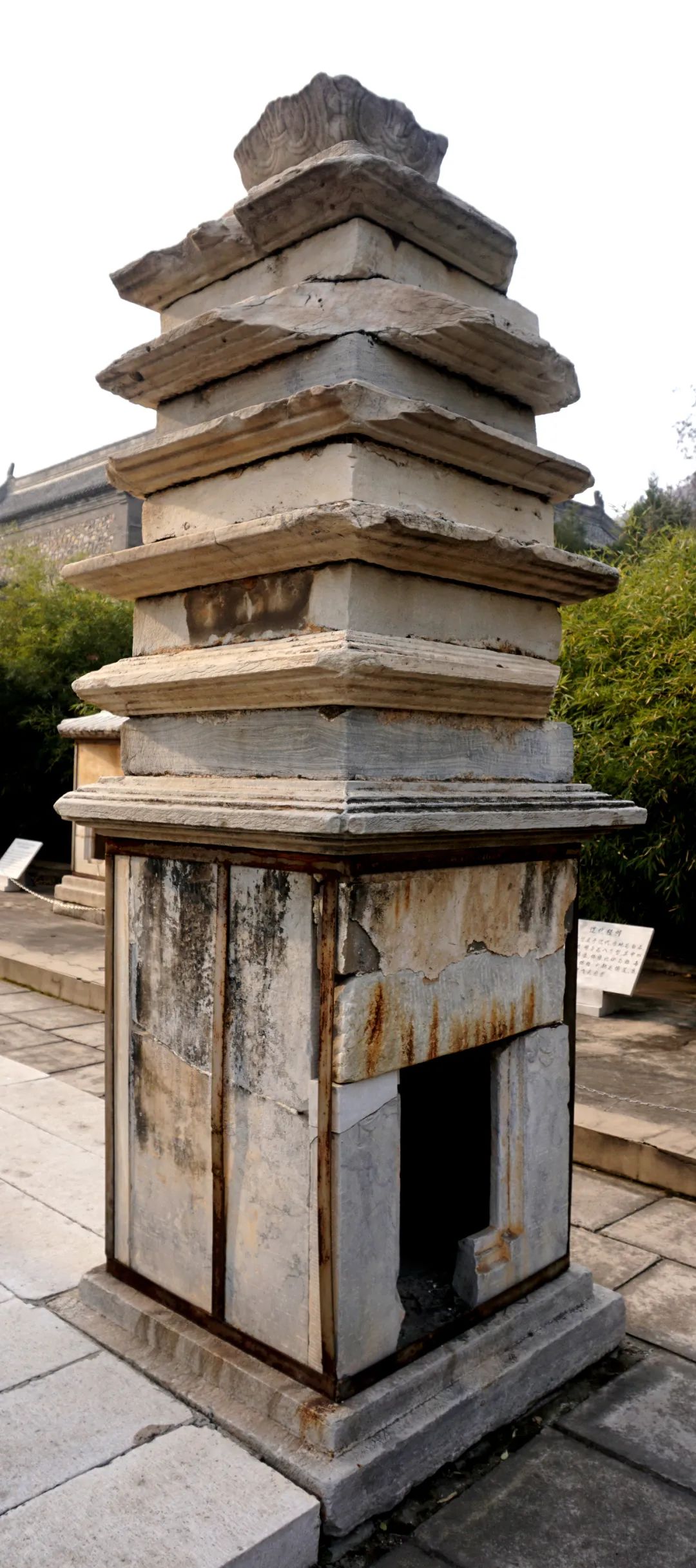
Fig. 17 Jing Yun Ernian (711) Tower of Fangshan Yunju Temple.

Buddhism in China has a long tradition of building small pagodas, and a number of small stone pagodas with dense eaves, which were popular from the late early Tang Dynasty to the prosperous Tang Dynasty, have the same special scale for reference. These stone pagodas are composed of pedestal, tower body, tower eaves and tower brakes, which can reach more than 7 meters in height, and usually appear in pairs or groups. For example, at the beginning of the 8th century, four small towers were built at the four corners of the North Tower of Yunju Temple in Fangshan (built in 711, 712, 722 and 727 respectively), with a total height of 3.52 ~ 3.7 meters (Figure 17). These stone pagodas are larger in scale than the common small-scale support pagodas and smaller than the normal pagodas. Interestingly, the small stone pagoda has an internal space for worshipping Buddha (Figure 18), but the height of the pagoda door is generally less than 1 meter, so the worshippers can’t enter it, but they can simulate and imagine the actual behavior of worshipping Buddha in the pagoda while spying on it, so as to achieve the purpose of offering support and praying. These pagodas use their special scales to provide viewers with a specific and subtle way of worshipping Buddha, which is also an annotation of the actual worship of pagodas. Similarly, the relatively small-scale, solid, non-boarding function but faithfully expressing the form of brick tower can also be interpreted in the same way. At the same time, just like the stone pagoda with dense eaves in the Tang Dynasty, the white pagoda at Zhakou also carved Buddhist images, with higher complexity and richer meaning. Therefore, in addition to the architectural form and wood-like details of the stone pagoda, we can understand the religious significance of the white pagoda at Zhakou more deeply and comprehensively by examining the relationship between the pagoda and the image.
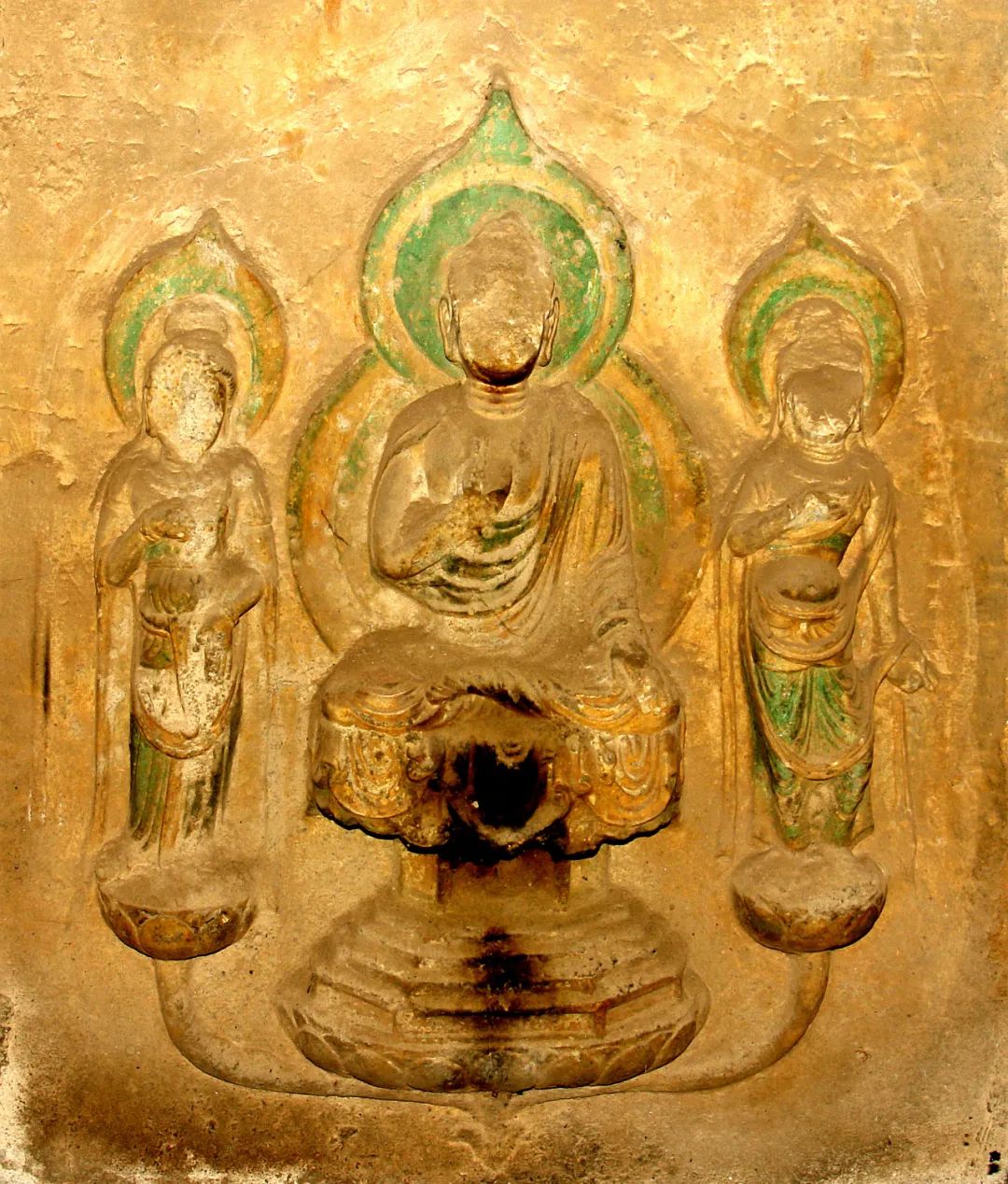
Fig. 18 Statue in the Tower of Yunju Temple in Fangshan (711) in the second year of Jing Yun.

5.2 Architecture and Image Program
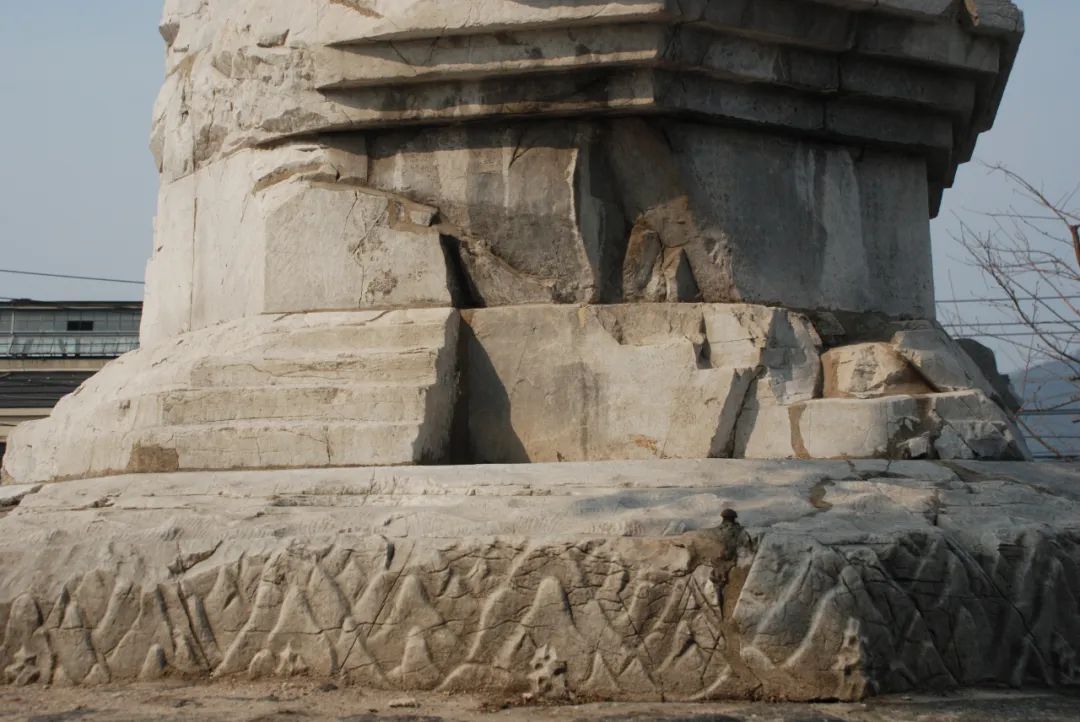
Fig. 19 The pattern of "Eight Seas in jiusan" carved on the soil lining of Baita Gate.
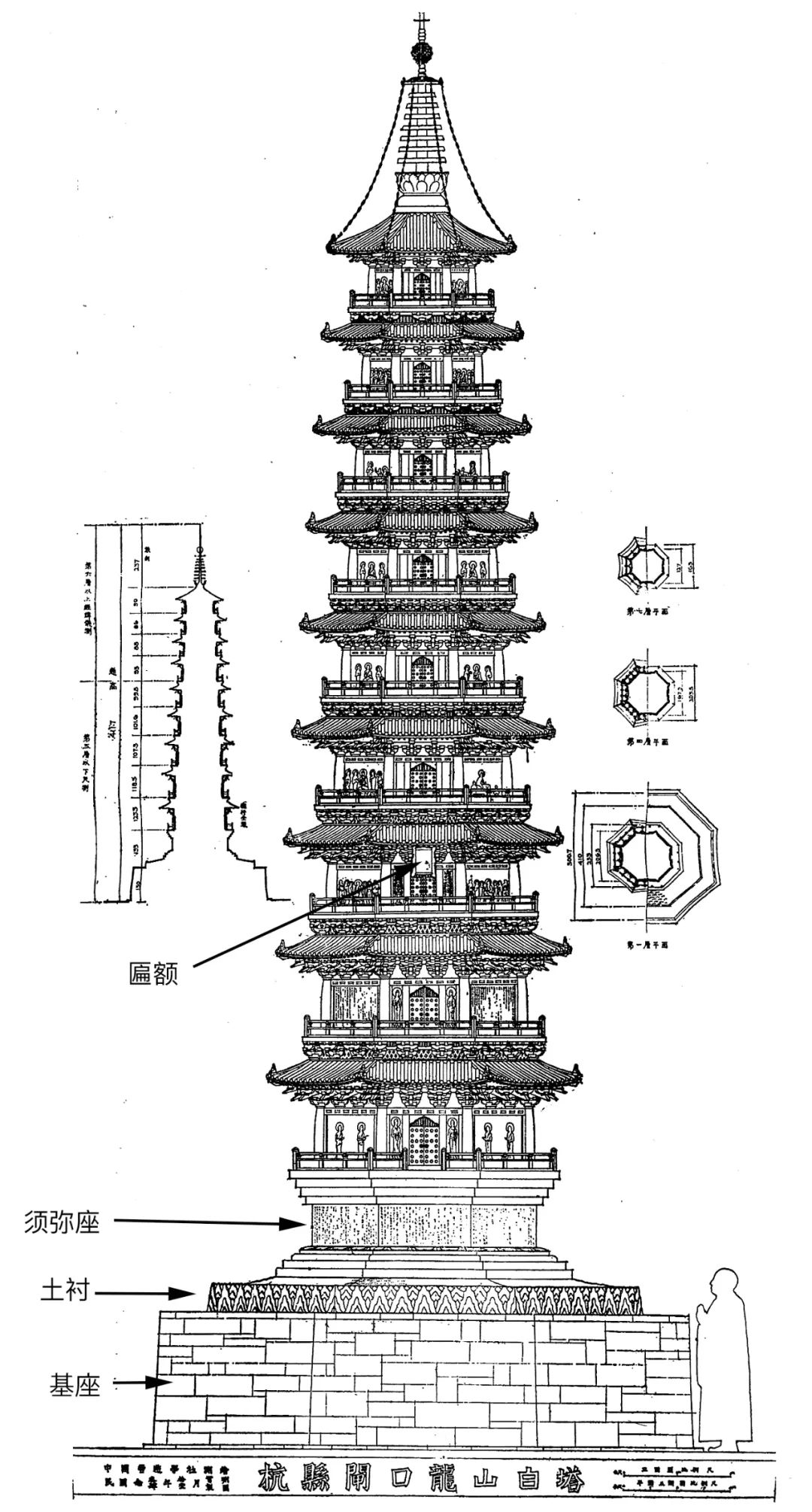
 

Fig. 20 elevation line diagram of white tower at sluice gate
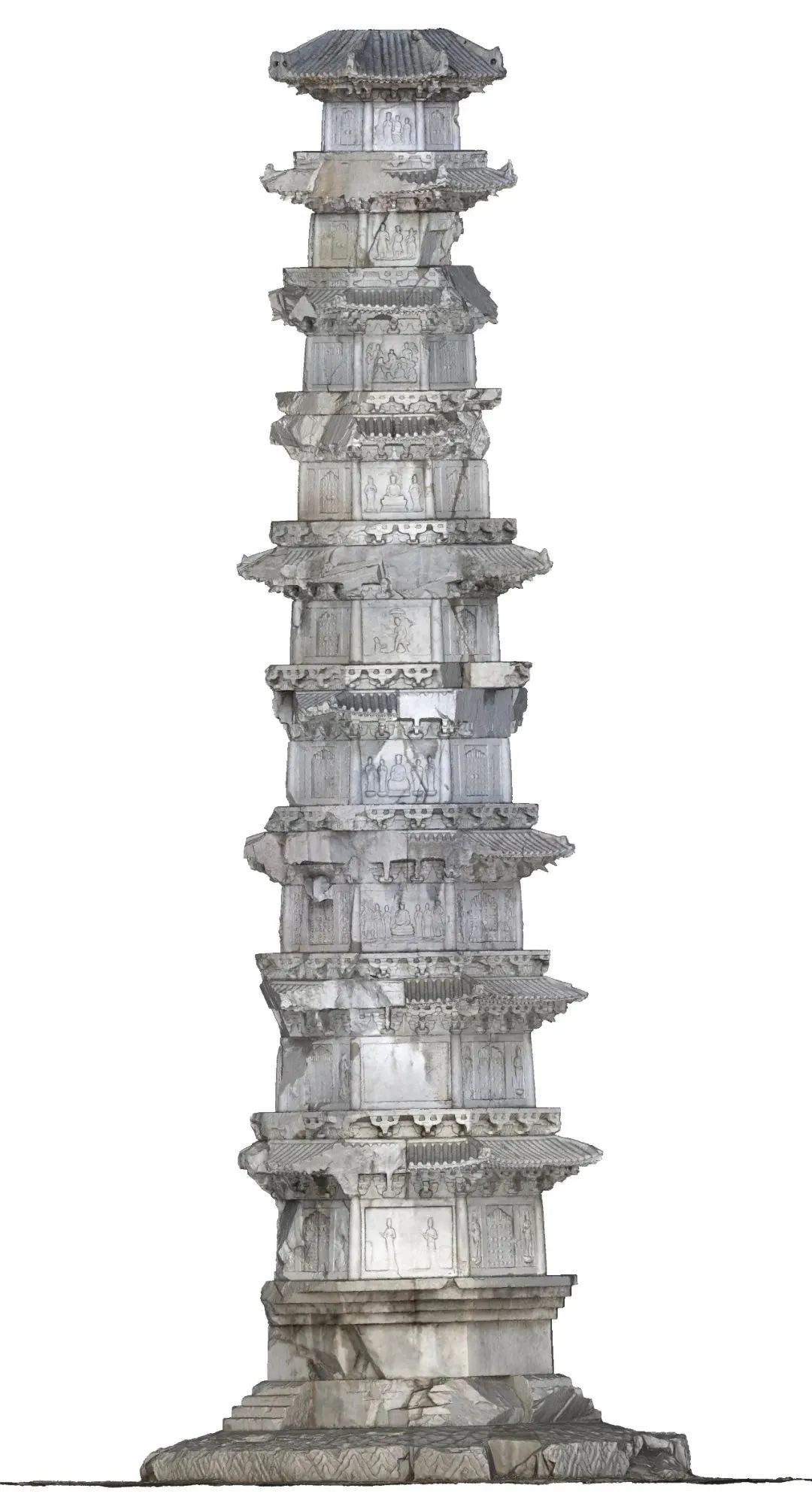
 

Fig. 21 Southeast of 3D scanning model of sluice white tower

The abutment of Zhakou White Pagoda consists of a tall plain base (1.7 ~ 1.8m) and a soil lining on it. The soil lining is carved with the pattern of "Eight Seas in jiusan" (Figure 19), above which is the Sumeru Tower, and further up is the tower body, which is about 12.48m high. There are square columns on the four fronts of each floor of the tower to divide the wall into three rooms, with carved doors in the middle and carved Buddhist themes on the other four corners for decoration (Figure 20 and Figure 21).
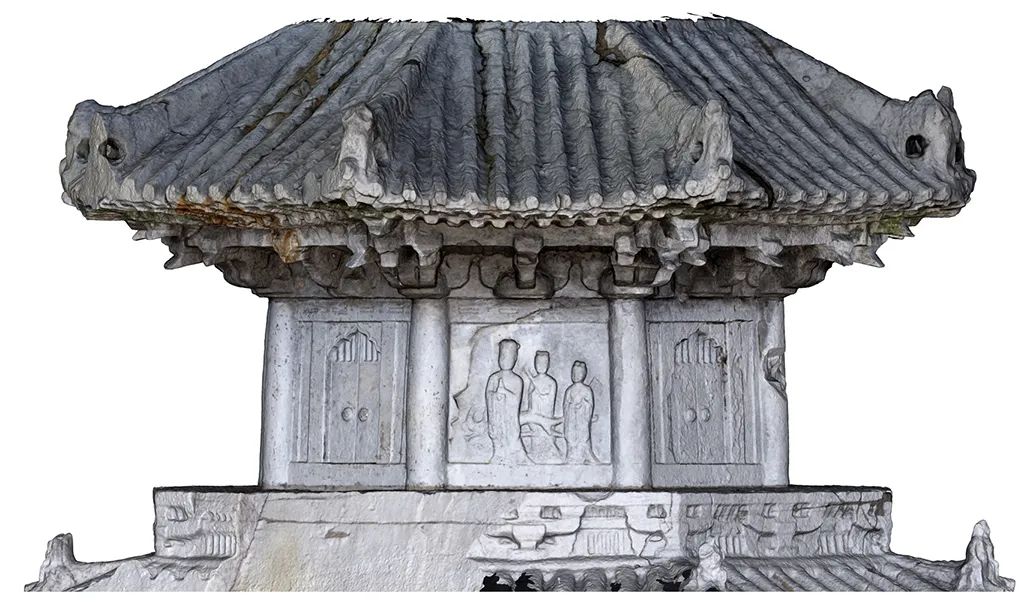
Fig. 22 "Dragon King Ritual to Buddha" in the southeast of the ninth floor of the White Pagoda at Zhakou.

There are two standing bodhisattvas carved on every corner of the first floor, either with their hands folded, or holding incense burners or holding Buddhist banners, all facing west, and the eight bodhisattvas all around seem to go around in a continuous space. On the four corners of the second floor, scriptures are engraved from right to left, and the contents are all Darani mantras. Therefore, although the images and scriptures on the bottom two corners need to skip four fronts when watching, they will guide the viewer to bypass the tower column clockwise because of their inherent continuity. This bypass viewing mode also appears on the top two floors. The four corners of the ninth floor are engraved with three figures facing west accompanied by a dragon, with the front figure wearing a crown and holding a water board, followed by two attendants holding things in their hands. Some scholars call it the "Dragon King’s Buddha Ceremony" (Figure 22), and the four groups of Buddha Ceremony can be regarded as walking around the tower in a continuous space. The four corners of the eighth floor are engraved with the four heavenly kings and their attachments, and they also travel by clouds to the west, which can be regarded as walking around the tower in a continuous space. These four floors, which echo from top to bottom, imply the dynamic and the direction around the tower, showing that the image on the white tower at the gate has been specially designed.
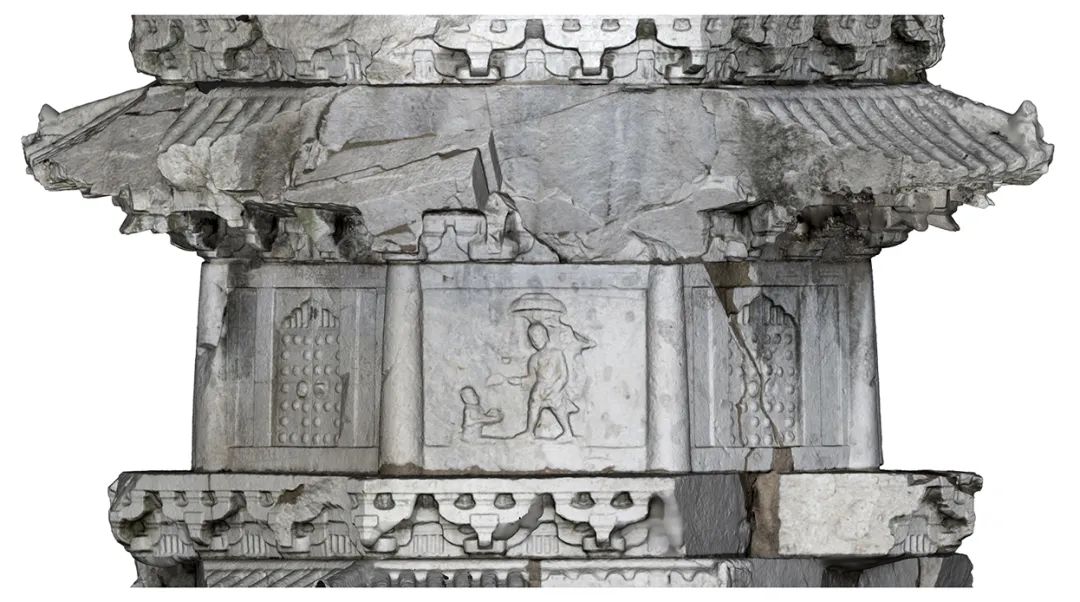
Fig. 23 "Walking Monk Image" in the southeast of the fifth floor of Zhakou Baita.

The middle five layers are different from the above four layers. Different from the dynamic images in the upper and lower layers, the Buddhist figures in the middle five layers all face the viewer, and most of them have no obvious direction of action. There are four arhats carved on every corner of the seventh floor, with different postures, but the composition is stable. There are sixteen arhats in the four shops, which reflects the popularity of the belief in arhats in Wu Yueguo. On each corner of the sixth floor, there is a bodhisattva with two threats. Some of the main bodhisattvas hold objects and some have their hands sealed. The details provided by the present situation are difficult to identify the main bodhisattva. The southwest, northwest and northeast corners of the fifth floor are all three statues of bodhisattvas, whose identities are unknown, but the "walking monk image" appears in the southeast (Figure 23). The monk shouldered the warp basket with an umbrella cover, facing the west, holding the dust and waving it at the half-length boy in front. Further down to about 6 ~ 7 meters from the ground, it is the most important part of the fourth and third floors-the whole tower image, which is still in the sight of the ground.
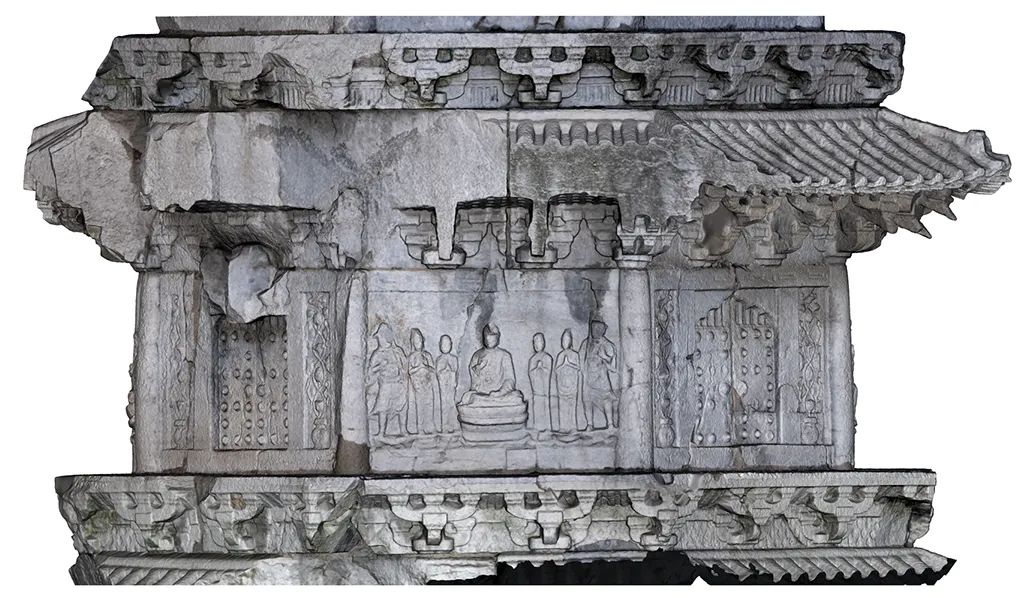
Fig. 24 "Seven Statues of Sakyamuni" in the southeast of the third floor of Zhakou Baita.

On the third floor, seven statues are carved on each corner, which are combined into one Buddha, two disciples, two bodhisattvas and two heavenly kings. According to the handprints and objects of the main statue, it can be identified that the main statue in the northwest is the pharmacist Buddha, the Maitreya Buddha in the northeast, the Amitabha Buddha in the southwest and the Sakyamuni Buddha in the southeast (Figure 24). This is the first time that the image of Buddha has appeared in the White Pagoda. The fourth floor is another layout mode. Five statues of one Buddha, two disciples and two bodhisattvas are carved on both sides of the southeast and northwest, and five statues of bodhisattvas are carved on the clouds in the southwest and northeast. In the northeast, Pu Xian rides an elephant to the west, while in the southwest, Manjusri rides a lion to the east. If the east and south sides are not counted, the three corners connected with them just form a combination of one Buddha and two threats to serve the Bodhisattva, mainly in the southeast, supplemented by the other two sides (Figure 25). Therefore, unlike the arrangement of stone pagodas or "going around to the west" or the combination of individual Buddha statues, the image of the fourth floor needs the viewer to cross the different faces of the stone pagodas to get the whole picture.
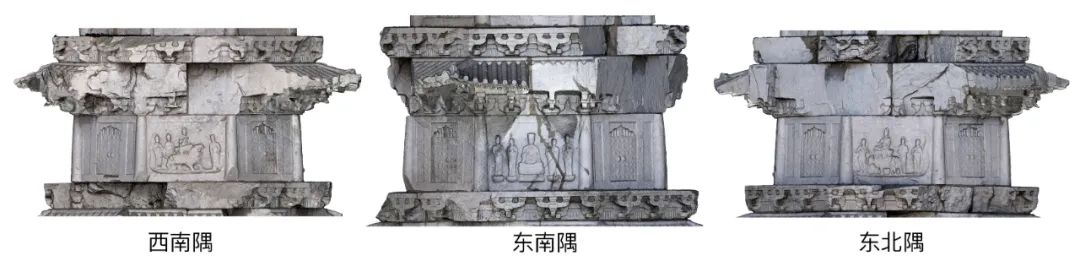
A) Manjusri rides a lion in the southwest corner b) Pilu Zenafo in the southeast corner c) Pu Xian rides an elephant in the northeast corner.

Fig. 25 Image of the fourth floor of Gate White Pagoda

The existing situation of Zhakou White Pagoda restricts the identification of all Buddha statues. However, from the first floor around which bodhisattvas are supported, the third and fourth floors where buddhas are the mainstay, the fifth and sixth floors where bodhisattvas are the mainstay, the sixteen arhats on the seventh floor, the four heavenly kings on the eighth floor, and the dragon king who worships buddhas on the top floor, it can be seen that the images of Zhakou White Pagoda are all internally related through orderly design. On the other hand, from the vertical relationship between the images, the main Buddha of the third floor, the main Buddha of the fourth floor and the walking monk of the fifth floor are all in the southeast, so it should be reasonable to regard the "southeast" as the "front" of the overall image combination. At the same time, the waist of Sumeru is engraved with the words "Darani at the top of the Buddha", which also starts from the "Ode to Begging" in the southeast, and the last spell ends in the east. The horizontal and vertical images of the four corners are closely related, but the architectural details of the four fronts make it inconvenient to watch the images, which makes people wonder about the relationship between the images on the white tower at the gate and the buildings. If the small-scale White Pagoda at Zhakou is regarded as the "model" of the developing wuyue Pagoda in this period, solving this problem will be helpful to understand the wuyue Pagoda.
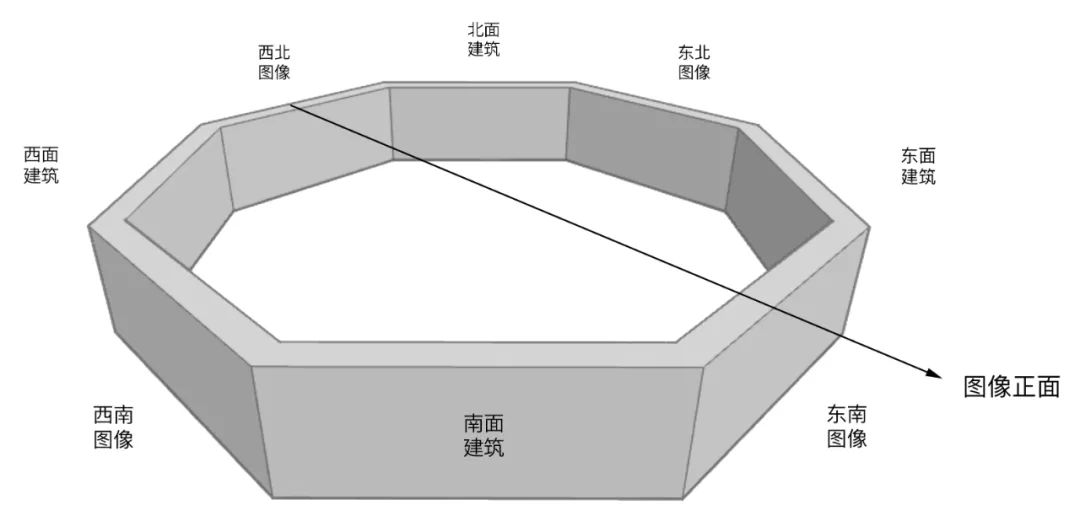
Fig. 26 Relationship between Gate White Pagoda Building and Image

In the restoration diagram of Liang Sicheng’s White Pagoda (Figure 20), the plaque was placed on the upper part of the heart room on the "south" of the third floor. In Gao Nianhua’s investigation report, it was also considered that the stone protruding there should have been the place to support the stone plaque. That is to say, the east, west, south and north are mainly architectural details, with the south as the front; The other four corners, which are dominated by images, take the southeast as the front (Figure 26). But what is the intention of having two "fronts" in a stupa? Is the special scale and image arrangement of the stone pagoda with dense eaves in the Tang Dynasty, which was discussed before, aimed at providing the viewer with a concrete and subtle way to worship Buddha, or is it an annotation to the worship of the actual wuyue stupa?
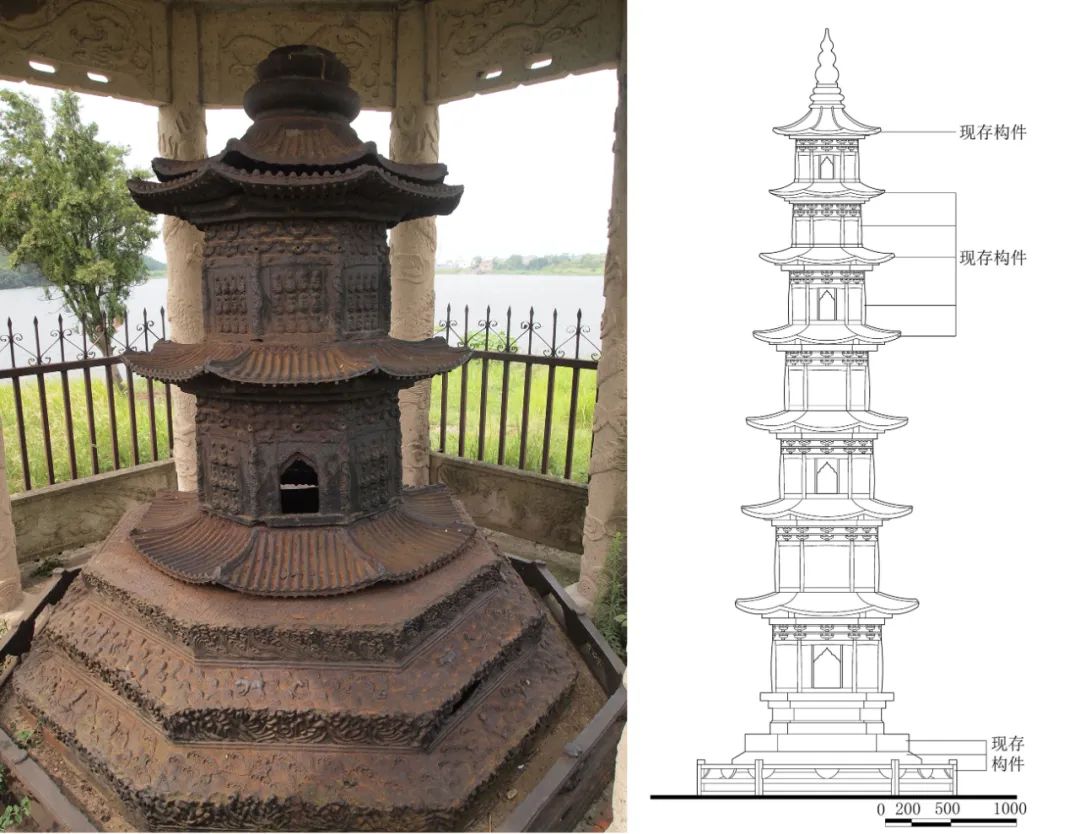
A) status quo a) restore the line drawing

Fig. 27 East Tower of Shuanglin Temple in Yiwu, 952.
 

A) east tower
 

B) west tower

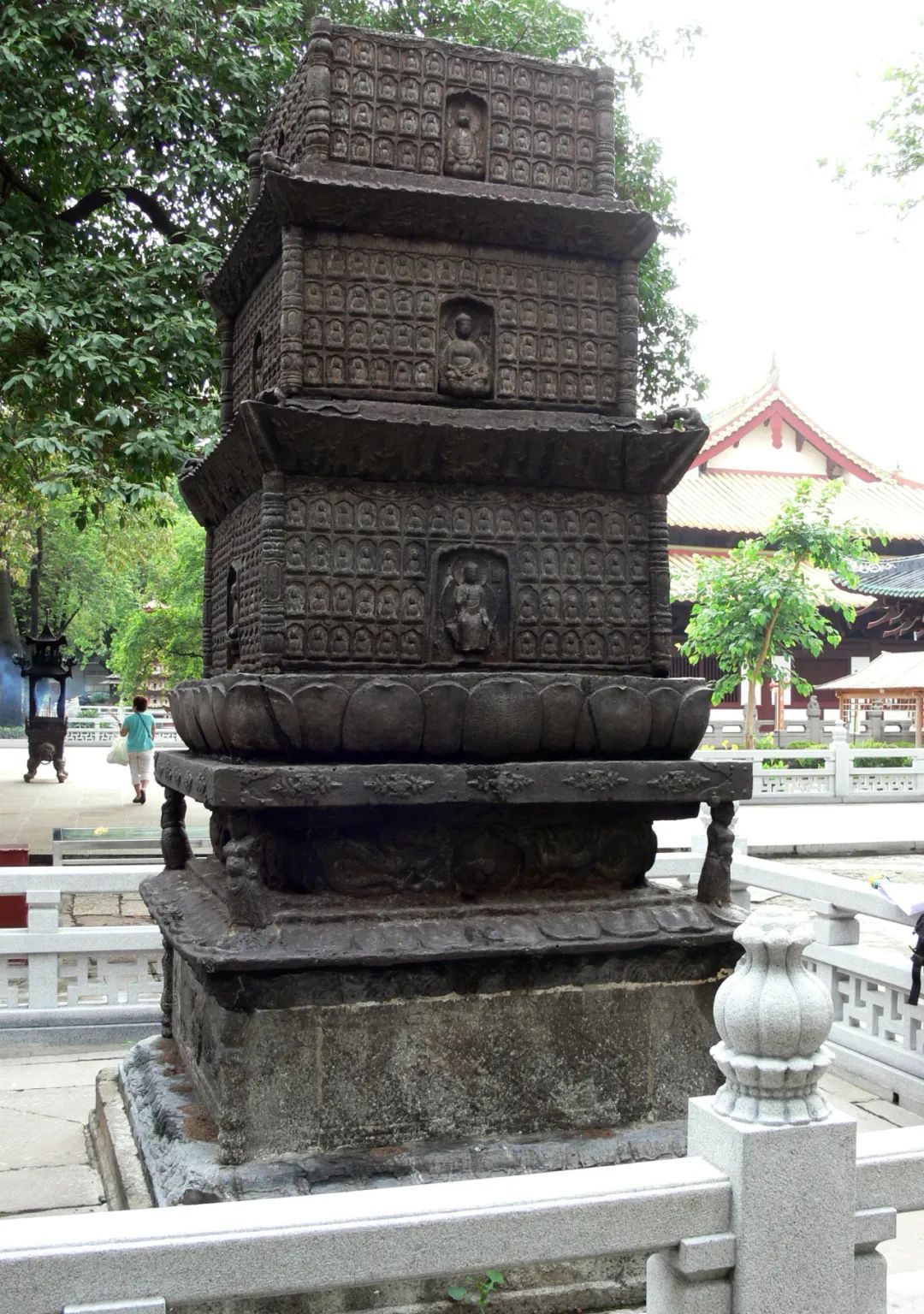
Fig. 28 East-West Tower of Guangxiao Temple in Guangzhou during the Southern Han Dynasty

Regarding the relationship between stupa architecture and images, another tower built at the same time as Zhakou White Pagoda can be used for reference. The East Tower of Shuanglin Temple in Yiwu was built in the second year of Guangxun in the last week (952). Now, only the bottom abutment and two-story tower body are left. After restoration, it should be a pavilion-like tower with eight sides and seven levels, with a total height of about 6 meters (Figure 27). The abutment is engraved with the pattern of "Eight Seas in jiusan", with four front doors on the first, third, fifth and seventh floors, and nine sitting buddhas on the four corners. On the second, fourth and sixth floors, all sides are sitting buddhas, with 12 statues on each side, and there are no architectural details. On the whole, there is no special image relationship between Buddha statues, and there is no complicated relationship between images and stupa buildings. Another example of the same period is the East-West Tower of Guangxiao Temple in Guangzhou in the Southern Han Dynasty, which is a seven-level pavilion tower with four sides. There is a large niche for a Buddha in the center of each floor, and the rest of the space is covered with small niches for sitting on the Buddha. Among them, the four buddhas on the first floor of the East Tower are Sakyamuni, Amitabha, Maitreya and Pharmacist (Figure 28), which are the same as the four buddhas on the third floor of Zhakou Baita. However, the Guangxiao Temple Tower is still the practice five generations ago, carving thousands of buddhas on the tower body, without pursuing the special relationship between images and buildings. It is no accident that the builders of Zhakou White Pagoda abandoned the above two common practices and presented a specific spatial layout of images and the particularity of the relationship between images and stupa buildings.
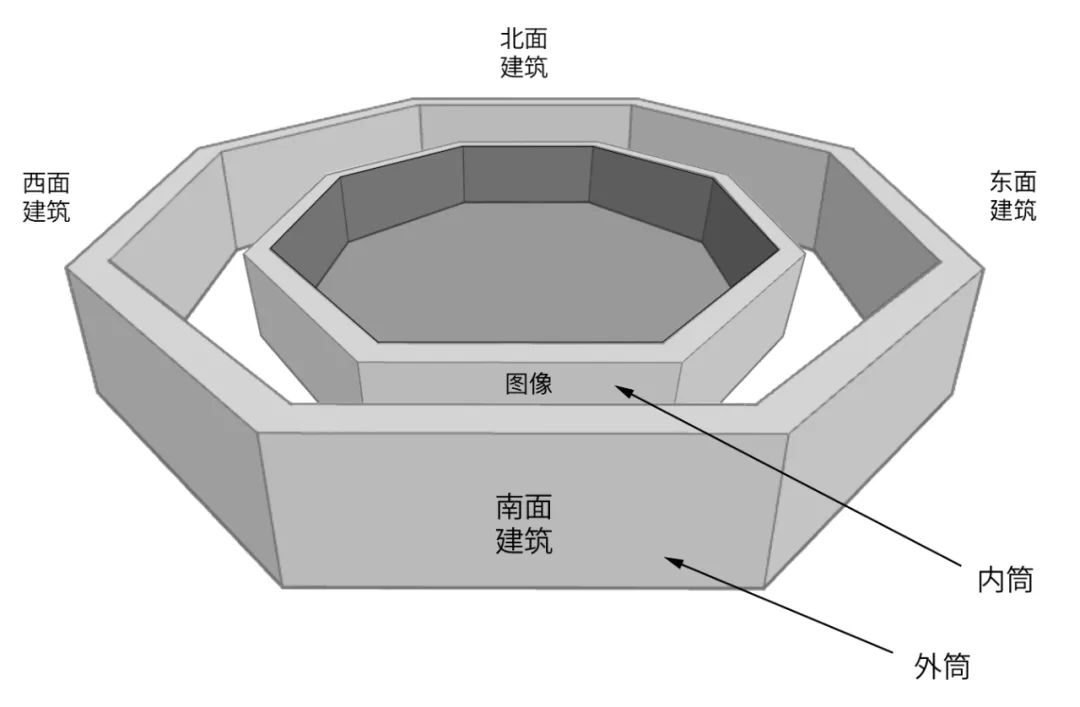
Fig. 29 Assumption diagram of the relationship between the white tower building at the gate and the image.

The author thinks that the carved image of the Gate White Pagoda and the building can be compared to the actual structural relationship between the inside and outside double sleeves, that is, four facades (buildings) are regarded as outside the tower and four corners (images) are inside the tower (Figure 29). These eight surfaces construct an imaginary space between the inside and outside of the pagoda, which provides the viewer with the possibility to imagine entering the stupa and then climbing the stairs from the bottom when he goes around the pagoda with the first floor to support the bodhisattva. First, climb the third floor to worship the four Buddhas one by one, then go up to the fourth floor, and go around the tower to the southeast to worship the Pilu Zhena Buddha and the three statues of Manjusri and Pu Xian, and then worship the Buddha step by step until the eighth and ninth floors, and follow the king and dragon king of the town stone pagoda to bypass the pagoda. The special size of the White Pagoda at Zhakou and the complicated but systematic images provide the possibility for the viewer to imagine it like this when going around the pagoda. Moreover, the accurate and meticulous performance of the imitation wood structure also enhances the realism of the detour to simulate the actual experience of circling the tower.

5.3 Virtual space
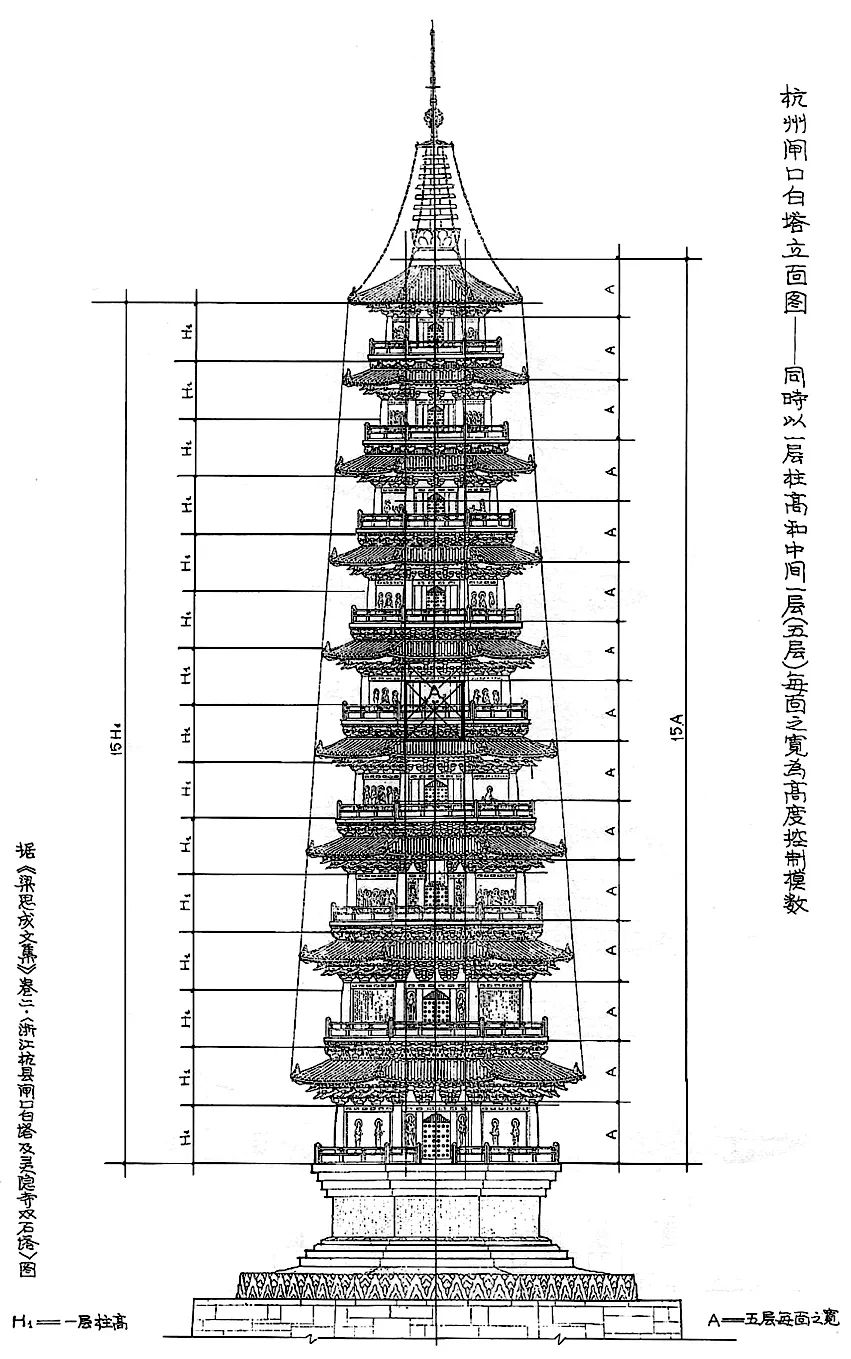
Fig. 30 Elevation of Gate White Pagoda

According to Liang Sicheng’s surveying and mapping, the total height of the Gate White Pagoda is 14.117 meters, and half of the total height is located on the fifth floor, that is, the middle layer of the stone pagoda. In addition, Fu Xinian also found that no matter the width of the fifth floor or the height of the first floor column is taken as the modulus for calculating the ratio of tower height, the center position of the tower also falls on the fifth floor (Figure 30). That is to say, the fifth floor is the most important floor in the whole tower in terms of architectural proportion and design modulus, which is different from the fourth floor where the most important image of Peluzenafo is located. However, from the overall image configuration, the "walking monk image" carved on the southeast side of the fifth floor (Figure 23) is indeed the most unique among the stone pagodas, and it has special meaning.
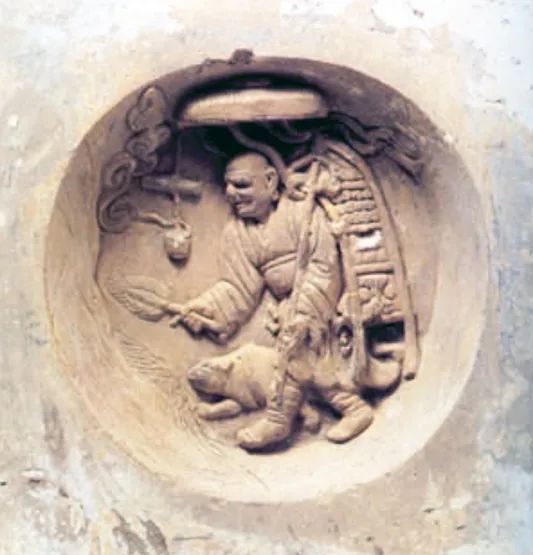
Figure 31 Statue of a Walking Monk in Kaifeng Fanta in Northern Song Dynasty
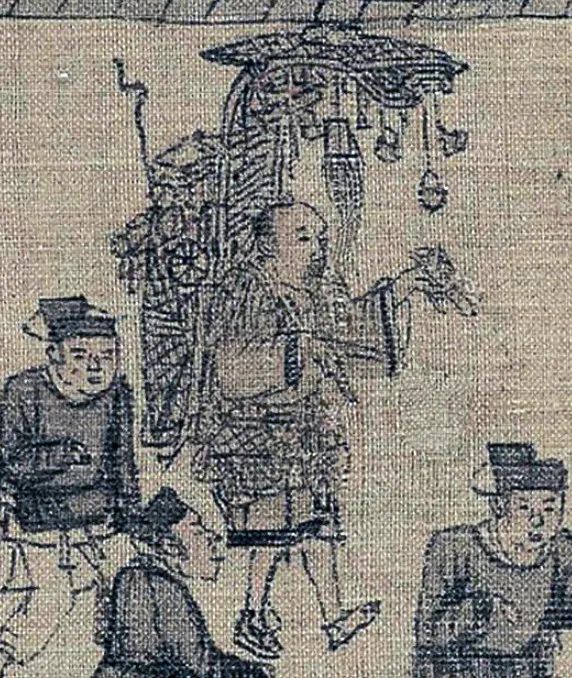
 

Fig. 32 Monks in Zhang Zeduan’s Riverside Scene at Qingming Festival in the Northern Song Dynasty.

The 10th century during the period of Wu Yue-guo was the period when the image of "Walking Monk" was popular, which had something to do with the active activities of seeking and spreading Buddhism at that time, and scholars had discussed it a lot. In particular, Xuanzang’s Buddhist scriptures have gradually become the prototype of a wandering monk, being deified, appearing in Buddhist images of specific dharma-seeking scenes, and can be seen in Dunhuang murals and materials unearthed in Tibetan scriptures caves. In fact, "Walking Monk", as a painting theme, had already appeared in the Tang Dynasty, and the "Famous Paintings of Past Dynasties" recorded the "Walking Monk Statue" painted by Wu Daozi in the Buddhist Temple of Changshou Temple in Tang Dynasty. In the Five Dynasties and the early years of the Northern Song Dynasty, the walking monk was also used as a motif alone. For example, the Kaifeng Pagoda in the Northern Song Dynasty had a statue of the walking monk as a support (Figure 31), and the name and year of the tower-building donor were engraved. On the other hand, Zhang Zeduan’s The Riverside Scene at Qingming Festival in the Northern Song Dynasty also depicts the image of a monk (Figure 32), which shows that monks who often travel to seek dharma at that time did not seek dharma, but the meaning of monks "walking" in the noisy market. The walking monk who appeared in the building center of Baita at Zhakou lacked the combination of relevant elements of seeking the scriptures and seeking the dharma, and regarded it as a simple image of support. Facing west, it is in a gesture of action. From the image combination and configuration of the whole tower, it looks more like a monk walking around the tower, which is consistent with the trend of other dynamic images on the White Tower. It seems that in the virtual imagination space of the White Tower at the gate, it can replace the viewers who can only walk around the tower on the ground, worship the Buddha statues layer by layer and go around.

6 the creation of three-dimensional religious space

After discussing the White Pagoda at Zhakou, we can understand how craftsmen conceived the tower structure and the spatial relationship between the inside and outside of the tower in the absence of a wooden pavilion tower as a prototype. Among them, the innovation of architectural technology is a necessary condition, and the White Pagoda at Zhakou, which was built in 957, made an important reference, or a "model", for the later construction of wuyue stupa.
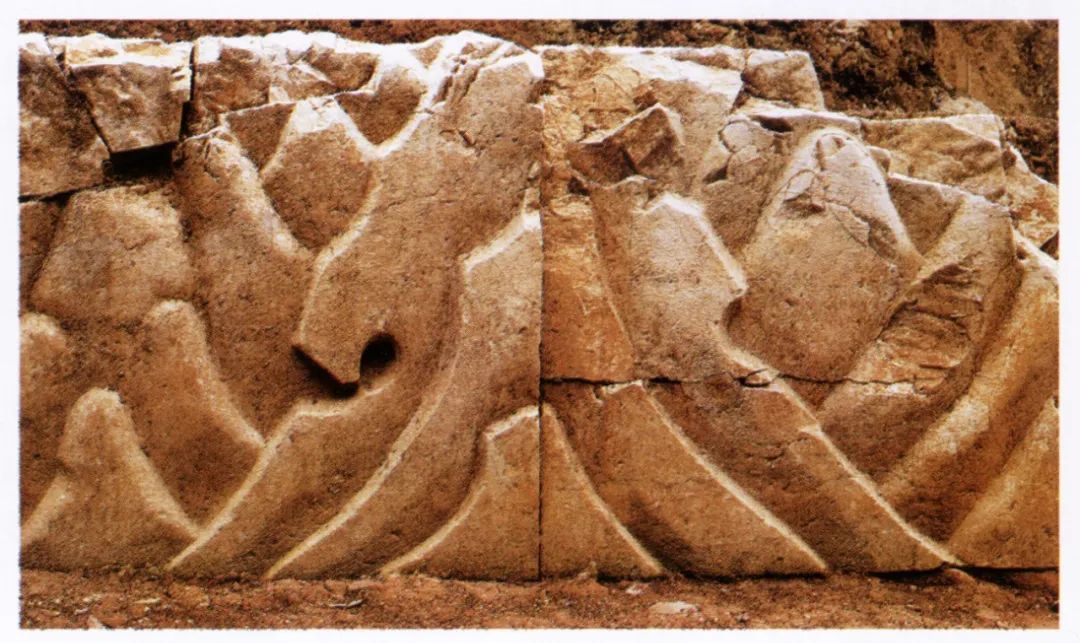
Fig. 33 "Eight Seas of jiusan" is carved on the base of Leifeng Tower.
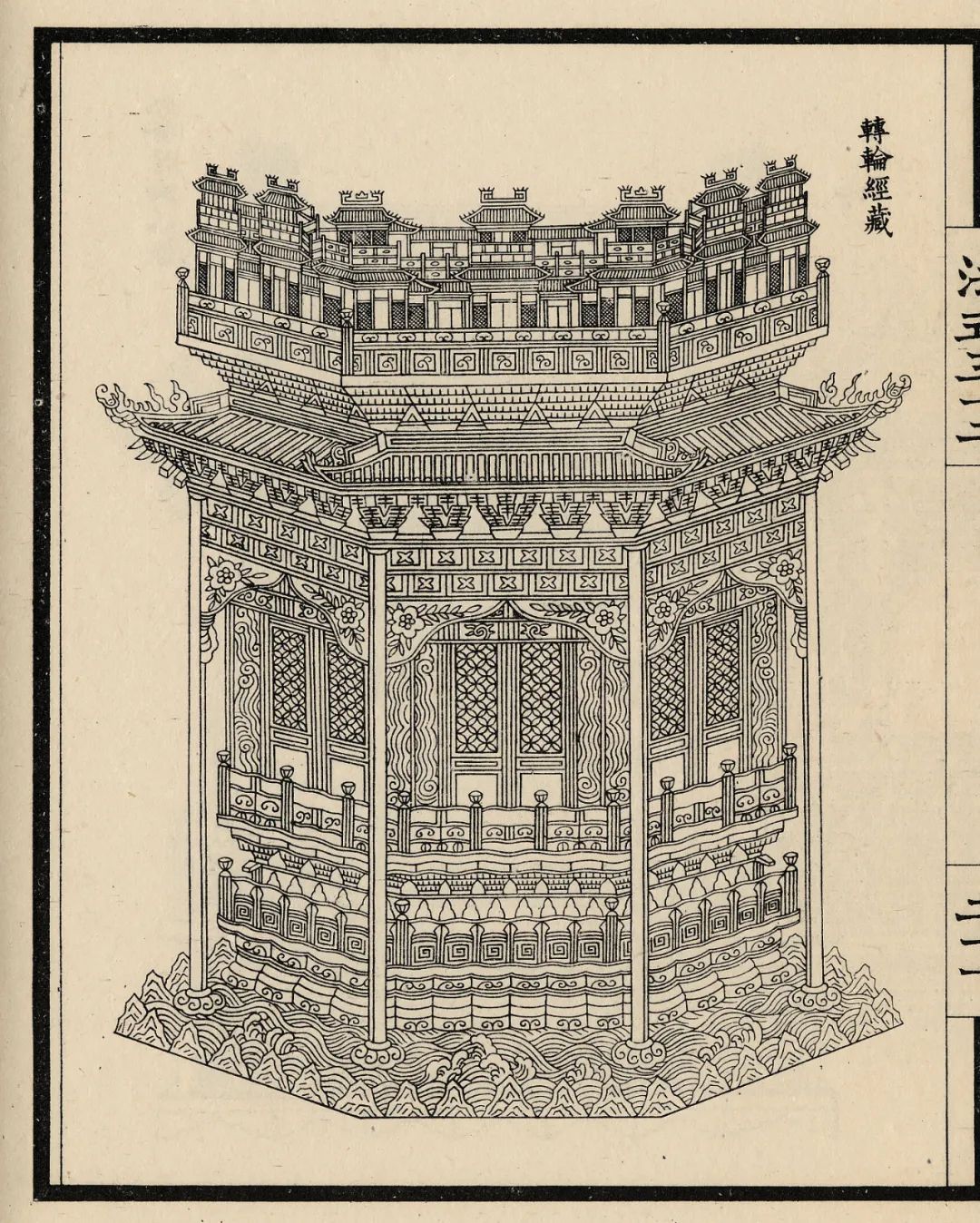
 

Fig. 34 "Building French Style" Runner Classic Tibetan Pattern

The collapsed Leifeng Pagoda provides the clearest and most reliable materials about the cultural relics hidden in the pagoda in wuyue. Leifeng Tower, built in 972, is a pavilion-like tower with octagonal five-level wooden eaves and brick body. During the excavation of the site in 2000-2001, a well-preserved tower foundation was revealed on the east side, which was shaped as a double stone sumeru, and the surface was carved with the decorative pattern of "Eight Seas in jiusan" (Figure 33). Carving "Eight Seas of jiusan" on the soil lining of the tower foundation is one of the characteristics of wuyue stupa, but the existing examples are mostly found in smaller towers such as stone pagodas or iron towers, rather than actual pagodas. In the northern song dynasty, Li Jie mentioned in the "stone making system" in "Building French Style" that "the earth lining … made a sudden treasure mountain on the outside and a pool on the surface". However, what is closer to the pattern of "Eight Seas in jiusan" seen in wuyue is the pattern of "Runwheel Sutra" in Volume 32 (Figure 34), which belongs to the category of Joinery Work. The book "Building French Style" was written at the end of the Northern Song Dynasty, which is not enough to represent the use of this kind of wavy pattern in wuyue. However, Leifeng Tower carved the surface of the double abutment into the pattern of "Eight Seas in jiusan", probably referring to the small-scale white pagoda at that time or the twin towers of Lingyin Temple in Hangzhou. Patterns can also be used as indirect evidence that the actual pagoda is based on the small pagoda.

As discussed earlier, the Leifeng Tower is a double-sleeve structure (Figure 11), and the underground palace is directly below the ventricle of the first floor tower. From the collapsed tower, a large number of cultural relics were also found, which confirmed that there was a heavenly palace in the heart of Leifeng Tower where offerings were hidden. In fact, there are three Ashoka Pagodas unearthed from Leifeng Pagoda. Apart from the complete Ashoka Pagodas with gilded pure silver in the underground palace, there are two in the Heavenly Palace, one made of pure silver and the other made of copper, which were all broken when unearthed. It is not known whether there are relics hidden inside. During the excavation, we also found a collection of scriptures brick, among which the Darani Sutra printed by Baoyu, the so-called "Leifeng Pagoda Collection of Scriptures" (Figure 14). According to the ruins of the collapse, the bricks of Tibetan scriptures are only built on the top floor of the tower. That is to say, the location of the tower center of Leifeng Pagoda, from the underground palace and the heavenly palace to the top floor of the supporting pagoda, constitutes the vertical center of the pagoda. In addition, according to the Darani Sutra of the Seal of Treasure, if the seal of treasure is included in the tower, the tower will become a tower made of seven treasures, which is equivalent to the whole body relic of the Tathagata of the third Buddha. If someone "surrounds this tower for a week, all kinds of sufferings will be relieved". The Leifeng Pagoda with the seal of the treasure is naturally used for detour. In addition to the secondary turns outside the pagoda and the double-sleeve space structure inside the pagoda, it also provides space for the supporters to enter the pagoda and detour around the pagoda center layer by layer, realizing the virtual reality that the White Pagoda at the gate can only be completed by the imagination of the viewer. As for how to climb the stairs in the tower, there is no textual research because of the collapse of Leifeng Tower. Fortunately, Yunyan Temple Pagoda still largely preserves the original space in the pagoda, which may answer questions.
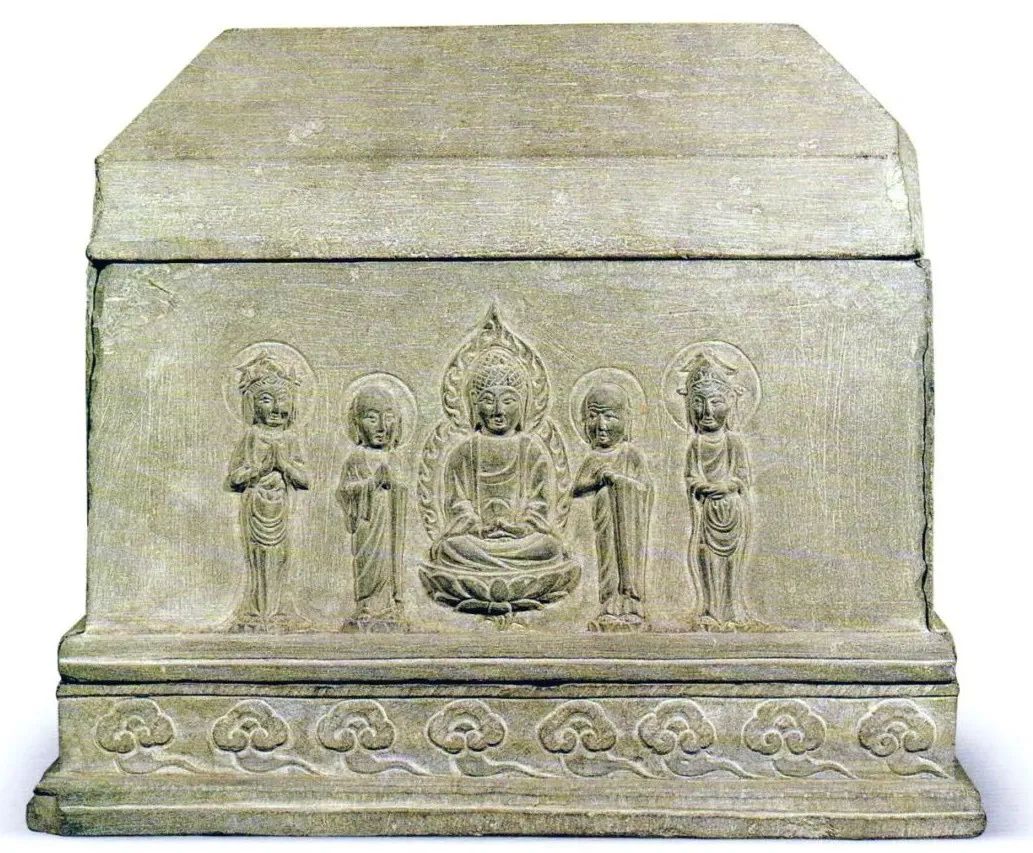
A) Five statues of Maitreya Buddha

Fig. 35. Stone Letter of Civil Classics Box from the Second Floor of Yunyan Temple Tower.
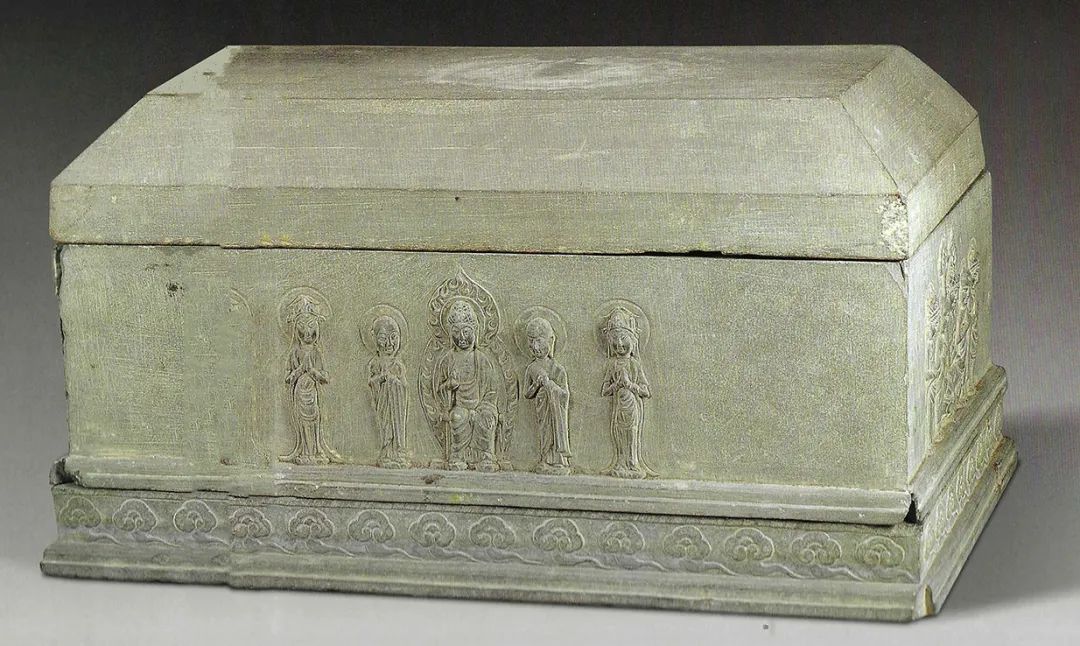
 

B) Five statues of Amitabha Buddha

Fig. 35. Stone Letter of Civil Classics Box from the Second Floor of Yunyan Temple Tower.

Yunyan Temple Pagoda was built in 961, only a few years later than Zhakou White Pagoda. It has seven floors inside, consisting of a tower ventricle and a cloister (Figure 7), and each floor has wooden stairs at the cloister for climbing. During the renovation in 1956, the Heavenly Palace, Asoka Tower, Buddha statue and various offerings were found at the top of the ventricles of the towers on the second, third and fourth floors. Among them, the second floor of the Temple of Heaven’s "nanmu Sutra Box" was found to have decayed Buddhist sutras. The wooden sutra box was originally placed in the stone letter, and five statues of one Buddha, two disciples and two bodhisattvas were embossed on each side of the stone letter (Figure 35). The main statues were Sakyamuni and Maitreya, while the pharmacist Buddha and Amitabha Buddha were separated before and after. The arrangement of the four statues was the same as that of the four buddhas in the four corners of the third floor of the White Pagoda at Zhakou. On the whole, the spatial relationship constructed by buildings and images in Yunyan Temple Pagoda is similar to that of Zhakou White Pagoda, which is also built outside and includes Buddha statues. When the providers enter the pagoda and walk around the pagoda along the cloister between the inner and outer sleeves of the pagoda, they are also offering worship to the Buddha statues, relics and offerings hidden in the Heavenly Palace.
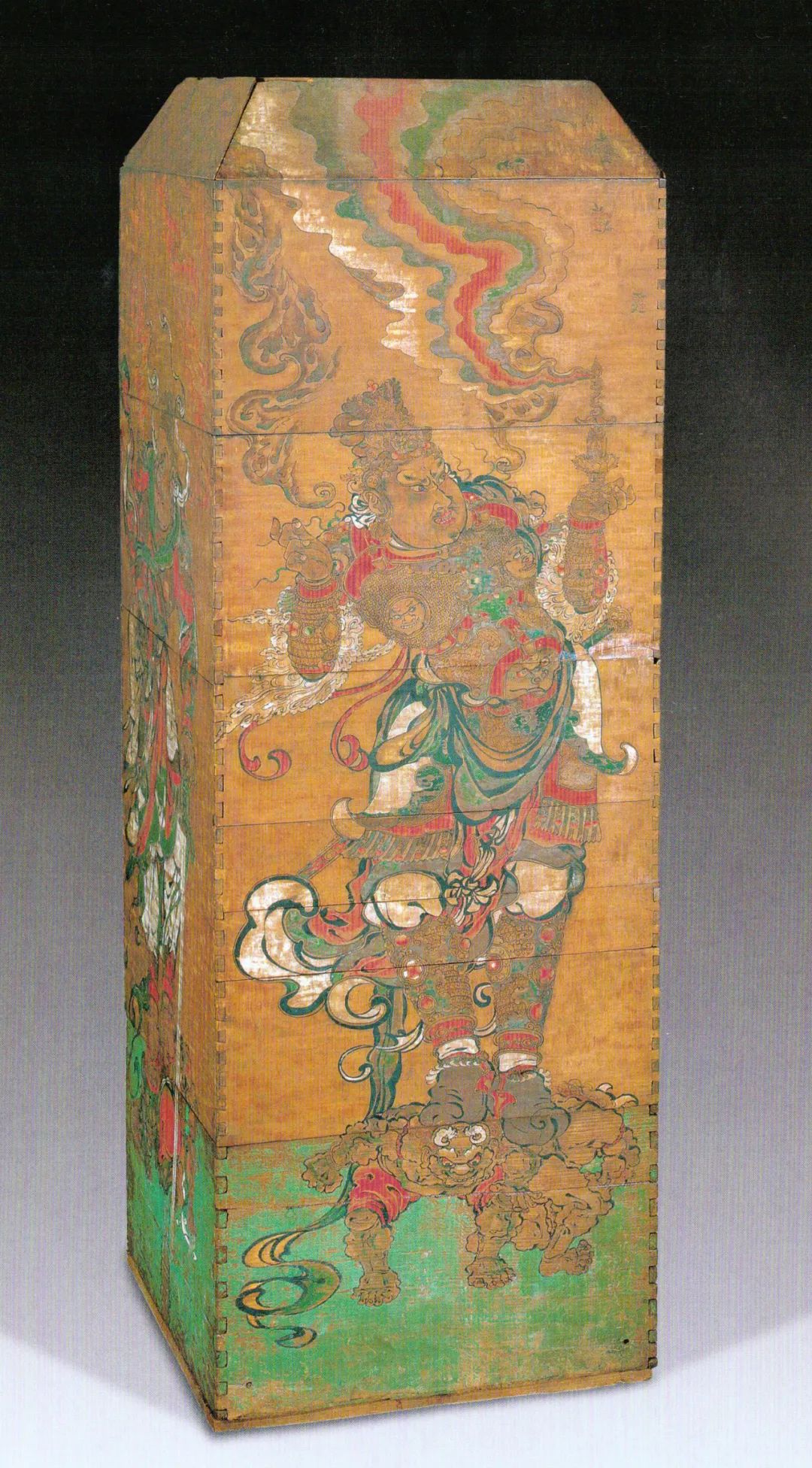
Fig. 36 One of the Four Heavenly Kings is painted on the wooden letter of the Tiangongbao Building on the third floor of the Ruiguang Tower.
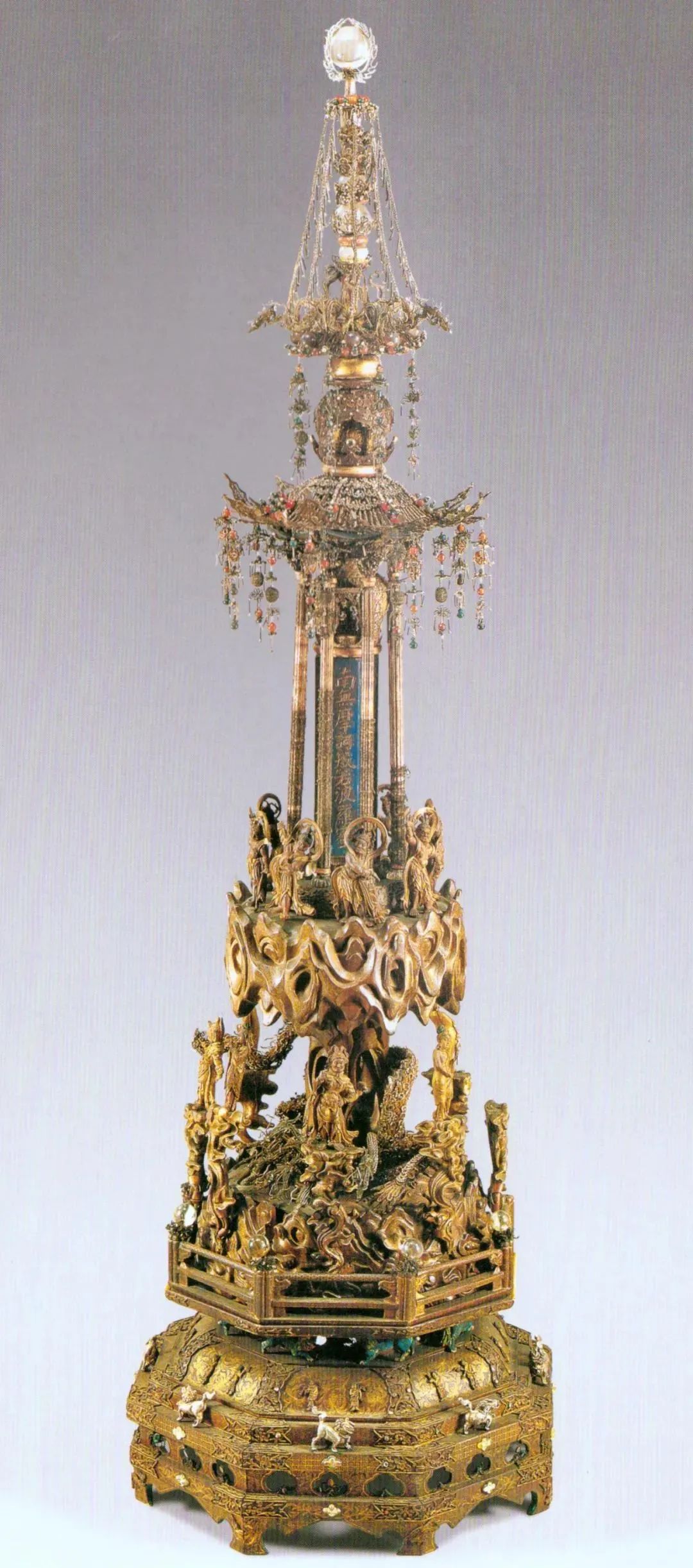
 

Fig. 37 The octagonal tower in the center of Pearl relic building in Tower Heart Tiangong on the third floor of Ruiguang Tower.

If the research object is extended to the Ruiguang Pagoda in the early Northern Song Dynasty, we can also observe the continuous development of the masonry pagodas in wuyue after entering the Song Dynasty. As we have seen before, Ruiguang Tower is a brick tower with eight sides and seven eaves. It was built in the first year of Jingdezhen in the Northern Song Dynasty (1004). During the two renovation projects in 1978 and 1980, the lost cultural relics were found in the third tower center and the second tower wall respectively. Among them, a rectangular heavenly palace was found in the center of the tower on the third floor. In addition to all kinds of gold and copper sitting buddhas, there is also a copper Ashoka Tower. At the same time, we also found a wooden letter of a treasure building with a height of 123 cm (Figure 36), with one king painted in colors on all sides, which reminds us of the four kings embossed on the four corners of the eighth floor of Zhakou White Pagoda. Inside the wooden letter, there is a pearl relic treasure building, and there is an octagonal scripture building in the center of the treasure building (Figure 37). The inside is hollow, with a gourd-shaped bottle and nine relics. There is also a folded Chinese and Sanskrit Darani Sutra Mantra.

The Ruiguang Tower also adopts a double-sleeve structure, but the inner tube tower center is solid, the lower five floors are cloister-shaped, and the top two floors are connected into one (Figure 13). There are wooden stairs for the upper and lower floors, which are similar to Yunyan Temple Pagoda in shape. Its spatial structure is the outer wall of the pagoda building, the cloister, the solid tower center, the Tiangong in the tower center, the Buddha statue hidden in the Tiangong, and the most central relic and mantra from outside to inside. Ruiguang Pagoda was built in the early 11th century, which seems to sum up the development of brick and stone pagodas in wuyue since Qian Chu took charge of state affairs and revitalized Buddhism. In addition to structural innovation, it also developed a spatial relationship that was orderly constructed by architecture, images and relics, providing a complete religious environment for worshippers to bypass worship. Interestingly, in the initial investigation report of the Ruiguang Tower in 1965, it was mentioned that a tunnel was found in the east outer wall of the first floor, in which many wooden figurines in the shape of monks were placed. The report only published photos of two of them (Figure 38), with heights of 29.5 cm and 38.5 cm respectively. Regarding these wooden figurines, the report describes them as follows: "These wooden figurines are arranged in two layers, with two wooden figurines lying side by side on each layer, and a pair of wooden figurines are longitudinally connected in turn against each other. The wooden figurines are connected with gypsum, which seems to be a continuous circle around the tower." If the report is correct, these wooden figurines hidden in the tower wall seem to be like pairs of offering bodhisattvas at the four corners of the first floor of the White Pagoda at Zhakou. Any believer, whether outside or inside the pagoda, will follow them around and then climb the stairs.
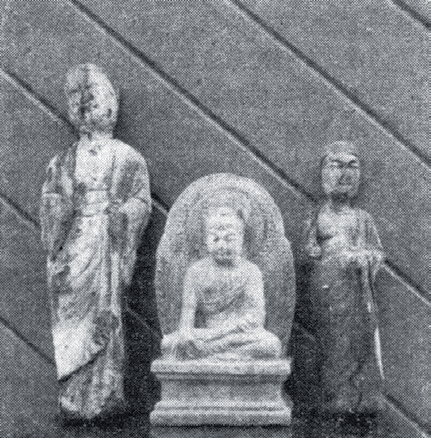
Fig. 38 Monk-shaped wooden figurines (left and right) found in the east wall of the bottom floor of Ruiguang Tower.

The religious space embodied in the Ruiguang Pagoda was indeed manifested in the virtual reality constructed by buildings and images in the Zhakou White Pagoda half a century ago. The Darani mantra on the second floor of the Zhakou White Pagoda can be regarded as the sacred center of the Pagoda. Around this center are the Buddha statues on each floor, which are guarded by the four great kings on the eighth floor. The images on the four corners and the buildings on the four fronts form a space around the Pagoda, just like the walking monk on the fifth floor, and the supporters follow the surrounding bodhisattva layer by layer. Perhaps, as Liang Sicheng said, Zhakou White Pagoda is a concrete and subtle model, which compresses the multi-level space of the masonry pagodas in wuyue at the same time from the inside out.

7 wuyue stupa: a new paradigm

In the above analysis, the White Pagoda at Zhakou is regarded as a model to interpret the masonry pagodas in wuyue, which is suspected of shooting arrows and drawing targets. However, judging from the construction time, Zhakou White Pagoda is indeed earlier than other wuyue masonry pagodas, especially the pagodas mainly analyzed in this paper are all in the central area of wuyue. In 1955, when Qian Chu began to fully promote Buddhism, including casting the Ashoka Pagoda and engraving the Darani Sutra, a new concept of stupa appeared in wuyue, which promoted new masonry technology and gave birth to the White Pagoda at Zhakou and the wuyue Pagoda with new features. Such a historical development is not impossible. More importantly, the material and scale of the white pagoda at Zhakou give the pagoda a new way of expression and induce different imagination spaces about it. However, in order to imagine the solid stone pagoda as a stupa with spatial hierarchy and internal and external relations, different visual methods are needed.

In the past, the study of stupa mostly distinguished architecture from other Buddhist elements (such as images and relics) as different research topics, as well as the White Pagoda at Zhakou. In particular, the accuracy of the details and proportions of the imitation wooden structure of Zhakou White Pagoda is considered as an important example to fill the history of wooden architecture in this period, but it ignores the scale reduction of stone pagodas and the significance of Buddhist images.

7.1 Buddhist visual culture of masonry materials
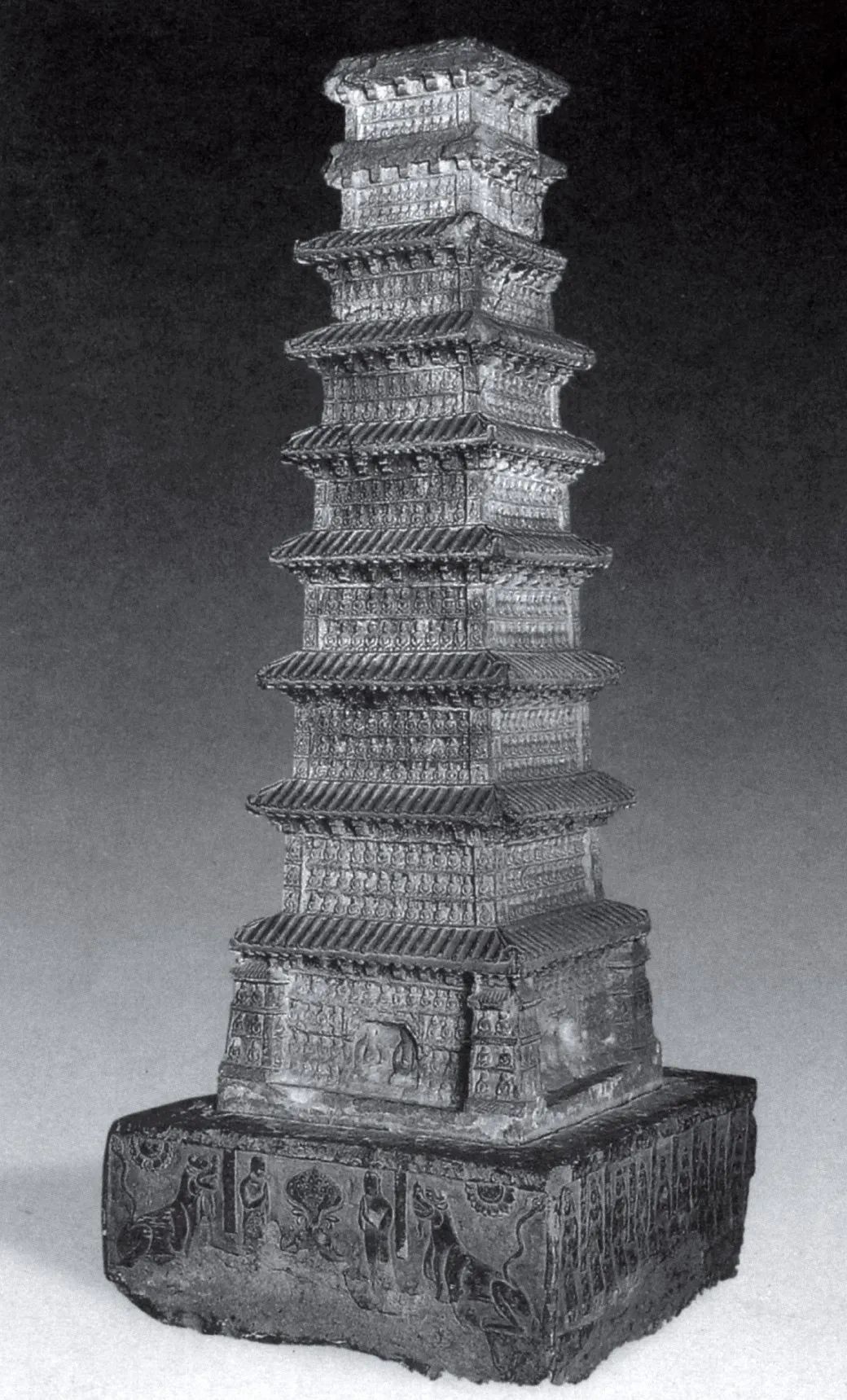
Fig.39 Dutta, Cao Tian, 466.
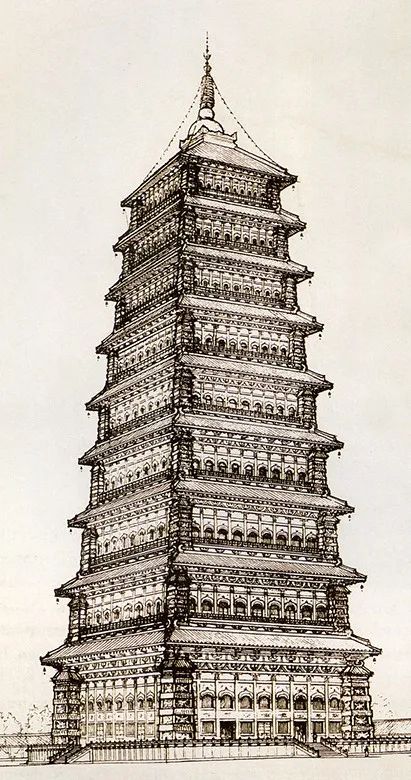
 

Figure 40 Restoration of Yongning Temple Tower in Luoyang

Since the Wei, Jin, Southern and Northern Dynasties, there have indeed been countless stone pagodas carved with different Buddha themes (Figure 39), but in fact, pagodas are usually only partially sculpted for decoration, and they have never been covered with relief sculptures. Early high-rise pagodas, such as Yongning Temple Pagoda in Luoyang, Northern Wei Dynasty (Figure 40), only had statues in the first floor of the pagoda, and the pagoda body was not decorated with Buddha statues. However, this does not prevent Buddhists from contributing to support the small stupa covered with Buddha statues-an ideal model that only exists in imagination when actually building the pagoda. In the religious visual language of China in the Middle Ages, this kind of expression was very common. For example, in the depiction of the lecture and dharma meeting in Dunhuang classics paintings, the Buddha, the threatened bodhisattvas and many offering bodhisattvas were generally painted in the open space outside the Buddhist temple instead of inside the Buddhist temple, and everyone listened attentively to the Buddha’s lecture and dharma. People will not mistake the visual expression in murals for reality, but in the Buddhist context, these changed paintings externalize the "visual imagination" in the viewer’s mind, and at the same time give the actual Buddhist temple architecture more religious significance.
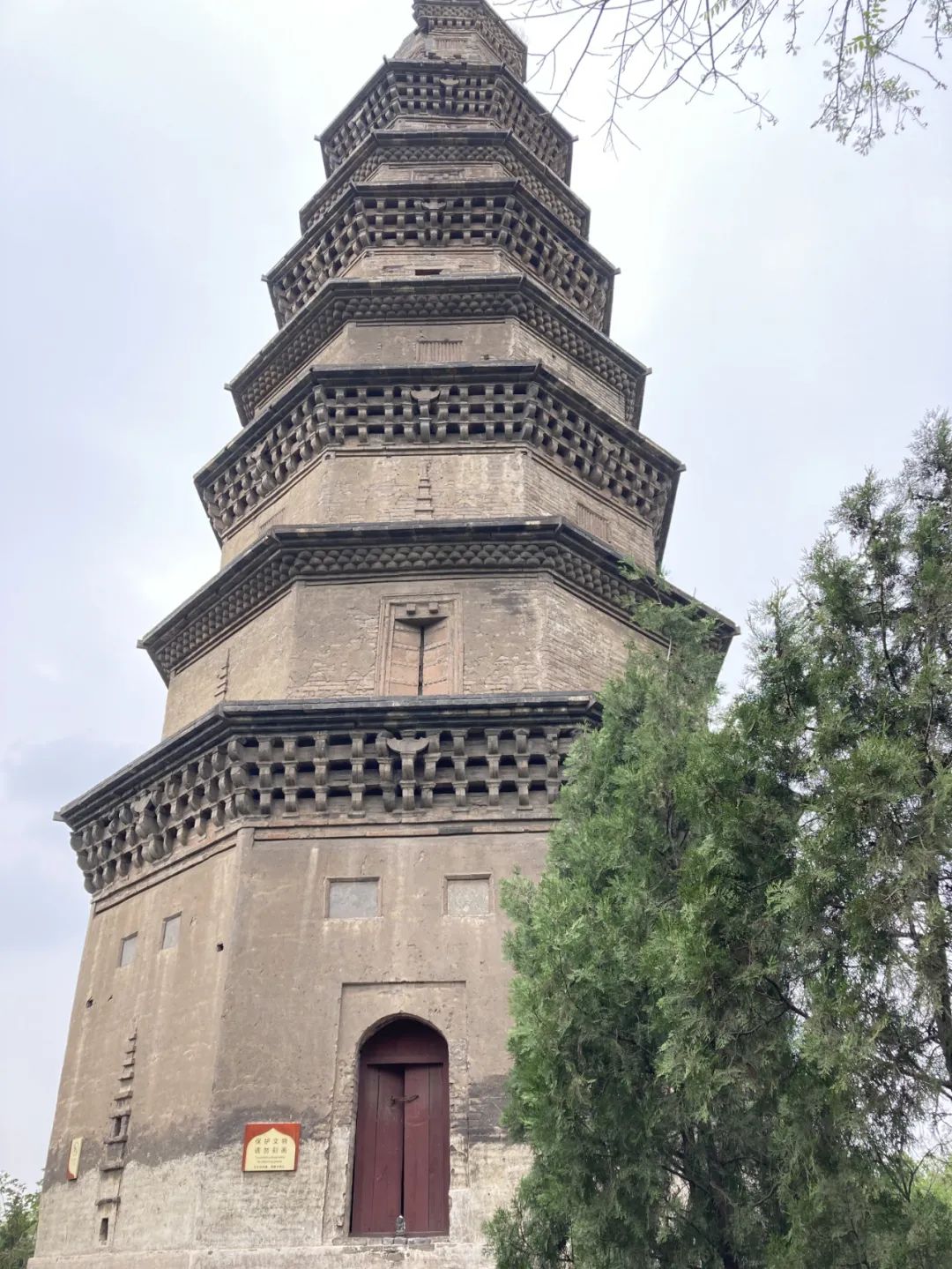
Fig. 41 The image of monks opening the door of brick tower in Northern Song Dynasty in Changle Temple, Handan.

Furthermore, in the late Tang Dynasty and the Five Dynasties, wooden-like tombs rose, which were found in the tombs from Hebei and Shanxi to Guanzhong in the north and from Qianshu in Sichuan to the later Tang Dynasty in Nanjing in the south. Among them, the brick carving "opening the door" image is one of the popular images at this time, suggesting that there is another space behind the brick carving door. Coincidentally, the same door-opening images also appeared more and more on brick towers after the end of the Tang Dynasty (Figure 41). In order to avoid the stress on the brick structure of the tower wall being too concentrated, the positions of the doors, windows and solid walls on each floor of the tower will change randomly. It is a common practice to make fake doors and windows on the tower surface where the doors and windows are not opened, but the image of "opening the doors" seems to further imply the space that can be entered after the fake doors, so that the bricks and stones can be penetrated in the viewer’s visual imagination and increase the depth of the space.
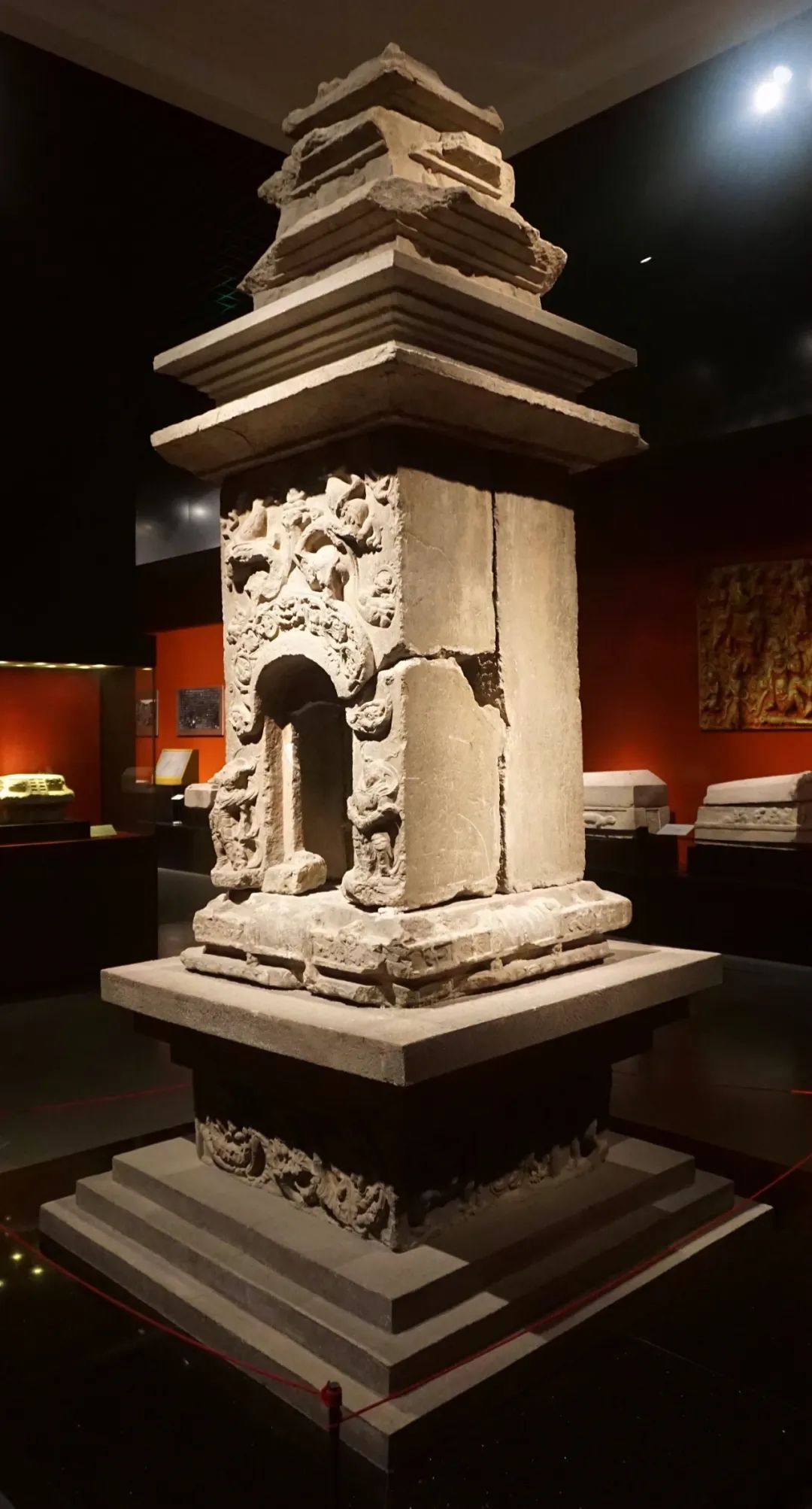
Fig. 42 Yang Zan Statue Tower in Tianbao Second Year (743) in Shifosi Village, Qingzhou, Shandong Province.

The visual language adopted by the Gate White Pagoda and the imagination of the material of the stupa should be understood in the big historical background, and its special scale also serves such visual imagination. As mentioned earlier, there was a wave of building small stone pagodas with dense eaves in the prosperous Tang Dynasty. The most special thing is that these small stone pagodas were built in the form of miniature pagodas on the first floor above the tower foundation, and multi-storey eaves were placed on them to imitate the structure of brick pagodas with dense eaves. Compared with the scale of tens of meters in real dense eaves towers, the height of such small stone towers is only 2 ~ 4 meters, and the highest one is only about 7 meters. However, the description of the tower by the inscription on the tower body is not limited to the actual scale of the small stone tower. The statue tower of Yang Zan in Tianbao II (743) in Shifosi, Qingzhou Village, Shandong Province (Figure 42) has a residual height of 263 cm and a total height of 350 cm after restoration. When Ta Ming described the process of building a tower, he described it as a towering tower:

If there is no cover, please have a good relationship, stack the cymbals, and set up the pavilion; Overlooking the Wan Ren, it stands upright. E e wind brake, soaring with the wind law; The dragon niche, Yun He and cymbals … Its word is: 壹 壹 壹 壹 壹 壹 壹 壹 壹 壹 壹 壹 壹 壹𷧁22 Tong Tong baa baa, Duhe Palace Xi into Guiqi; Next to the hell, the town is solid, and the upper part is the cloud; Thousands of years and generations are immortal, and all kinds of people fly together.

According to this idea of support, and considering the complex architectural details and image configuration of the White Pagoda at Zhakou, the reduced scale can easily enlarge the new functions and significance of the Pagoda in wuyue period, while not reducing its sacredness.

8 Conclusion

The rise of pagodas in wuyue has something to do with the prosperity of Buddhism in this area and the worship of pagodas promoted by Qian Chu at the end of wuyue. However, how to build and use building materials, whether to continue the traditional form and structure or find another way out, are issues that need to be considered. Due to various factors, the decline of wooden high-rise buildings at the turn of Tang and Song Dynasties contributed to the development of masonry in wuyue. However, the characteristics of masonry are different from those of wood. Whether it is to build a wood-like structure or create an internal space, builders are urged to seek new technologies and ways. The White Pagoda at Zhakou, which was built in the center of wuyue and in the early stage of Qian Chu’s Buddhism revitalization, has constructed the religious space and significance of the wuyue Pagoda in a unique way. The relationship between buildings and images, the virtual cloister formed between buildings and images, the continuous vertical space, and even the most central Darani scripture, etc., create an orderly sacred space in the tower, provide the imagination of entering the tower to bypass the Buddha, and pass it on to the Buddha-worshippers around the tower through the miniature architectural form of the White Pagoda at Zhakou, which has become the most important spatial vocabulary and architectural features of the wuyue Masonry Pagoda. This also reminds us that architectural considerations such as materials, construction techniques and structural methods are inextricably linked with the spatial design, function and significance of the stupa, and are also topics that should be continuously studied in the future.

(The first draft of this article was written at the invitation of teacher Li Luke’s lecture, and was reported in the online lecture of School of Architecture, Tsinghua University on November 11th, 2021 with the title of "Architecture, Images and Relic Collection of wuyue Pagodas". In the chart section, we would like to thank Wei Zhuting, Zhang Jianwei, Zhu Jixiang and Zhou Mengyuan for providing photos. )

Note: Lin Weizheng, the author of this article, is an associate professor, Ph.D., in the Department of Art History, University of Chicago, USA, mainly engaged in the research of China art history and architectural history. The original title of this article is "Zhakou White Pagoda: A Miniature Model of wuyue Pagoda". The full text was originally published in the Journal of Architectural History No.2 in 2022, but it was abridged when it was translated by The Paper.
The 2023 edition of the basic catalogue of experimental teaching in primary and secondary schools was officially released.

  Cctv newsAccording to the website of the Ministry of Education, in order to thoroughly implement the Supreme Leader’s Socialism with Chinese characteristics Thought in the new era, implement the fundamental task of cultivating people by virtue, promote the reform of educational methods, guide the majority of primary and secondary schools to focus on the requirements of the new curriculum and the new educational reform, start experimental classes in full swing, consolidate the practical foundation of basic disciplines, improve the quality of scientific education, and cultivate students’ scientific thinking ability, scientific inquiry and practice ability, scientific attitude and social responsibility. The Department of Basic Education of the Ministry of Education commissioned the Education Technology and Resources Development Center of the Ministry of Education (Central Audio-visual Education Center) to organize the development and release of the Basic Catalogue of Experimental Teaching in Primary and Secondary Schools (2023 Edition) (hereinafter referred to as the Basic Catalogue).

  The development of the Basic Catalogue is based on the current curriculum standards, with reference to the teaching equipment allocation standards and teaching materials of various disciplines, and sorts out the basic experiments and practical activities that should be carried out to construct the core concepts, core laws, core experimental literacy and skills of disciplines under the new curriculum concept, including primary school mathematics, science, information technology, junior high school mathematics, physics, chemistry, biology, geography, information technology, There are more than 900 experiments and practical activities in 16 subjects of high school mathematics, physics, chemistry, biology, geography, information technology and general technology, covering a variety of practical activities such as observation, measurement, inquiry, simulation, design, programming, production, planting, breeding, visiting, investigation, mapping and experiment.

  Based on the current situation, development needs and typical problems of experimental teaching in primary and secondary schools, the Basic Catalogue takes into account the practical needs of meeting regional differences, the integration of learning segments, the characteristics of disciplines and the diversification of teaching, and strives to highlight the basic, typical, systematic and educational nature. From a basic point of view, the Basic Catalogue takes the theme of curriculum standards as a clue, sorts out the basic experiments and practical contents that should be carried out in various disciplines, and defines the experimental activities that should be started and started, so as to ensure that students can fully experience the practical learning experience of exploring nature, acquiring scientific knowledge, cultivating scientific thinking and solving scientific and engineering problems. Typically, the Basic Catalogue fully considers the characteristics of disciplines and practice types. Based on the standardized scientific research paradigm, engineering technology design and implementation process, it refines the typical scientific inquiry and practice activities of natural sciences and the general processes and methods of practical teaching of technical disciplines, and promotes the cultivation of basic experimental skills such as individual skills and skills to the cultivation of high-level practical literacy such as model construction, reasoning, analysis and synthesis, innovative thinking, and promotes the activity and curriculum of practical teaching, and strives to cultivate students’ complex problem solving. From a systematic point of view, the Basic Catalogue follows the demand of advanced training of practical ability, systematically selects and refines suitable practical activities in each study section, reduces repeated and fragmented experimental projects between study sections and disciplines, promotes the integrated development of practice between disciplines and study sections, and provides effective methods and approaches for interdisciplinary learning and project-based learning. From the perspective of educating people, the Basic Catalogue insists on five educations, with moral education first.Fully adopt the forms of investigation and study, exhibition and exchange, map drawing, poster making, emergency drills, simulated first aid and other activities, and integrate major educational themes such as China’s advanced science and technology culture, national security, economic strategy, life safety and health into the practical teaching of science and technology, so as to lay a solid literacy foundation for cultivating students into socialist builders and successors with ideals, skills and responsibilities.

  Making good use of the Basic Catalogue is of great significance to the implementation of the "double reduction", the addition of science education and the cultivation of compound innovative talents. We should make a good experimental teaching plan according to the Basic Catalogue, take the basic experimental course as an important teaching content, start experimental courses and practical activities well, pay attention to deepening the reform of teaching methods according to the Basic Catalogue, incorporate experimental and inquiry practical teaching as an important part of the science and technology curriculum system into the basic norms of subject teaching, carefully design practical teaching contents such as experiments according to the teaching requirements of different classes, and strengthen learning by doing, using and creating middle schools, reflecting practicality and innovation. Based on the experimental contents of the Basic Catalogue, we should strengthen the construction of laboratories in primary and secondary schools, support the exploration and construction of diverse practical spaces such as functional classrooms, comprehensive laboratories, innovative laboratories and educational maker spaces, do a good job in the allocation of teaching equipment in various disciplines, and ensure the experimental teaching conditions. It is necessary to refer to the Basic Catalogue to strengthen the evaluation and investigation of experimental teaching, incorporate the opening of experimental courses in schools into teaching visual guidance and daily supervision, carry out monitoring of the compliance rate and utilization rate of teaching equipment, and continuously improve the experimental ability and practical innovation ability of teachers and students.

Special feature: Why the loss of a mountain fire hit a hundred-year record —— Reflection on the mountain fire disaster in California, USA

  Xinhua News Agency, Los Angeles, December 16th, special feature: Why did the loss of a mountain fire hit a hundred-year record — — Reflection on Mountain Fire Disaster in California, USA

  Xinhua News Agency reporter Huang Heng Gaoshan

  On the real-time fire map of California Forest Fire Bureau, many mountain fires are still burning. Compared with the basically controlled mountain fire "Kemp", these mountain fires are small in scale, but they still make Californians nervous.

  Recently, mountain fires "Kemp", "woolsey" and "Hill" have ravaged the north and south of California at the same time, causing at least 89 deaths and burning more than 20,000 buildings. The "Kemp" mountain fire has become the most deadly and destructive mountain fire disaster in the United States in the past 100 years because it claimed more than 80 innocent lives.

  Although California mountain fires are related to natural factors, they also expose some problems such as outdated infrastructure, improper planning and insufficient budget in some parts of the United States, which causes American society to reflect.

  Climate change policy is questioned.

  On December 7, the US Environmental Protection Agency announced a new policy, which greatly loosened the restrictions on carbon emissions of new coal-fired power plants. This is the latest action of the Clean Power Plan issued by the current US government during its subversion of the Obama administration. In the eyes of many scientists, similar carbon emission loosening policies will aggravate global warming, thus leading to more "Kemp"-style deadly mountain fires.

  According to the statistics of the National Inter-departmental Fire Center of the United States, four of the five largest mountain fires in California history occurred after 2012 in terms of fire area. The "Thomas Mountain Fire", which just set a fire area record at the beginning of this year, was surpassed by the "Mendocino Joint Mountain Fire" with a fire area of more than 1,148 square kilometers seven months later.

  Neil Laru, an atmospheric researcher at the University of Nevada, Reno, believes that the frequent severe mountain fires are behind the trend of climate warming. "When the atmosphere warms, it also becomes hungrier." Strong winds accelerate the spread of fire, and at the same time, "thirsty" air will absorb water from plants, making vegetation more flammable. "Heat, drought and strong winds are all raw materials for mountain fires. It’s all collected this time. "

  In the view of California Governor Jerry Brown, "Fire Devil" is rampant because of human factors. He emphasized to the media and the public that global warming and the increase in extreme weather are the fundamental reasons for the destructive power of California mountain fires. Humans need to "stand with nature" to stop the trend of global warming.

  This is an important part of the White House’s policy philosophy. The current U.S. government not only withdrew from the Paris Agreement on Climate Change, but also abolished a series of energy reform measures formulated during the Obama era by administrative order, and even planned to force the reduction of automobile exhaust and carbon emission standards of coal-fired power plants.

  Coincidentally. When reflecting on the severe flooding caused by Hurricane Harvey in Houston last year, many scientists also expounded the relationship between climate change and frequent hurricanes. Jim Black, a professor of environmental engineering at Rice University in Texas, told reporters that in the United States, climate change has almost become a taboo topic, and he does not agree with this practice. He believes that facing up to climate change will help to deal with disastrous weather conditions to a certain extent.

  "These measures [to loosen carbon emission restrictions] mean that when people face heat waves, droughts, fires and floods, the government will ignore them. These disasters will become more terrible because of climate change. " Ken Chimel, president of the American Union of Concerned Scientists, told reporters.

  Infrastructure aging buried hidden dangers.

  In addition to the "bad weather", California suffered heavy fire losses in the past two years, which also reflected two major livelihood issues that have plagued the United States for many years, namely, the housing crisis and the aging of infrastructure. Failure to nip in the bud is closely related to these disadvantages of people’s livelihood.

  In California, for example, the housing needs of a large number of low-income people have been unable to meet for a long time, and their homes have been forced to gradually expand from the edge of the city to the adjacent wild forest areas, some of which are even the originally planned urban fire belts. In order to ensure the real estate tax that supports local finance, some municipal authorities have relaxed supervision on developers. As a result, a large number of buildings were illegally built in the forest. Once a mountain fire happens, it is easy to cause huge personal and property losses.

  Richard halsey, an expert on mountain fires, wrote in the Los Angeles Times that the social reasons behind mountain fires must be acknowledged, including "poor planning". "They allow developers to leave hidden dangers during development, but let firefighters take the blame."

  The aging of power, communication, emergency and other infrastructure has seriously affected the life-saving and escape measures such as fire warning, notification and evacuation. The communication signal in the mountainous area of California is extremely poor. In Paradise Town, the hardest hit area of the mountain fire "Kemp", many victims who escaped from the fire confirmed to reporters that about one-third of the 27,000 residents in the town did not receive the mandatory evacuation order issued by the police through mobile phones, networks and other channels when the mountain fire occurred.

  According to an after-the-fact investigation by the California Public Facilities Committee, the first batch of firefighters who rushed to Paradise Town arrived at the scene 10 minutes after the fire broke out, at about 6: 45 am on November 8. Due to the shortage of local base stations and communication difficulties, although the county sheriff’s office quickly issued an evacuation order, it was past 8 o’clock when the first batch of residents learned the order, and by 10: 15, the mobile communication signal in Paradise Town was completely interrupted.

  Savannah Lauscher, a resident of Paradise Town, recalled that when she received the alarm at about 8: 30, the ashes had drifted outside her house. "We saw a wall of fire. The Woods 50 yards (about 45 meters) away are burning and moving forward at a speed of almost 10 yards (about 9 meters) per minute. " Their family escaped by car like most people, but the road was so congested that they had to drive into the opposite lane to find a way out. Many people abandoned their cars and fled, while many people who stayed in the cars were burned to death.

  Old power facilities are also a great hidden danger. According to the investigation report of the California Forest Fire Bureau on the cause of the fire in 2017, of the 21 large-scale fires in that year, 17 were caused by the equipment failure of Pacific Gas and Power Company. According to reports, the cause of the "Kemp" mountain fire may also be related to this.

  Insufficient special budget attracts criticism.

  The frequent occurrence of catastrophic mountain fires highlights the shortage of funds related to disaster prevention and relief in the United States. When the fiscal deficit and debt are rising, the U.S. government insists on using more government budgets in the military field, and does not hesitate to squeeze the budgets of federal agencies related to people’s livelihood. In addition, short-sighted economic and fiscal policies have magnified the shortcomings of insufficient and unbalanced disaster prevention and relief resources in the United States at this stage.

  In FY 2018, the department responsible for forest fire prevention at the federal level — — The overall fire budget of the US Forestry Administration decreased by 17%, of which the budget for fire fighting was 1.06 billion US dollars, and in fiscal year 2017, the bureau spent more than 2.5 billion US dollars on fighting mountain fires. Overexpenditure on fire fighting has resulted in less and less expenses on fire prevention and related scientific research.

  Us president trump accused California of failing to clean up dead trees and weeds in the forest in time after the "Kemp" mountain fire. The budget table of the US Forestry Administration shows that this year’s federal budget will directly reduce the budget for "cleaning up dangerous combustibles" from more than $37 million to zero. The inter-departmental "Joint Fire Science Research Project" has funded 280 sub-projects in the past 10 years, which has played a great role in guiding the disaster reduction and prevention of mountain fires. However, the funding for this research project in 2018 is less than a quarter of that in 2011.

  Due to historical reasons, a large area of land in the western United States belongs to the federal government. Take the forests of California as an example, 40% are owned by federal agencies, 30% are privately owned, and 30% are owned by the California government. The federal government has invested less in the prevention, control and scientific research of mountain fires, so the state government has to use local financial funds to advance. In 2016, California paid $16 million in firefighting funds for the federal government. Until 2017, the money was not returned, which led California to threaten to stand by and watch the fires in the federal government’s jurisdiction.

  The California mountain fire also exposed the imbalance in the allocation of disaster relief forces of local governments in the United States. An official of the Los Angeles Fire Department told the reporter that "Kemp" caused heavy casualties in northern California, while the other two fires near Los Angeles caused relatively light losses. The most direct reason was that the local government in southern California had more money, so it could hire more firefighters, professional firefighting planes and other large equipment. The worst-hit paradise town, which is located in Buyut County, is one of the poorest places in California.

  The casualties and losses caused by a fire are heartbreaking. The inability of the federal and local governments to cope with the disaster has exposed the shortcomings of American social governance. These deep-seated contradictions and problems should arouse the reflection of the American government and society, otherwise, the future fire and water disasters will only be more ruthless. (Participating in reporters: Wu Xiaoling, Changyuan, Gaolu, Liu Liwei)

Regulations on natural disaster relief

decree of the state council of the people’s republic of china


No.577


  Regulations on Natural Disaster Relief, adopted at the 117th executive meeting of the State Council on June 30, 2010, is hereby promulgated and shall come into force as of September 1, 2010.
                    

                              General manager Wen Jiabao
                              July 8, 2010

Regulations on natural disaster relief

Chapter I General Principles


  the first  These Regulations are formulated in order to standardize the natural disaster relief work and ensure the basic livelihood of the affected people.

  the second Natural disaster relief work follows the principles of people-oriented, government-led, hierarchical management, social mutual assistance and self-help for victims.

  Article Natural disaster relief work implements the administrative leadership responsibility system of the people’s governments at all levels.

  The National Disaster Reduction Committee is responsible for organizing and leading the national natural disaster relief work and coordinating major natural disaster relief activities. The civil affairs department of the State Council is responsible for the national natural disaster relief work and undertakes the specific work of the National Disaster Reduction Committee. The relevant departments of the State Council do a good job in the national natural disaster relief work according to their respective responsibilities.

  The local people’s governments at or above the county level or the comprehensive emergency coordination agencies of the people’s governments shall organize and coordinate the natural disaster relief work in their respective administrative areas. The civil affairs departments of local people’s governments at or above the county level shall be responsible for the natural disaster relief work in their respective administrative areas. The relevant departments of the local people’s governments at or above the county level shall, in accordance with their respective responsibilities, do a good job in natural disaster relief in their respective administrative areas.

  Article 4 The people’s governments at or above the county level shall incorporate natural disaster relief into the national economic and social development plan, establish and improve the fund and material guarantee mechanism that is compatible with the needs of natural disaster relief, and incorporate the natural disaster relief funds and natural disaster relief funds arranged by the people’s government into the fiscal budget.

  Article 5 Villagers’ committees, residents’ committees and social organizations such as the Red Cross, charities and public offering foundations shall assist the people’s governments in carrying out natural disaster relief work according to law.

  The state encourages and guides units and individuals to participate in activities such as natural disaster relief, donation and voluntary service.

  Article 6 People’s governments at all levels should strengthen publicity and education on disaster prevention and mitigation, and improve citizens’ awareness of disaster prevention and avoidance and their ability of self-help and mutual assistance.

  Villagers’ committees, residents’ committees, enterprises and institutions shall, in accordance with the requirements of the local people’s governments and in light of their actual conditions, carry out publicity and popularization activities on emergency knowledge of disaster prevention and mitigation.

  Article 7 Units and individuals that have made outstanding contributions to natural disaster relief shall be commended and rewarded in accordance with relevant state regulations.


Chapter II Rescue Preparation


  Article 8 The local people’s governments at or above the county level and their relevant departments shall, according to the relevant laws, regulations and rules, the emergency plans of the people’s governments at higher levels and their relevant departments, and the natural disaster risk investigation in their respective administrative areas, formulate corresponding emergency plans for natural disaster relief.

  The emergency plan for natural disaster relief shall include the following contents:

  (a) natural disaster relief emergency organization and command system and its responsibilities;

  (2) Emergency teams for natural disaster relief;

  (3) Emergency funds, materials and equipment for natural disaster relief;

  (4) Early warning and forecasting of natural disasters and reporting and processing of disaster information;

  (five) the level of emergency response to natural disaster relief and corresponding measures;

  (6) Measures for post-disaster emergency rescue and residents’ housing restoration and reconstruction.

  Article 9 The people’s governments at or above the county level shall establish and improve the technical support system for emergency command of natural disaster relief, and provide necessary transportation, communication and other equipment for natural disaster relief work.

  Article 10 The state establishes a natural disaster relief material reserve system, and the civil affairs department of the State Council shall, jointly with the finance department and the development and reform department of the State Council, formulate a national natural disaster relief material reserve plan and a reserve bank plan, and organize their implementation.

  The people’s governments at or above the municipal level and the people’s governments at or above the county level in areas prone to natural disasters shall, according to the characteristics of natural disasters, the number and distribution of residents, and in accordance with the principle of reasonable layout and moderate scale, set up a natural disaster relief material reserve.

  Article 11 The local people’s governments at or above the county level shall, according to the number and distribution of local residents, make use of public facilities such as parks, squares, stadiums, etc., make overall plans to set up emergency shelters, and set up obvious signs.

  If it is necessary to inform residents to go to the emergency shelter to start the early warning response or emergency response of natural disasters, the local people’s governments at or above the county level or the comprehensive coordination agencies for natural disaster relief and emergency response of the people’s governments shall timely announce the specific address and arrival path of the emergency shelter through radio, television, SMS, electronic display screen and Internet.

  Article 12 Local people’s governments at or above the county level shall strengthen the team building and professional training of natural disaster relief personnel, and villagers’ committees, residents’ committees and enterprises and institutions shall set up full-time or part-time natural disaster information officers.


Chapter III Emergency Relief


  Article 13 The people’s governments at or above the county level or the comprehensive coordination institutions for natural disaster relief and emergency response of the people’s governments shall start the early warning response according to the early warning and forecast of natural disasters and take one or more of the following measures:

  (a) issued a warning to the society to avoid the risk of natural disasters, to publicize the common sense and skills of avoiding risks, and to remind the public to prepare for self-help and mutual assistance;

  (2) Open emergency shelters, evacuate and transfer people and property vulnerable to natural disasters, and implement organized evacuation in case of emergency;

  (three) to strengthen the security of villages, communities and public places vulnerable to natural disasters;

  (four) instructed the civil affairs departments to make preparations for basic living assistance.

  Article 14 If a natural disaster occurs and reaches the starting conditions of the emergency plan for natural disaster relief, the people’s government at or above the county level or the comprehensive coordination agency for natural disaster relief emergency of the people’s government shall promptly start the emergency response for natural disaster relief and take one or more of the following measures:

  (a) immediately release the government response measures and public preventive measures to the society;

  (two) emergency transfer and resettlement of the affected people;

  (3) Emergency allocation and transportation of emergency funds and materials for natural disaster relief, timely provision of food, drinking water, clothing, heating, temporary shelter, medical and epidemic prevention and other emergency relief to the affected people, and protection of their basic livelihood;

  (four) to comfort the victims and deal with the aftermath of the victims;

  (five) to organize the affected people to carry out self-help and mutual rescue;

  (six) analysis and evaluation of disaster trends and the needs of disaster areas, and take corresponding natural disaster relief measures;

  (7) Organizing natural disaster relief and donation activities.

  For emergency relief materials, the competent transportation departments shall organize priority transportation.

  Article 15 During the emergency period of natural disaster relief, the local people’s governments at or above the county level or the comprehensive coordination agencies of natural disaster relief and emergency of the people’s governments may urgently requisition materials, equipment, means of transportation and venues within their respective administrative areas, and shall return them in time after the emergency work of natural disaster relief is completed, and make compensation in accordance with relevant state regulations.

  Article 16 If natural disasters cause casualties or large property losses, the civil affairs department of the people’s government at the county level in the affected area shall immediately report to the people’s government at the same level and the civil affairs department of the people’s government at the next higher level.

  Natural disasters cause particularly serious or heavy casualties and property losses, and the civil affairs departments of the people’s governments at the county level in the affected areas shall report in a timely manner in accordance with the procedures stipulated in relevant laws, administrative regulations and emergency plans in the State Council, and may directly report to the State Council when necessary.

  Article 17 Before the disaster is stabilized, the civil affairs departments of the people’s governments in the affected areas shall report daily the casualties, property losses and the dynamics of natural disaster relief work caused by natural disasters, and release them to the public in a timely manner.

  After the disaster situation is stable, the people’s governments at or above the county level in the affected areas or the comprehensive coordination agencies for natural disaster relief and emergency response of the people’s governments shall assess, verify and publish the natural disaster losses.


Chapter IV Post-disaster Relief


  Article 18 The people’s governments in the disaster-stricken areas shall, on the premise of ensuring safety, take a combination of local resettlement and off-site resettlement, government resettlement and self-resettlement, and make transitional resettlement for the affected people.

  Local resettlement should be in a place with convenient transportation and convenient resumption of production and life, and avoid areas where secondary natural disasters may occur, and try not to occupy or occupy less cultivated land.

  The people’s governments in the affected areas shall encourage and organize the affected people to help themselves and each other, and restore and rebuild.

  Article 19 After the danger of natural disasters is eliminated, the people’s governments in the affected areas should make overall research and formulate plans and preferential policies for the restoration and reconstruction of residents’ houses, organize the reconstruction or repair of residents’ houses damaged by disasters, and give key assistance to families with real difficulties in restoration and reconstruction.

  The restoration and reconstruction of residents’ housing should be adapted to local conditions, economical and practical, and ensure that the quality of housing construction meets the requirements of disaster prevention and mitigation.

  The civil affairs departments of the people’s governments in the disaster-stricken areas shall issue subsidy funds and materials to the residents’ housing recovery and reconstruction subsidy objects confirmed by the audit, and the housing and urban-rural construction departments shall provide necessary technical support for the reconstruction or repair of residents’ housing damaged by the disaster.

  Article 20 Residents’ housing restoration and reconstruction subsidies are applied by the affected persons themselves or nominated by villagers’ groups and residents’ groups. After democratic appraisal by villagers’ committees and residents’ committees, those who meet the conditions for assistance shall be publicized in natural villages and communities; If there is no objection or the democratic appraisal objection of villagers’ committees and residents’ committees is not established, the villagers’ committees and residents’ committees will submit the appraisal opinions and relevant materials to the township people’s government and the subdistrict office for examination and approval, and report them to the civil affairs departments of the people’s government at the county level for examination and approval.

  Article 21 In the winter of the year and the spring of the following year after the occurrence of natural disasters, the people’s governments in the affected areas shall provide basic living assistance for the affected people with difficulties in life.

  The civil affairs department of the people’s government at the county level in the disaster-stricken areas shall, before the end of October each year, make statistics and assess the basic living difficulties and needs of the victims in their respective administrative areas in the winter of that year and the spring of the following year, verify the relief objects, prepare work ledgers, formulate rescue work plans, organize their implementation after approval by the people’s government at the same level, and report them to the civil affairs department of the people’s government at the next higher level for the record.


Chapter V Management of Relief Funds and Articles


  Article 22 The financial departments and civil affairs departments of the people’s governments at or above the county level are responsible for the allocation, management and supervision of the use of natural disaster relief funds.

  The civil affairs departments of the people’s governments at or above the county level are responsible for allocating, distributing and managing natural disaster relief materials.

  Article 23 The people’s government purchases goods, projects and services for natural disaster relief preparation and post-disaster recovery and reconstruction, and organizes the implementation in accordance with the relevant laws and regulations on government procurement and bidding. Emergency procurement activities involving emergency rescue, emergency relocation and temporary assistance in natural disaster emergency rescue and post-disaster recovery and reconstruction shall be implemented in accordance with relevant state regulations.

  Article 24 Natural disaster relief funds and materials are used exclusively and free of charge.

  Directional donations of money and materials shall be used according to the wishes of the donors. Money and materials accepted by government departments without designated intention by donors shall be used for natural disaster relief by the civil affairs departments of people’s governments at or above the county level as a whole; Money and materials accepted by social organizations that donors have no designated intention shall be used for natural disaster relief by social organizations in accordance with relevant regulations.

  Article 25 Natural disaster relief funds and materials should be used for emergency relocation and resettlement of the affected people, basic living assistance, medical assistance, restoration and reconstruction of public service facilities and houses such as education and medical care, procurement, storage and transportation of natural disaster relief materials, and comfort of relatives of victims of disasters.

  Article 26 Civil affairs, finance and other departments of the people’s government in the disaster-stricken areas and relevant social organizations shall voluntarily disclose to the public the sources, quantities and usage of the accepted natural disaster relief funds and donations through newspapers, radio, television and Internet.

  Villagers’ committees and residents’ committees in disaster-stricken areas shall announce the objects of assistance and the amount and use of the money and materials they receive.

  Article 27 People’s governments at all levels shall establish and improve the supervision and inspection system of natural disaster relief funds and donations, and promptly accept complaints and reports.

  Article 28 The supervisory organs and auditing organs of the people’s governments at or above the county level shall supervise and inspect the management and use of natural disaster relief funds and donations according to law, and civil affairs, finance and other departments and relevant social organizations shall cooperate.


Chapter VI Legal Liability


  Article 29 Any functionary of an administrative organ who, in violation of the provisions of this Ordinance, commits any of the following acts shall be punished by the appointment and removal organ or the supervisory organ in accordance with laws and regulations; If the case constitutes a crime, criminal responsibility shall be investigated according to law:

  (a) late reporting, false reporting, concealment of natural disaster losses, resulting in consequences;

  (2) Failing to organize the transfer and resettlement of the affected people in time, or failing to work effectively in the process of providing basic living assistance and organizing recovery and reconstruction, resulting in consequences;

  (3) withholding, misappropriating or privately dividing natural disaster relief funds or donations;

  (4) Failing to return the requisitioned property in time, or failing to make compensation in accordance with regulations;

  (five) there are other acts of abuse of power, dereliction of duty, favoritism.

  Article 30 Take false reports, concealment, forgery and other means to defraud natural disaster relief funds or donations, and the civil affairs departments of the people’s governments at or above the county level shall order them to return the illegally obtained funds and materials within a time limit; If a crime is constituted, criminal responsibility shall be investigated according to law.

  Article 31 Whoever robs or gathers people to plunder natural disaster relief funds or donations shall be ordered by the civil affairs department of the people’s government at or above the county level to stop the illegal act; If it constitutes a violation of public security administration, it shall be punished by the public security organ according to law; If a crime is constituted, criminal responsibility shall be investigated according to law.

  Article 32 Those who obstruct natural disaster relief workers from performing their duties according to law by violence or threat, which constitutes a violation of public security administration, shall be punished by public security organs according to law; If a crime is constituted, criminal responsibility shall be investigated according to law.


Chapter VII Supplementary Provisions


  Article 33 Accidents, public health incidents, social security incidents and other emergencies need to be carried out by the civil affairs departments of the people’s governments at or above the county level, with reference to these regulations.

  Article 34 Where there are other provisions in laws and administrative regulations on disaster prevention, resilience and relief, those provisions shall prevail.

  Article 35 These Regulations shall come into force as of September 1, 2010.

Explanation on the Amendment of People’s Republic of China (PRC) Patent Law (Draft)

The NPC Standing Committee:

Entrusted by the State Council, I am now explaining the Amendment (Draft) of the Patent Law of People’s Republic of China (PRC).

The Patent Law of People’s Republic of China (PRC) (hereinafter referred to as the current patent law) came into force on April 1, 1985, and was revised twice on September 4, 1992 and August 25, 2000. Since the implementation of the current patent law, it has played an important role in encouraging and protecting inventions, promoting scientific and technological progress and innovation, and promoting China’s economic and social development. With the development of domestic and international situation, it is necessary to further improve China’s patent legal system: First, the report of the 17th National Congress of the Communist Party of China put forward the goal of improving the ability of independent innovation and building an innovative country, and the State Council formulated the Outline of National Intellectual Property Strategy. Therefore, it is necessary to further strengthen the protection of patent rights, encourage independent innovation, promote the implementation of patented technology, promote the transformation of patented technology into real productivity and shorten the transformation period by amending and perfecting the patent law. Second, the Doha Ministerial Conference of the World Trade Organization adopted the Declaration on the Agreement on Trade-related Aspects of Intellectual Property Rights and Public Health (hereinafter referred to as the Declaration), and the General Council of the World Trade Organization adopted the Protocol on Amending the Agreement on Trade-related Aspects of Intellectual Property Rights (hereinafter referred to as the Protocol) to implement the Declaration. The Declaration and the Protocol allow WTO members to break through the restrictions of the Agreement on Trade-related Aspects of Intellectual Property Rights and grant compulsory licenses to exploit pharmaceutical patents under specified conditions. Accordingly, the current patent law needs to be amended. The Convention on Biological Diversity stipulates the use of patent system to protect genetic resources.As a big country with genetic resources, China needs to amend the current patent law to exercise the rights conferred by the Convention.

On the basis of summing up the implementation experience of the current patent law, the Intellectual Property Office drafted the Patent Law of People’s Republic of China (PRC) (revised draft for review), which was submitted to the State Council for approval on December 27th, 2006. After receiving this document, the Legislative Affairs Office twice solicited opinions from 72 central departments and units, 35 local people’s governments, 14 local courts, more than 20 enterprises and institutions, and more than 50 experts and scholars, and also received opinions from relevant foreign government agencies, enterprise associations and international organizations; Went to Guangdong and other places to investigate the patent work of enterprises, the patent administrative law enforcement of local governments and the patent trial of local courts; Held several expert argumentation meetings and two international seminars to discuss major issues such as using the patent system to promote the construction of an innovative country, and the consistency between the revision of the patent law and international conventions; In conjunction with the Intellectual Property Office, the National People’s Congress Education, Science, Culture and Health Committee, the the National People’s Congress Standing Committee (NPCSC) Law Commission, and the High Court, we have repeatedly communicated and coordinated, and on this basis, we have repeatedly studied and revised the draft for submission, forming the "Amendment of the Patent Law of People’s Republic of China (PRC) (Draft)" (hereinafter referred to as the draft). On June 27, 2008, the Legislative Affairs Office and the Intellectual Property Office made a report to the Education, Culture, Health and Science Committee of the National People’s Congress, and then further revised the draft according to the opinions of the members. The draft has been discussed and adopted at the 19th executive meeting of the State Council on July 30th, 2008. The main contents of the draft are as follows:

First, according to the incentive of independent innovation, improve autonomy

The requirements of innovation ability, the current

Modification of Patent Law In order to achieve the goal of building an innovative country, the Science and Technology Progress Law submitted by the State Council to the National People’s Congress Standing Committee (NPCSC) for deliberation and revision in 2007 has stipulated a series of systems and measures in terms of increasing investment in science and technology, integrating scientific and technological resources, stimulating the enthusiasm of scientific research institutions and scientific and technological personnel, and promoting technological progress of enterprises. The draft mainly makes the following amendments to the current patent law from the perspective of using the patent system to stimulate independent innovation:

(1) The contents of "improving the ability of independent innovation" and "building an innovative country" have been added to the legislative purpose. The legislative purpose of the current Patent Law is revised as follows: This Law is formulated in order to protect patent rights, encourage inventions, promote the management and application of inventions, improve the ability of independent innovation, promote scientific and technological progress and economic and social development, and build an innovative country.

(2) Improve the standard of patent authorization. The current patent law adopts the "relative novelty standard" on the conditions of patent authorization, that is, the invention-creation applying for the patent right for invention and utility model has not been publicly published at home and abroad, nor has it been publicly used at home or known to the public in other ways; The design for which the patent right for design is applied has not been published at home and abroad, nor has it been used publicly in China. According to this regulation, although some unpublished technologies have been publicly used abroad or have been sold with corresponding products, as long as no one has publicly used them or sold them in China, patents can be granted in China, which leads to low patent quality in China. This is not conducive to encouraging independent innovation, but also hinders the application of existing foreign technologies in China. To this end, the draft adopts the "absolute novelty standard": inventions and creations that stipulate that patents are granted are not known to the public at home and abroad. In order to further improve the quality of design patents, the draft stipulates that no patent right shall be granted to the design that mainly plays the role of logo in plane printed matter.

(3) The provision that China patents must be applied for before applying for patents in foreign countries is deleted. According to the current patent law, an invention made in China must apply for a patent in China before applying for a patent in a foreign country. In order to encourage foreign countries to apply for patents and improve China’s international competitiveness, the draft stipulates that any unit or individual can apply for patents for inventions and creations completed in China, thus canceling the restriction that it must apply for China patents first; At the same time, considering that some patent applications may involve China’s national security and need to be subject to confidentiality review, the draft stipulates that inventions and creations completed in China should be subject to confidentiality review in advance by the patent administration department of the State Council.

(4) Giving the patentee of a design the right to promise to sell. Promising to sell is a promise to sell goods by advertising, displaying on store shelves or at trade fairs. The current patent law does not stipulate the promise of sales right in the patent right of design. Considering that design is an advantageous field in China, it is beneficial for China to improve the level of patent protection for design, and the draft adds the right to promise to sell in the design patent. After such modification, the patentee of a design can stop others from promising to sell the patented product by advertising, displaying it on the shelves of shops or at trade fairs without his permission.

(5) It is clear that the compensation for patent infringement should include the cost of the right holder’s rights protection, increase the punishment for illegal acts, and increase the provisions on statutory compensation. From the practice of patent protection, if the cost of the patentee’s rights protection is not compensated, it will not be able to make up for the losses suffered by the obligee due to infringement. In order to protect the reasonable interests of the patentee more effectively, the draft adds a provision that the compensation for patent infringement should include the reasonable expenses paid by the right holder to stop the infringement. At the same time, in order to crack down on patent violations, the amount of fines for counterfeiting other people’s patents will be increased from 3 times to 4 times of illegal income; If there is no illegal income, the fine will be raised from 50,000 yuan to 200,000 yuan, and the fine for impersonating a patent will be raised from 50,000 yuan to 200,000 yuan. In addition, in order to improve the efficiency of judicial protection, the draft also stipulates that: in litigation activities, if it is difficult to determine the loss of the right holder, the benefits obtained by the infringer and the patent license fee, the people’s court may determine to give compensation of more than 10,000 yuan and less than 1 million yuan according to the type of patent right, the nature and circumstances of the infringement.

(six) to increase the provisions of evidence preservation before litigation. In order to prevent the infringer from transferring or destroying the evidence before the patentee files a lawsuit, the draft adds a provision: In order to stop the patent infringement, the obligee may apply to the people’s court for evidence preservation before filing a lawsuit if the evidence may be lost or difficult to obtain later.

Second, according to the need to promote the popularization and application of technology,

The amendments to the current patent law (1) stipulate that the co-owners of the patent right may exploit the joint patent alone or license others to exploit it by ordinary license. In order to protect the legal rights of co-owners of joint patents and promote the implementation of joint patents, the draft stipulates that the right to apply for a patent or the patent right shall be jointly owned by two or more units or individuals, and if the co-owners have an agreement on the exercise of the rights, such agreement shall prevail. If there is no agreement, the co-owner may exploit the patent alone or license others to exploit it by ordinary license; Where another person is licensed to exploit the patent, the royalties collected shall be distributed among the co-owners. Except in the circumstances specified in the preceding paragraph, the exercise of the joint patent application right or patent right shall obtain the consent of all the co-owners. The so-called general license means that while the licensee is implementing the patented technology, the co-owner can also implement or license others to implement the patented technology.

(2) If the technology specified for implementation belongs to the existing technology, it does not constitute infringement of the patent right. According to the current patent law, in a patent infringement case, the defendant thinks that the patent right is invalid and must file a request for invalidation with the Patent Reexamination Board; After the Patent Reexamination Board declares the patent right invalid, the court can decide that the defendant does not constitute patent infringement. In order to prevent malicious use of the known existing technology to apply for a patent, hinder the implementation of the existing technology, and help the implementers of the existing technology get rid of the patent infringement disputes in time, the draft adds a provision that in a patent infringement dispute, if the accused infringer has evidence to prove that the technology he implements belongs to the existing technology, it does not constitute patent infringement. Accordingly, the accused infringer does not need to file a request for invalidation with the Patent Reexamination Board, and the court can directly determine that the accused infringer does not infringe.

(3) adding circumstances that are not regarded as infringement. Drawing lessons from the practices of the United States, Canada, Australia and other countries, the draft adds one item in the case that it is not regarded as infringement: in order to provide the information needed for administrative examination and approval, the unit or individual that intends to manufacture drugs or medical devices manufactures patented drugs or patented medical devices.

3. According to the provisions of international treaties, especially the new provisions of international treaties after China’s accession to the World Trade Organization,

The first amendment to the current patent law is that the Protocol to Amend the Agreement on Trade-Related Aspects of Intellectual Property Rights stipulates that compulsory licenses can be granted for the manufacture and export of patented drugs to specific countries or regions for public health purposes. The so-called compulsory license refers to the license made by the state administrative organ under legal conditions, allowing qualified units and individuals to exploit other people’s inventions or utility model patents. According to the provisions of the Protocol, the draft adds the following provisions: for the purpose of public health, the patent administration department of the State Council may grant compulsory license to manufacture and export drugs patented in China to the following countries or regions: (1) the least developed countries; (2) Members who do not have the manufacturing capacity of the drug or have insufficient manufacturing capacity, and have fulfilled the relevant procedures in accordance with the relevant treaties of the World Trade Organization to which People’s Republic of China (PRC) is a party. In addition, the Agreement on Trade-related Aspects of Intellectual Property Rights stipulates that the patentee’s behavior of excluding or restricting competition can be protected by compulsory licensing. Accordingly, the draft also adds a provision that the the State Council Patent Administration Department may grant the applicant a compulsory license for acts that are determined by judicial and administrative procedures to exclude or restrict competition.

Second, the Convention on Biological Diversity stipulates that the utilization of genetic resources should follow the principles of national sovereignty, informed consent and benefit sharing, and clearly stipulates that the patent system should help achieve the goal of protecting genetic resources. At present, developing countries rich in genetic resources such as India and Brazil and developed countries such as Switzerland, Norway and Denmark have protected genetic resources through patent legal systems. China is a big country with genetic resources. In order to prevent illegal theft of genetic resources in China for technical development and patent application, the draft adds provisions: for inventions and creations completed by relying on genetic resources, the applicant shall state the direct source and original source of the genetic resources in the patent application documents; If the original source cannot be declared, the reasons shall be explained. It is also clear that if the acquisition or utilization of genetic resources violates the provisions of relevant laws and administrative regulations, no patent right will be granted.

In addition, the draft also makes textual amendments to some provisions of the current patent law.

Please review whether the Amendment to the Patent Law of People’s Republic of China (PRC) (Draft) and the above explanation are appropriate.


Preface by Zhou Qifeng, president of Peking University Security’s book "Standing on Peking University" (Figure)

He first entered Peking University in 2007 and became a security guard. He was born in the countryside, but he always yearned for the highest academic hall. When standing guard, he was once jealous of Peking University students. "They walked into the academic hall of Peking University, while I was standing guard.". But soon, Peking University’s good school spirit and style of study made him find a "home", and he began to use his rest time to listen to lectures and read books. In 2008, he passed the adult college entrance examination and was admitted to the Chinese Department of Peking University, becoming a student in a security suit. At the beginning of June this year, his new book "Standing on Peking University" was published, and Zhou Qifeng, president of Peking University, made a special preface for him. He is Gan Xiangwei, a security guard at Peking University.

Small security guards realize "writer’s dream"

Born in 1982, Gan Xiangwei came from Guangshui, Hubei Province. In August 2007, he began to work as a security guard in Peking University, and stood guard at the west gate and west gate of Peking University. As a security guard for nearly five years, I have always had a writer’s dream. In the past five years, Gan Xiangwei, who loves writing, has often recorded his experience. In December last year, Gan Xiangwei bound his 120,000 words into a book, named "Walking on the Unnamed Lake", and he hoped that the booklet would be published into a book.

Earlier this year, a publishing house found Gan Xiangwei. Liu Zhi, the general planner of the book "Standing on Peking University", said that after seeing Gan Xiangwei’s report from the media, he was moved by his inspirational experience. "He is an ordinary security guard, but he loves learning very much. His experience touched us, so he decided to publish it."

After editing and sorting out, in early June this year, Walking on the Unnamed Lake was renamed Standing on Peking University and officially published. Recently, he has resigned from his job as a security guard at Peking University, ready to look for a job related to literature, expecting to become a university counselor or a middle school Chinese teacher.

Zhou Qifeng wrote a preface and modestly called himself a poor writer.

In front of the "Peking University" plaque, Gan Xiangwei, a thin figure, was dressed in a security suit and looked at the distance … … This is the cover photo of Gan Xiangwei’s new book "Standing on Peking University". More than 30 short stories in the book narrate his five-year experience as a security guard at Peking University in prose style.

Before the publication of the new book, Gan Xiangwei sent an email to Zhou Qifeng, president of Peking University, with his own "Peking University Story", hoping that President Zhou could write a preface for his "new book".

Soon, President Zhou Qifeng wrote a thousand words as a preface. In the preface, Zhou Qifeng quipped: "I study chemistry, and my writing style is not good, because I wrote a song" Chemistry is You, Chemistry is Me "(song), which made the whole world know that my writing style is not good … … However, when Comrade Gan Xiangwei, who works as a security guard in our school, wrote a letter asking me to give him a few words of recommendation for his new writing, I agreed and was very happy. "

Zhou Qifeng said that a security guard, after hard work, can make full use of Peking University’s good learning resources, strive for progress and improve himself, which is admirable.

Nearly 20 Peking University security guards get their degrees every year.

Xiao Liu, a security guard, passed the interview of Beijing Institute of Technology in April this year and became a graduate student as he wished. Zhang Guoqiang, deputy head of the security team of Peking University, has two undergraduate degrees from Tsinghua and the Central Party School, and has also obtained a lawyer’s qualification certificate. Wang Guiming, the captain of the Peking University Security Brigade, told reporters that since 1994, more than 300 of his security guards have obtained university degrees or above, and some have returned to their hometowns to become university teachers after graduation.

There are less than 500 security guards in Peking University all the year round, but nearly 20 people get their degrees every year, because the security formation of Peking University has become a tradition of encouraging learning. The security team gives the green light to hard-working scholars and helps them adjust their positions and shifts suitable for learning; Some courses in Peking University allow security guards to attend, some professors also give books and old computers to security guards, and civilian schools organized by trade unions in Peking University also set aside places for security guards to attend classes every year.

The atmosphere of encouraging learning has also taken shape in the Tsinghua Security Team. It is understood that in Tsinghua, all the squadron leaders and above have college education, and their learning experience can also enlighten the new security guards. At present, the security companies affiliated to Tsinghua and Peking University have cooperated with Beijing Radio and TV University to encourage security guards to attend RTVU, and they can get a diploma without half the tuition fees. Most of the security guards attend adult education or self-taught courses, and usually attend classes at night and weekends. In order to ensure that security guards go to school, Tsinghua and Peking University Security Brigade also arrange posts according to the security guards’ class time, and can take time off during the security examination. Get a college diploma or above, and get a monthly salary increase in 50 yuan.

Visit right away

"A low starting point does not mean a low ending point"

Q: How did you get into Peking University as a security guard?

A: In August, 2007, when I was strolling around the unnamed lake, I saw a security guard reading a book in a building, so I went up to chat. Then I asked him, I said, do you still recruit security guards here? He said that I would ask the captain. The next day, he said that the captain said that you should come for an interview. At that time, the captain interviewed me: Why did you come to Peking University? I just said two things: first, seek survival before development. Second, I said I wanted to learn knowledge and increase my knowledge. The captain said yes, you can study after your work is done. So I entered Peking University as a security guard.

Q: How did you adjust your study and working hours during your time as a security guard at Peking University?

A: We have three shifts in the morning, noon and evening, each shift is 8 hours. If I work in the morning shift, I will have time at noon, afternoon and evening. Sometimes there is a conflict with the class time, so I will adjust it with my colleagues. The team is more supportive and the learning atmosphere has always been good. The security brigade has always had a tradition of encouraging learning. We security guards are all young people, all children from the countryside, with strong plasticity. I feel embarrassed to see that students from Peking University attend classes and study every day without taking a book. We just cherish such learning opportunities.

Q: Why do you want to publish a book?

A: I like writing and often record my experiences. At that time, I had some feelings: when I first arrived at Peking University, I walked around every day. Because I stood guard from my dormitory to Ximen, I passed the students on the way. They went to the academic hall of Peking University, and I went to the Ximen of Peking University. At that time, I felt a little lost. Why couldn’t I walk into the classroom of Peking University? At that time, I had some ideas, which I wrote down after I went back, that is, my feelings about life, and I wrote them out slowly. After a long time, I found more and more words and space. After five years, I accumulated 120,000 words. Many friends around me felt very inspirational after reading my heart, and encouraged me to publish this book. I hope this book can inspire and give confidence to today’s young people, especially children in adversity, especially children in rural areas.

Q: Why did you name the book Standing on Peking University?

A: Originally, the name of this book was "Walking on the Unnamed Lake", and it was about my own experience in Peking University in recent years. Later, I think Standing on Peking University can better summarize the contents of the book. On the surface, as a security guard, patrol and other duty periods are generally standing; From a deeper level, "standing" represents a kind of self-improvement and independence of personality.

Q: You have resigned as a security guard at Peking University. What are your plans for the future?

A: I’d better do something in the education industry in the future, which is also my advantage and specialty, because I don’t have high material requirements, and it is very important for me to improve my spiritual realm. At present, I have begun to look for a job, expecting to be a college counselor or a middle school teacher, and writing will persist as a sideline after work.

Q: Can you give some advice to this year’s college entrance examination students?

A: No matter whether you are admitted to a famous university or not, you should not be discouraged. There are thousands of roads in life, and some people can’t be selected by grades. You should use your hobbies and specialties to give full play to your advantages and make in-depth research in this field in the future, and you can still make achievements. A low starting point doesn’t mean a low ending point. The starting point can’t decide whether it is good or bad, and an exam can’t decide a person’s fate. Ultimately, it is your dream and long-term unremitting efforts to succeed.

It’s another year to fly! Catkin early warning map These places will enter a period of high incidence.

  China Weather Network News "Dissolve the sunny harbor and the spring glow, asparagus is born in Liu Xufei." In April, many places in the north are blooming in spring, enjoying the beautiful spring, but also welcoming the season when catkins break out in a year. Flying "snow" all over the sky seems romantic, but it is often miserable. China Weather Network specially launched the early warning map of catkins in 2023 to see when your family will enter the high-incidence period. There is also a guide to the healthy travel protection of willow catkins to help you spend the flying catkins period safely.

  Beijing, Tianjin and other places are about to enter the high incidence period of willow catkins. Why do they fly more catkins in spring?

  In the middle and late March of this year, most of the northern part experienced a great recovery, and the temperature in North China and Huanghuai was higher than normal. As of April 7th, the catkins in most parts of Henan, Shandong, central and southern Hebei, Beijing and other places have been floating, and Jinan and Shijiazhuang began to float as early as late March.

  At present, the area with high incidence of flying floc will continue to advance northward. Hu Xiao, chief meteorologist of China Weather Network, said that the southern part of Beijing, the central city, Tianjin, Shandong Peninsula and southwestern part of the mountain will enter the high-incidence period of willow catkins before April 15th, and the mountainous areas such as northern Hebei and central and northern Shanxi will not see "flying catkins like snow" until late April. In big cities, Beijing and Tianjin entered a period of high incidence of flying flocs on the 9th, and Taiyuan may welcome flying flocs around the 13th.

bqdt

  Since April every year, catkins in the northern region have entered a period of high incidence. So, why do you fly more at this time? Hu Xiao introduced that the flying of catkins is closely related to the weather. Rising temperature, sufficient sunlight, low air humidity and certain wind speed are all conducive to the flying of catkins.

  Taking Populus tomentosa as an example, when the average temperature in North China is higher than 0℃, Populus tomentosa can grow and develop normally. Add up these values over 0℃, and when the total reaches 480℃ and the average daily temperature reaches 14℃, Populus tomentosa begins to float. In North China, this standard is often reached around the first ten days of April, and poplars are flying. After more than 10 days of flying catkins, catkins will also enter the flying period.

  Why are the areas affected by catkins floating mainly concentrated in North China and Huanghuai? Willow has strong adaptability, alkali resistance and drought resistance, easy survival, fast growth and long greening time in northern China, and is widely planted in North China and Huanghuai area. However, the willow tree is dioecious, and the flying catkins are the seeds of the female plant. Spring is the time for female plants to reproduce. When the small balls on their inflorescences mature, they burst to expose cotton-like flocs. When these seeds are propagated by wind, they will show a scene of "snow falling all over the sky" in the local area.

  It’s another spring when it snows. Please keep this guide to the protection of catkins.

  Warm and dry weather is beneficial to catkins flying, while rainy and humid air is an effective way to restrain catkins flying. At present, North China and Huanghuai areas are in the period of "spring rain is as expensive as oil", and it will still be sunny in the next five days. Without a hearty rain, the temperature will slowly rise, and catkins will continue to fly, making it difficult to get better.

  In the future, friends in North China and Huanghuai will have to face the troubles caused by flying flocs, especially allergic people who need to go out should pay attention to choosing time and equipment.

bqtb

  In terms of time, try to avoid going out during the high-incidence period of flying catkins from 10 am to 16 pm, and choose to go out in the morning, evening or after rain when catkins appear less. If possible, it is the best choice for allergic people to stay indoors and close the doors and windows.

  If you need to go out, try to wear long-sleeved trousers and wear a mask and glasses. Long-sleeved trousers can prevent bare skin from touching the flying flocks, and you should wash your hands and face in time when you go out, and clean up the flying flocks on your clothes; If the skin is stained with flying flocs, wash it with warm water in time, which will help to prevent allergies or alleviate allergic symptoms. If the skin itching, erythema, papules and other symptoms are serious, you should seek medical advice in time. If the flying floc accidentally enters the eye, remember not to rub it by hand, otherwise it will easily cut the cornea and increase the chance of infection. The correct way is to wash it with clear water. If the flying floc enters the deep layer of the eye, it is recommended to go to the hospital in time.

  In addition, the scattered catkins may also bring safety hazards in travel. Poplar catkins have high carbon fiber content, low ignition point and fluffy, which are easy to be ignited. When encountering an open flame, the burning speed will be very fast, and if encountering windy weather, it will easily lead to a fire. Be careful with fire on the day of flying catkins, and don’t throw cigarette butts around. The sanitation department should spray water to clean the falling catkins in time to avoid fire. (Planning/Du Bingbing Design/Chen Yujie Data Support/Hu Xiao)

Regulations on the Implementation of the Budget Law of the People’s Republic of China (October 1, 2020)


Regulations of the People’s Republic of China on the Implementation of Budget Law

(1995year11moon22DecreeNo. of the State Council of the People’s Republic of China186No. release2020yeareightmoonthreeDecreeNo. of the State Council of the People’s Republic of China729No. revision)

Chapter I General Principles

Article 1 These Regulations are formulated in accordance with the Budget Law of the People’s Republic of China (hereinafter referred to as the Budget Law).

Article 2 The dispatched offices of local governments at or above the county level shall conduct budget management activities according to the authorization of the government at the corresponding level, which shall not be regarded as the first-level budget, and their revenues and expenditures shall be included in the budget at the corresponding level.

Article 3 The budget of the social insurance fund shall realize sustainable operation on the basis of actuarial balance, and the general public budget may appropriately arrange funds to supplement the budget of the social insurance fund according to needs and financial resources.

Article 4 The "departments" mentioned in the second paragraph of Article 6 of the Budget Law refer to state organs, armies, political party organizations, institutions, social organizations and other units that have a direct relationship with the financial department of the government at the corresponding level.

Article 5 The budgets of various departments shall reflect all budgetary funds allocated to the department and its subordinate units by the general public budget, government fund budget and state-owned capital operation budget.

The budget revenue of each department includes the budget allocation revenue and other income arranged by the finance at the corresponding level for this department and its subordinate units. The budget expenditure of each department is the expenditure corresponding to the budget income of the department, including basic expenditure and project expenditure.

The basic expenditure mentioned in the second paragraph of this article refers to the expenditure incurred by various departments and units to ensure the normal operation of their institutions and complete their daily tasks, including personnel funds and public funds; The project expenditure refers to the expenditure incurred by various departments and units to complete their specific tasks and career development goals.

The budgetary appropriation income of each department and its subordinate units at the corresponding level and their corresponding expenditures shall be reflected separately in the departmental budget.

The specific measures for the preparation and implementation of departmental budgets shall be stipulated by the financial department of the government at the corresponding level according to law.

Sixth general transfer payments to the public should be detailed to the region. The disclosure of special transfer payments to the public should be refined to regions and projects.

Government debt, government operating expenses, government procurement, financial special account funds, etc., are disclosed to the public in accordance with relevant regulations.

Department budgets and final accounts shall disclose basic expenditures and project expenditures. The departmental budget and final accounts expenditure shall be disclosed according to its functional classification; According to its economic nature, the basic expenditure should be made public.

The budgets, final accounts and statements of the subordinate units of various departments shall be approved by the departments.twentyDays by the unit to the public. The unit budget and final accounts shall disclose the basic expenditures and project expenditures. The unit budget and final accounts expenditure shall be disclosed according to its functional classification; According to its economic nature, the basic expenditure should be made public.

Article 7 The central and local tax sharing system mentioned in Article 15 of the Budget Law refers to the financial management system that determines the scope of central and local fiscal expenditures on the basis of dividing the powers of central and local governments, and divides the central and local budgetary revenues according to tax categories.

The specific contents and implementation measures of the tax-sharing financial management system shall be implemented in accordance with the relevant provisions of the State Council.

Article 8 Local governments at or above the county level shall, in accordance with the principle of central and local tax sharing and the relevant provisions of the higher-level government, determine the financial management system of the government at the same level for the lower-level governments.

Article 9 The term "general transfer payment" as mentioned in the second paragraph of Article 16 of the Budget Law includes:

(1) Balanced transfer payment;

(two) financial assistance to the old revolutionary base areas, ethnic minority areas, border areas and poverty-stricken areas;

(3) Other general transfer payments.

Article 10 The term "special transfer payment" as mentioned in the third paragraph of Article 16 of the Budget Law refers to the budgetary funds given by the higher-level government to the lower-level government in order to achieve specific economic and social development goals, and used by the lower-level government according to the purposes specified by the higher-level government.

The financial departments of governments at or above the county level shall, jointly with relevant departments, establish and improve the regular evaluation and withdrawal mechanism of special transfer payments. The special transfer payment after evaluation shall be dealt with according to the following circumstances:

(a) in accordance with laws, administrative regulations and the provisions of the State Council, it is necessary to continue the implementation, you can continue to implement;

(two) the relevant requirements of the establishment are changed, or the actual performance is far from the target, and the management is not perfect enough, which should be adjusted;

(3) If the foundation is invalid or abolished, it shall be cancelled.

Article 11 Budget revenue and budget expenditure shall be calculated in RMB yuan. Where budgetary revenues and expenditures are received and paid in currencies other than RMB, they shall be converted into RMB.

Chapter II Scope of Budget Revenue and Expenditure

Article 12 The term "administrative fee income" as mentioned in the first paragraph of Article 27 of the Budget Law refers to the income formed by state organs, institutions, etc. charging fees to specific objects in accordance with the provisions of laws and regulations and with the approval of procedures stipulated by the State Council, in the process of implementing social public management and providing specific public services to citizens, legal persons and other organizations.

The income from paid use of state-owned resources (assets) mentioned in the first paragraph of Article 27 of the Budget Law refers to the income from paid use of state-owned resources such as mineral deposits, rivers, sea areas, uninhabited islands and forests and grasslands owned by the state according to the law, and the income from state-owned assets that are included in the general public budget management according to the regulations.

The term "transfer income" as mentioned in the first paragraph of Article 27 of the Budget Law refers to the tax refund and transfer payment from higher authorities, the income from lower authorities, the transferred funds, and the free assistance from the non-affiliated government included in the transfer income according to the provisions of the Ministry of Finance.

Article 13 transfer expenditure includes the payment of higher-level expenditures, tax refund and transfer payments to lower levels, transfer of funds, and free assistance to non-affiliated governments listed in transfer expenditure according to the provisions of the Ministry of Finance.

Article 14 The budgetary revenue of government funds includes the revenue from various projects of government funds and the transfer income.

The budgetary expenditures of government funds include the expenditures of various projects and transfer expenditure corresponding to the budgetary revenues of government funds.

Article 15 The budget income of state-owned capital operation includes the profit income turned over to the state by wholly state-owned enterprises and wholly state-owned companies that should be included in the budget of state-owned capital operation according to laws, administrative regulations and the State Council regulations, the dividend income obtained from state-owned capital holding and shareholding companies, the transfer income of state-owned property rights, liquidation income and other income.

State-owned capital operating budget expenditure includes capital expenditure, expense expenditure, transfer of funds to the general public budget and other transfer expenditure and other expenditures.

Article 16 The budgetary income of social insurance funds includes various social insurance premium income, interest income, investment income, general public budget subsidy income, collective subsidy income, transfer income, higher-level subsidy income, lower-level premium income and other income.

The budget expenditure of social insurance fund includes various social insurance benefits expenditure, transfer expenditure, subsidy to lower level expenditure, upper level expenditure and other expenditures.

Article 17 The specific measures for the division of income and expenditure items between the higher and lower levels of local budgets, as well as the payment, return or transfer shall be formulated by the local government at the higher level and reported to the Standing Committee of the people’s congress at the corresponding level for the record.

Article 18 The specific measures for the division of income and expenditure items between the upper and lower levels of local social insurance fund budgets, as well as the solution and subsidies, shall be formulated by the local government at the higher level according to the overall level and reported to the Standing Committee of the people’s congress at the corresponding level for the record.

Chapter III Budgeting

Article 19 The draft budget referred to in Article 31 of the Budget Law refers to the budgets prepared by governments at all levels, departments and units that have not been examined and approved by legal procedures.

Article 20 The term "performance evaluation" as mentioned in the first paragraph of Article 32 of the Budget Law refers to a systematic and objective evaluation of the input, use process, output and effect of budgetary funds according to the set performance objectives and standardized procedures.

The results of performance evaluation should be used as the basis for improving management and compiling future annual budgets in accordance with regulations.

Article 21 The budgetary expenditure standards mentioned in the third paragraph of Article 32 of the Budget Law refer to the expenditure budgeting standards that are reasonably classified and stipulated separately, including basic expenditure standards and project expenditure standards.

The financial departments of local governments at all levels shall, according to the budget expenditure standards formulated by the Ministry of Finance, and in combination with the level of economic and social development and financial resources of the region, formulate the budget expenditure standards of the region or the corresponding level.

Article 22 The Ministry of Finance shall, every yearsixmoon15A few days ago, the specific matters of preparing the draft budget for the next year were deployed, and the report format, compilation method and submission period were stipulated.

Twenty-third central departments should be in accordance with the requirements of the State Council and the deployment of the Ministry of Finance, combined with the specific situation of the department, organize the preparation of the draft budget of the department and its subordinate units.

The central departments are responsible for reviewing the draft budgets of their subordinate units, compiling the draft budgets of their own departments, and submitting them to the Ministry of Finance for review in accordance with relevant regulations.

Article 24 The Ministry of Finance shall examine and verify the draft budgets of various central departments, and formulate the draft central budget in detail; Summarize the draft local budget or local budget, and compile the draft central and local budgets.

Twenty-fifth provinces, autonomous regions and municipalities directly under the central government in accordance with the requirements of the State Council and the deployment of the Ministry of Finance, combined with the specific conditions of the region, put forward the requirements of the administrative region to prepare a draft budget.

The financial departments of local governments at or above the county level shallsixmoon30A few days ago, the specific matters of preparing the draft budget for the next year in this administrative region were deployed, and the relevant report format, compilation method and submission period were stipulated.

Article 26 All departments of local governments at or above the county level shall, according to the requirements of the government at the corresponding level and the deployment of the financial department of the government at the corresponding level, organize the preparation of the draft budgets of their own departments and their subordinate units, and report them to the financial department of the government at the corresponding level for examination in accordance with the provisions.

Article 27 The financial departments of local governments at or above the county level shall examine the draft budgets of various departments at the corresponding level, specifically compile the draft budgets at the corresponding level, and compile the draft total budgets at the corresponding level. After being examined and approved by the governments at the corresponding levels, they shall be submitted to the financial departments of the governments at the next higher level within the prescribed time limit.

The draft general budget at the corresponding level or the general budget at the corresponding level summarized by the financial departments of the governments of provinces, autonomous regions and municipalities directly under the Central Government shall be submitted in the next year.onemoon10Recently reported to the Ministry of Finance.

Twenty-eighth financial departments of governments at or above the county level shall, when examining the draft budgets of various departments at the corresponding level, find that they do not meet the requirements of budgeting, and shall correct them; When compiling the draft general budget at the corresponding level, if it is found that the draft budget at the lower level does not meet the budget preparation requirements of the higher level government or the government at the corresponding level, it shall report to the government at the corresponding level in time and be corrected by the government at the corresponding level.

Twenty-ninth financial departments of governments at all levels shall solicit the opinions of tax, customs and other budgetary revenue collection departments and units when preparing the draft revenue budget.

Budget revenue collection departments and units shall, in accordance with the requirements of the financial department, provide the forecast of next year’s budget revenue collection.

Thirtieth the financial department in conjunction with the administrative department of social insurance deployment of the next year’s social insurance fund budget draft specific matters.

The social insurance agency shall specifically prepare the draft budget of the social insurance fund for the next year and report it to the social insurance administrative department at the same level for review and summary. The draft income budget of the social insurance fund shall be compiled by the social insurance agency in conjunction with the social insurance premium collection agency. The financial department is responsible for reviewing and summarizing the draft budget of the social insurance fund.

Thirty-first financial departments of governments at all levels shall, in accordance with the provisions of the budget law and these regulations, formulate rules for the preparation of the draft budget at the corresponding level.

Thirty-second departments and units in the preparation of the draft budget, should be based on asset allocation standards, combined with the stock of assets to prepare the relevant expenditure budget.

Article 33 The revenue compilation of the central general public budget includes the revenue of the general public budget at the corresponding level, the funds transferred from the state-owned capital operating budget, the local revenue, the funds transferred from the budget stabilization fund and other funds transferred.

The central general public budget expenditure includes the general public budget expenditure at the corresponding level, tax refund and transfer payment to local governments, and supplementary budget stabilization fund.

The limit of the central government’s debt balance shall be listed separately in the budget at the corresponding level.

Article 34 The revenue compilation of local general public budgets at all levels includes the revenue of the general public budget at the corresponding level, the funds transferred from the state-owned capital operating budget, the tax refund and transfer payment at the higher level, the revenue transferred from the lower level, the funds transferred from the budget stabilization fund and other funds transferred.

The contents of compiling general public budget expenditures at local levels include general public budget expenditures at the corresponding level, expenditures at higher levels, tax returns and transfer payments to lower levels, and supplementary budget stabilization funds.

Thirty-fifth central government funds budget revenue preparation content includes the income of government funds at the same level, the balance of the previous year, local income.

The budget expenditure of central government funds includes the expenditure of various projects of government funds at the same level, transfer payments to local governments and transfer of funds.

Thirty-sixth local government funds budget revenue preparation content includes the income of the government funds at the same level, the balance of the previous year, the income from the lower level, and the transfer payment from the higher level.

The budget expenditure of local government funds includes the expenditure of various projects of government funds at the same level, the expenditure of the superior, the transfer payment to the subordinate and the transfer of funds.

Thirty-seventh central state-owned capital operating budget revenue includes the income at the same level, the balance of the previous year, and the local income.

The budget expenditure of the central state-owned capital operation includes the expenditure at the corresponding level, the transfer of funds to the general public budget, and the transfer payment for specific local matters.

Thirty-eighth local state-owned capital operating budget revenue includes the income at the same level, the balance of the previous year, the transfer payment of specific matters by the higher level, and the income from the lower level.

The budget expenditure of local state-owned capital operation includes the expenditure at the same level, the transfer of funds to the general public budget, the transfer payment for specific matters at lower levels, and the expenditure at higher levels.

Article 39 The budgetary revenues and expenditures of the central and local social insurance funds include the revenues and expenditures specified in Article 16 of these Regulations.

Fortieth departments and units of the budget revenue preparation content includes the budget appropriation income, budget appropriation carry-over and other income.

The budget expenditures of all departments and units include basic expenditures and project expenditures.

The budgetary expenditures of various departments and units shall be classified into items according to their functions and into items according to their economic nature.

Forty-first governments at all levels should strengthen the management of project expenditure. The financial departments of governments at all levels shall establish and improve the evaluation system of project expenditure budget. All departments and units shall carry out budget review in accordance with the provisions of the financial department of the government at the corresponding level.

The project expenditure shall be managed by the project library, and the project warehousing evaluation mechanism and project rolling management mechanism shall be established and improved.

Article 42 The balance management mentioned in the second paragraph of Article 34 of the Budget Law refers to the management method that the State Council decides the scale, variety, term and time of issuing bonds within the balance limit of the central general public budget debt approved by the National People’s Congress; The so-called balance refers to the outstanding principal of the borrowed debt in the central general public budget.

Forty-third local government debt balance is subject to quota management. The government debt limits of all provinces, autonomous regions and municipalities directly under the Central Government shall be submitted by the Ministry of Finance to the State Council for approval within the total limits approved by the National People’s Congress or its Standing Committee, based on factors such as the debt risk and financial situation of various regions, and taking into account the needs of national macro-control policies.

The balance of government debts of all provinces, autonomous regions and municipalities directly under the Central Government shall not exceed the quota approved by the State Council.

Article 44 The scale of borrowing debts mentioned in the second paragraph of Article 35 of the Budget Law refers to the sum of the debt balance limits of local governments, including general debt limits and special debt limits. General debt refers to general bonds included in the general public budget for the development of public welfare undertakings, and loans from foreign governments and international economic organizations for which local governments have the responsibility to repay; Special debt refers to special bonds included in the budget of government funds for the development of profitable public welfare undertakings.

Article 45 The financial departments of the governments of provinces, autonomous regions and municipalities directly under the Central Government shall, in accordance with the local government debt limit issued by the State Council, put forward the debt limit arrangement scheme for the governments at the corresponding levels and for lending to the lower levels, and after reporting to the governments at the corresponding levels for approval, include the increased borrowed debts in the budget adjustment scheme at the corresponding levels and report to the Standing Committee of the people’s congress at the corresponding levels for approval.

The government that accepts the reloan and reloans to the lower-level government shall include the reloan debt in the budget management at the corresponding level. The government that uses reloan and bears the direct repayment responsibility shall include the reloan debt in the budget adjustment plan at the corresponding level and report it to the Standing Committee of the people’s congress at the corresponding level for approval.

The financial departments of local governments at all levels are responsible for the unified management of local government debts.

Article 46 the State Council may lend loans borrowed from foreign governments and international economic organizations to the governments of provinces, autonomous regions and municipalities directly under the Central Government.

Loans from foreign governments and international economic organizations that the State Council has lent to the governments of provinces, autonomous regions and municipalities directly under the Central Government should be included in the budget management at the corresponding level if the governments of provinces, autonomous regions and municipalities directly under the Central Government are directly responsible for repayment. If the governments of provinces, autonomous regions and municipalities directly under the Central Government fail to fulfill their repayment obligations on time, the State Council can deduct the tax refund and other funds to the region accordingly.

The governments of provinces, autonomous regions and municipalities directly under the Central Government may re-lend the loans from foreign governments and international economic organizations lent by the State Council to lower-level governments.

Article 47 The Ministry of Finance and the financial departments of the governments of provinces, autonomous regions and municipalities directly under the Central Government shall establish and improve the debt risk assessment index system of local governments, organize the assessment of the debt risk status of local governments, provide early warning to areas with high debt risks, and supervise the resolution of debt risks.

Forty-eighth governments at or above the county level shall, in accordance with a certain proportion of the estimated number of transfer payments in this year, issue the estimated number of transfer payments in the next year to the government at the next lower level in advance, and the specific issues shall be handled by the financial department of the government at the same level.

In addition to the transfer payment for special projects such as factual settlement, the proportion of the estimated number of general transfer payments issued in advance is generally not less than90%; The proportion of the estimated number of special transfer payments issued in advance is generally not less than70%. Among them, the special transfer payment allocated according to the project law should be clearly defined together with the projects organized and implemented in the next year.

Forty-ninth with the approval of the government at the same level, the financial departments of governments at all levels may set up budgetary working capital, and the amount shall not exceed the total expenditure of the general public budget at the same level.1%. At the end of the year, the financial departments of governments at all levels can recover the working capital of the budget and use it to supplement the budget stabilization fund.

Article 50 The term "carry-over funds" as mentioned in the first paragraph of Article 42 of the Budget Law refers to the funds that have not been implemented by the end of the expenditure year of the budgeted items, or have not been implemented for some reason, but need to be used for the original purpose in the next year; Carry-over funds that have not been used up for two consecutive years refer to the funds that have not been used up at the end of the next year.

The term "surplus funds" as mentioned in the first paragraph of Article 42 of the Budget Law refers to the remaining funds after the actual completion of budget revenue is deducted from the actual completion of budget expenditure and carry-over funds at the end of the annual budget implementation.

Chapter IV Budget Implementation

Fifty-first in the implementation of the budget, the main responsibilities of the financial department of the government:

(a) to study and implement fiscal and tax policies and measures to support the healthy development of economy and society;

(2) Formulating systems and measures for organizing budgetary revenues, managing budgetary expenditures and related finance, accounting, internal control and supervision;

(three) to urge the budget revenue collection departments and units to perform their duties according to law and collect budget revenue;

(four) according to the annual expenditure budget and the plan for the use of funds, reasonably allocate and allocate budgetary funds, and supervise the use and management of budgetary funds of various departments and units;

(five) unified management of government debt borrowing, expenditure and repayment, supervision of the use of debt funds;

(six) to guide and supervise all departments and units to establish and improve the financial system and accounting system, standardize account management, improve the internal control mechanism, and use the budget funds in accordance with the provisions;

(7) Summarizing and compiling the data of budget implementation by stages, analyzing the budget implementation, regularly reporting the budget implementation according to the requirements of the Standing Committee of the people’s congress at the corresponding level, the government at the corresponding level and the financial department of the government at the next higher level, and putting forward relevant policy suggestions;

(eight) to organize and guide the performance monitoring and performance evaluation of budgetary funds;

(nine) to coordinate the business work of budget revenue collection departments and units, the state treasury and other relevant departments.

Article 52 The financial special account referred to in the second paragraph of Article 56 of the Budget Law refers to the bank settlement account opened by the financial department for the management and accounting of specific special funds in accordance with the law or with the approval of the the State Council; The term "special funds" includes funds that can set up special financial accounts according to laws, loans and grants from foreign governments and international economic organizations, currencies other than RMB stored according to regulations, and other special funds that the Ministry of Finance, jointly with relevant departments, reported to the State Council for approval.

The opening and alteration of financial accounts shall be approved by the Ministry of Finance, and the cancellation of financial accounts shall be reported to the Ministry of Finance for the record. The People’s Bank of China shall strengthen the approval, management and supervision of banking financial institutions to open accounts.

The financial account funds shall be managed by the financial department of the government at the corresponding level. Except as otherwise provided by law, without the consent of the financial department of the government at the corresponding level, no department, unit or individual has the right to freeze or use the funds in the special financial account.

The funds in special financial accounts shall be brought into unified accounting by the financial department of the government at the corresponding level, and reflected separately in the budget implementation, final accounts and comprehensive financial report of the government.

Fifty-third in the implementation of the budget, the main responsibilities of various departments and units:

(a) to formulate the budget implementation system of the department and the unit, and establish and improve the internal control mechanism;

(two) according to the organization of income, strict expenditure management, the implementation of performance monitoring, performance evaluation, improve the efficiency of the use of funds;

(three) accounting for the economic business of the unit;

(four) to summarize the budget implementation of the department and the unit, and regularly submit the budget implementation report and performance evaluation report to the financial department of the government at the same level.

Article 54 The financial department shall, jointly with the social insurance administrative department and the social insurance premium collection agency, formulate specific measures for the income, expenditure and financial management of the social insurance fund budget.

The budget of the social insurance fund shall be specifically implemented by the social insurance premium collection agency and the social insurance agency, and the implementation shall be reported to the financial department of the government at the corresponding level and the social insurance administrative department in accordance with the provisions.

Article 55 The financial departments of governments at all levels, tax, customs and other budgetary revenue collection departments and units must organize budgetary revenue according to law, collect budgetary revenue according to the provisions of the financial management system, collection management system and centralized collection system of the national treasury, and pay budgetary revenue into the national treasury in a timely manner in addition to the budgetary revenue such as social insurance funds paid into financial special accounts according to law.

Article 56 Except for the budgetary revenues such as social insurance funds paid into the financial special account according to law, all departments and units that have the obligation to pay budgetary revenues must pay the budgetary revenues that should be paid into the state treasury according to the prescribed budget levels, government revenue and expenditure classification subjects, and the way and time limit for payment. No department, unit or individual may intercept, occupy, misappropriate or default.

Fifty-seventh financial departments of governments at all levels should strengthen the management of the allocation of budgetary funds and follow the following principles:

(1) Allocating funds according to the budget, that is, allocating funds according to the approved annual budget and spending plan. Except for the circumstances that expenditures can be arranged before the approval of the draft budget as stipulated in Article 54 of the Budget Law, no funds can be allocated without budget, useless funds plan, over-budget or over-plan, and no expenditures can be changed without authorization;

(2) Allocating funds according to the prescribed budget levels and procedures, that is, according to the application of the fund-using unit, according to the budget levels of the fund-using unit, the approved fund-using plan and the budgetary fund allocation procedures stipulated by the financial department;

(three) according to the progress of the disbursement, that is, according to the actual progress of the use of funds.

Article 58 The Ministry of Finance shall make reasonable arrangements for the variety, structure, duration and timing of issuing treasury bonds according to the limit of the central government’s debt balance approved by the National People’s Congress.

The financial departments of the governments of provinces, autonomous regions and municipalities directly under the Central Government shall, according to the local government debt limit approved by the State Council, make reasonable arrangements for the structure, duration and timing of issuing local government bonds.

Fifty-ninth transfer payment budget and fund allocation shall be handled by the financial department, and other departments and units shall not issue transfer payment budgets or allocate transfer payment funds to lower-level government departments and units.

Article 60 Governments at all levels, departments and units shall strengthen the management of budgetary expenditures, strictly implement budgets, abide by the financial system and strengthen budgetary constraints, and shall not expand the scope of expenditures or raise expenditure standards without authorization; Use funds in strict accordance with the expenditure purposes specified in the budget and arrange the expenditure schedule reasonably.

Article 61 The Ministry of Finance is responsible for formulating financial rules, accounting standards and accounting systems related to budget implementation. All departments and units shall, in accordance with the requirements of the financial department of the government at the corresponding level, establish and improve the financial system and strengthen accounting.

Article 62 The state treasury is a specialized institution that handles the receipt, division, retention, refund and appropriation of budgetary revenues. Treasury is divided into central treasury and local treasury.

The central treasury business is managed by the People’s Bank of China. Where there is no branch of the People’s Bank of China, the People’s Bank of China shall, after consulting the Ministry of Finance, entrust the relevant banking financial institutions to handle it.

The local treasury business is managed by the branches of the People’s Bank of China. Where there is no branch of the People’s Bank of China, the branch of the People’s Bank of China at a higher level shall, after consulting the financial department of the local government, entrust the relevant banking financial institutions to handle it.

Conditional townships, nationality townships and towns shall set up a national treasury. The specific conditions and standards shall be determined by the financial departments of the governments of provinces, autonomous regions and municipalities directly under the Central Government.

Article 63 The business of the central treasury shall accept the guidance and supervision of the Ministry of Finance and be responsible for the central finance.

The local treasury business shall accept the guidance and supervision of the financial department of the government at the same level and be responsible for local finance.

The local treasury business rules formulated by provinces, autonomous regions and municipalities directly under the Central Government shall be reported to the Ministry of Finance and the People’s Bank of China for the record.

Article 64 The state treasury at all levels shall promptly report to the financial department of the government at the corresponding level the daily, ten-day, monthly and annual reports on the receipt, release, disbursement and balance of budgetary revenues.

Article 65 The state treasury at all levels shall, in accordance with the relevant laws, administrative regulations, the State Council, the relevant provisions of the Ministry of Finance and the People’s Bank of China, strengthen the management of treasury business, and timely and accurately handle the receipt, division, retention, refund and disbursement of budgetary expenditures.

The state coffers at all levels and relevant banking financial institutions must abide by the provisions of the state on the payment of budgetary revenues, and may not delay or occupy budgetary revenues and treasury funds that should be paid into the state coffers.

Article 66 The state treasury at all levels must allocate funds on the same day on the basis of the appropriation voucher or payment and liquidation instruction issued by the financial department of the government at the same level, and timely transfer the funds to the account of the payee or liquidate the funds.

The state treasury at all levels and relevant banking financial institutions shall not occupy the budgetary funds allocated by the financial department.

Article 67 The financial departments of governments at all levels, departments and units collecting budgetary revenues, and the state treasury shall establish and improve the reconciliation system of budgetary revenues among themselves, and check the receipt of budgetary revenues and the allocation of treasury funds on a monthly and annual basis during budget implementation, so as to ensure that the collection and storage of budgetary revenues, the allocation of treasury funds and the inventory amount are accurate.

Article 68 Measures for refunding the central budget revenue and the revenue shared by the central and local budgets shall be formulated by the Ministry of Finance. Measures for refunding local budget revenues shall be formulated by the financial departments of the governments of provinces, autonomous regions and municipalities directly under the Central Government.

The examination and approval authority for refunding budgetary revenues at all levels belongs to the financial department of the government at the corresponding level. The withdrawal of the central budget revenue and the revenue shared by the central and local budgets shall be approved by the Ministry of Finance or an institution authorized by the Ministry of Finance. The withdrawal of local budget revenue shall be approved by the financial department of the local government or its authorized institution. The specific procedures for withdrawing funds shall be handled in accordance with the relevant provisions of the Ministry of Finance.

For refunding the budgetary revenue, it shall be directly returned to the applicant or individual for use in accordance with the provisions of the state. No department, unit or individual may intercept or misappropriate the money returned from the library.

Sixty-ninth governments at all levels should strengthen the management and supervision of the state treasury at the corresponding level, and the financial departments of governments at all levels should be responsible for coordinating the business work of the departments and units that collect budgetary revenue at the corresponding level with the state treasury.

Article 70 The regulations and documents formulated by various departments in the State Council shall conform to the unified provisions of the state, which involve matters such as reducing or exempting the payable budget revenue, establishing and changing income items and standards, dealing with confiscated property, standards and scope of expenditure, disposal of state-owned assets and income distribution, accounting and so on. Where the increase or decrease of fiscal revenue or expenditure is involved, the opinions of the Ministry of Finance shall be sought.

Article 71 The rules and administrative measures formulated by local governments according to their statutory authority shall not involve the reduction or exemption of the central budget revenue and the revenue shared by the central and local budgets, and shall not affect the collection of the central budget revenue and the revenue shared by the central and local budgets; In violation of the provisions, the relevant budgetary revenue collection departments and units have the right to refuse to implement, and shall report to the higher budgetary revenue collection departments and units and the Ministry of Finance.

Seventy-second governments at all levels should strengthen their leadership over the implementation of the budget, regularly listen to the reports of the financial departments on the implementation of the budget, and study and solve the problems in the implementation of the budget.

Article 73 The financial departments of governments at all levels have the right to supervise the work related to the budget management of various departments at the corresponding level and their subordinate units, and to evaluate and assess the budget implementation and performance of various departments.

The financial departments of governments at all levels have the right to supervise the collection of budgetary revenues at the corresponding level by the collection departments and units related to budgetary revenues at the corresponding level, and order them to make corrections in case of over-collection, early collection, reduction, exemption, deferment or refund of budgetary revenues in violation of laws and administrative regulations.

Article 74 The financial departments of governments at all levels shall report the budget implementation to the government at the corresponding level every month, and the specific contents, methods and time limit of the report shall be stipulated by the government at the corresponding level.

Article 75 The financial departments of local governments at all levels shall regularly submit the budget implementation of their respective administrative regions to the financial department of the government at the next higher level, including ten-day reports, monthly reports and quarterly reports on budget implementation, statistical reports on government debt balance, treasury funds reports and related written explanatory materials. The specific content, method and time limit for submission shall be stipulated by the financial department of the government at the next higher level.

Seventy-sixth tax, customs and other budgetary revenue collection departments and units at all levels shall, in accordance with the time limit and requirements stipulated by the financial department, submit the relevant budgetary revenue collection to the financial department and the superior competent department, with written explanations.

Tax, customs and other budgetary revenue collection departments and units at all levels shall establish an information sharing mechanism for revenue collection and management with relevant financial departments.

Article 77 All departments shall, in accordance with the time limit and requirements stipulated by the financial department of the government at the corresponding level, submit to the financial department of the government at the corresponding level reports and written explanatory materials on the budgetary revenues and expenditures of the department and its subordinate units.

Article 78 The term "excess revenue" as mentioned in the first paragraph of Article 66 of the Budget Law refers to the part in which the actual revenue of the general public budget at the corresponding level exceeds the budget revenue approved by the people’s congress at the corresponding level or its standing committee.

The term "short revenue" as mentioned in the third paragraph of Article 66 of the Budget Law refers to the situation that the actual completion of the general public budget revenue at the corresponding level is less than the budget revenue approved by the people’s congress at the corresponding level or its standing committee.

The actual completion and budget revenue mentioned in the preceding two paragraphs do not include transfer income and government debt income.

The deficits increased by the governments of provinces, autonomous regions and municipalities directly under the Central Government in accordance with the provisions of the third paragraph of Article 66 of the Budget Law can be balanced by issuing local government general bonds within the local government debt limit issued by the State Council.

In case of short revenue in the annual implementation of the general public budget of cities divided into districts and autonomous prefectures, balance of payments shall be achieved by transferring the budget stabilization fund or other budgetary funds and reducing expenditures; If the balance of payments cannot be achieved by taking the above measures, the current year’s budget can be balanced by applying for temporary assistance from the higher government, and the funds can be returned in the next year’s budget.

In the annual implementation of the general public budget at all levels, the actual implementation of the budget expenditure at the corresponding level is less than the total budget expenditure, which does not belong to the situation of budget adjustment.

If there is excess income in the annual implementation of the budget of government funds at all levels, it shall be arranged for use in the next year and given priority to repay the corresponding special debts; In case of short income, the balance of income and expenditure should be achieved by reducing expenditure. Unless otherwise stipulated by the State Council.

If there is excess income in the annual implementation of the state-owned capital operating budget at all levels, it shall be arranged for use in the next year; In case of short income, the balance of income and expenditure should be achieved by reducing expenditure. Unless otherwise stipulated by the State Council.

Article 79 After the annual budget is determined, if a department or unit changes its affiliation and causes changes in the budget level or budget relationship, it shall handle the budget and asset transfer accordingly while changing its financial relationship.

Chapter V Final Calculation

Article 80 The draft final accounts mentioned in Article 74 of the Budget Law refers to the annual implementation results of budgetary revenues and expenditures and balances compiled by governments at all levels, departments and units that have not been reviewed and approved by legal procedures.

Article 81 The Ministry of Finance shall, in the fourth quarter of each year, deploy the principles, requirements, methods and submission time limit for the preparation of the draft final accounts, and formulate the report formats of the final accounts of central departments, local accounts and other relevant final accounts.

The governments of provinces, autonomous regions and municipalities directly under the Central Government, in accordance with the requirements of the State Council and the deployment of the Ministry of Finance, put forward the requirements for the preparation of the draft final accounts of their respective administrative regions in light of the specific conditions of their respective regions.

The financial departments of local governments at or above the county level shall, in accordance with the deployment of the Ministry of Finance and the requirements of the governments of provinces, autonomous regions and municipalities directly under the Central Government, deploy the principles, requirements, methods and submission time limit for the preparation of the draft final accounts of government departments at the corresponding level and lower levels, and prepare the final accounts of government departments at the corresponding level, final accounts of lower levels and other relevant report formats.

Article 82 The financial department of the local government shall, according to the deployment of the financial department of the higher-level government, formulate specific methods for the preparation of the draft final accounts of the administrative region and the draft final accounts of various departments at the same level.

Each department shall, according to the deployment of the financial department of the government at the corresponding level, formulate specific preparation methods for the draft final accounts of its subordinate units.

Article 83 The financial departments, departments and units of governments at all levels shall, at the end of each budget year, clean up and verify the annual budget revenue, expenditure data and current accounts, and do a good job in reconciliation of final accounts data.

The data of final accounts shall be based on the verified accounting data of governments at all levels, departments and units, and shall not be replaced by estimated data, and shall not be falsified.

The final accounts of all departments and units shall show the carried-over and surplus funds.

Eighty-fourth units shall, in accordance with the arrangement of the competent department, carefully prepare the draft final accounts of their own units and report them within the prescribed time limit.

Each department shall, on the basis of reviewing and summarizing the draft final accounts of its subordinate units, together with its own final accounts income and expenditure data, compile the draft final accounts of the cost department with detailed explanations, and report them to the financial department of the government at the same level for review within the prescribed time limit after being signed by the person in charge of the department.

Eighty-fifth departments and units at all levels of budgetary revenue collection shall, in accordance with the requirements of the financial department, prepare annual income reports and relevant materials in a timely manner and submit them to the financial department.

Article 86 The financial departments of governments at all levels shall prepare the draft final accounts at the corresponding level according to the budget at the corresponding level, budget accounting data and other relevant materials.

Eighty-seventh after the implementation of the annual budget, the matters that need to be settled between the higher and lower levels of finance according to the regulations shall be settled at the time of final accounts.

The draft final accounts prepared by the financial departments of governments at or above the county level shall be submitted to the audit department of the government at the corresponding level for audit in a timely manner.

Article 88 Local governments at or above the county level shall, from the date when the final accounts at the corresponding level are approved.30Within days, the final accounts at the same level and the final accounts reported by the government at the next lower level shall be summarized and reported to the government at the next higher level for the record; Summarize the final accounts submitted by the government at the next lower level for the record and report them to the Standing Committee of the people’s congress at the corresponding level for the record.

The governments of townships, nationality townships and towns shall, from the date of approval of the final accounts at the corresponding level.30Within days, the final accounts at the same level shall be reported to the government at the next higher level for the record.

Chapter VI Supervisors

Article 89 Governments at or above the county level shall accept the supervision of the people’s congresses at the corresponding levels and their standing committees on the budget implementation and final accounts, and the governments of townships, nationality townships and towns shall accept the supervision of the people’s congresses at the corresponding levels and the people’s congresses at higher levels and their standing committees on the budget implementation and final accounts; According to the requirements of the people’s congress at the corresponding level or its Standing Committee, report the implementation of the budget; Seriously study and deal with the suggestions, criticisms and opinions of deputies to the people’s congresses at the corresponding levels or members of their standing committees on improving budget management, and reply in time.

Article 90 Governments at all levels should strengthen supervision over the budget implementation of lower-level governments, and stop and correct the acts of lower-level governments in violation of the Budget Law, these Regulations and national policies in budget implementation according to law; Take timely measures to deal with the problems in the implementation of the budget at the corresponding level.

The lower level government shall accept the supervision of the higher level government on the implementation of the budget; According to the requirements of the higher government, provide timely information, truthfully reflect the situation, and shall not conceal or make false reports; Strictly implement the relevant decisions made by the higher government and report the implementation results in a timely manner.

Ninety-first departments and their subordinate units shall accept the supervision of the financial department of the government at the same level on the work related to budget management.

The dispatched offices of the Ministry of Finance shall carry out their work according to the duties and authorization of the Ministry of Finance.

Article 92 The auditing departments of governments at all levels shall, in accordance with the law, supervise the budget implementation and final accounts at the corresponding level, as well as the budget implementation and final accounts of departments and units at the corresponding level and governments at lower levels.

Chapter VII Legal Liability

Article 93 The term "freezing, using or otherwise controlling the funds already paid into the state treasury in violation of the provisions of this Law" as mentioned in Item 6 of Article 93 of the Budget Law means:

(a) without the consent of the relevant government finance department, freezing and using the treasury funds;

(two) the budget revenue collection departments and units in violation of the provisions of the tax and other budget revenue into other accounts outside the state treasury;

(three) without the consent of the financial department of the relevant government or the institution authorized by the financial department, handle the disbursement and refund of funds;

(four) the treasury funds for other purposes;

(five) delay and occupy the treasury;

(six) occupy the budget funds allocated by the financial department of the government.

Ninety-fourth governments at all levels, relevant departments and units have one of the following acts, and shall be ordered to make corrections; The person in charge who is directly responsible and other directly responsible personnel shall be punished according to law:

(1) Borrowing debts beyond the general debt limit or special debt limit;

(two) in violation of the provisions of this Ordinance issued a transfer payment budget or transfer payment funds;

(3) Opening or changing accounts without authorization.

Chapter VIII Supplementary Provisions

Article 95 The comprehensive financial report of the government mentioned in Article 97 of the Budget Law refers to a report prepared on the basis of accrual basis, which reflects the overall financial status, operation and long-term financial sustainability of governments at all levels. The comprehensive financial report of the government includes financial statements such as government balance sheet, income and expense statement and notes to the statements, as well as comprehensive analysis based on them.

Article 96 The annual government investment plan shall be linked with the budget at the corresponding level. Government investment decision-making, project implementation, supervision and management shall be implemented in accordance with relevant administrative regulations on government investment.

The ninety-seventh article of this Ordinance since2020year10moononeIt will be implemented on the day.

— 28—

American expert: How long can Covid-19 live on common goods?

  During the epidemic, many people put on masks and gloves in order to ensure that they are "invulnerable". Press the elevator button at ordinary times, touch the door handle that is scary and common, and polish it with disinfectant every day. Many people can’t help asking, how long can Covid-19 survive on these common items?

  A few days ago, a joint team of top international scientific research institutions, such as National Institutes of Health, National Center for Immune and Respiratory Diseases, Princeton University and UCLA, published a pre-printed article in Medrxiv, specifically studying Covid-19’s viability on aerosol and material surfaces.

  The experimental results show that under normal air humidity and temperature conditions, Covid-19 can survive for at least 4 hours on copper surface, 24 hours on cardboard, and 72 hours on polypropylene plastic and stainless steel surface. Covid-19 can also survive for more than 3 hours in an aerosol environment with higher humidity.

  As a contrast, the article also studies the "vitality" of SARS virus. The results showed that SARS virus could survive for 8 hours on copper surface and cardboard surface, 48 hours on stainless steel surface and 72 hours on polypropylene plastic surface. In aerosol, SARS virus can survive for more than 3 hours.

  In addition, by comparing the "half-lives" of the two viruses on the surfaces of different materials and aerosols, it is found that the half-lives of Covid-19 on cardboard are obviously longer than that of SARS virus, and the other half-lives are similar.

  Therefore, the article thinks that the stability of Covid-19 and SARS virus in different environments is very similar. It is unlikely that Covid-19’s stronger spread comes from its stronger viability in the environment, but there are other potential factors.

Eight conjectures of Internet in 2017

  Figure ①: A staff member explains the technical features of 5G in the 5G Experience Hall of China Mobile. Xinhua News Agency reporter Wu Gangshe

  Figure 2: A shopping mall in Xiangyang City, Hubei Province invited the robot "Dalingxiaobao" as a shopping guide. A man and a woman were cute and cute, which attracted customers’ curiosity. People’s vision

  Layout design: Zhang Fangman

  Inherent innovative genes make "change" an eternal key word in the Internet world. Between people, between people and society, due to the deep involvement of the Internet, it has been profoundly rewritten, releasing more possibilities.

  In 2017, how can traditional industries and the Internet spark new sparks? What kind of whimsy and brand-new experience are standing on the cusp of change? Who will write a new legend in the story of "Big Mac" and "Unicorn" on the Internet?

  At the beginning of the new year, we once again launched the "2017 Internet Eight Conjectures". Although it is only a forecast, we are still very much looking forward to it: expecting more concepts and technologies to blossom, making daily life more intelligent, convenient and more relaxed and comfortable; Looking forward to more standardization and improvement, so that cyberspace is free and self-disciplined, interesting and orderly; I hope that I can participate in it, not only to pay for sharing, but also to activate my dreams and swim in the tide of the times together.

  A better future will come true in these expectations … …

  — — compiler

  Conjecture 1

  The 5G era is accelerating

  Reporter Xu Qing

  China’s 5G R&D has entered the stage of technical scheme verification and system verification, and there may be new breakthroughs in technology.

  In 2016, the most exciting news in the communication field was that the minimalist code scheme promoted by Huawei and China was selected into the 5G standard, which made China enter the basic communication framework protocol field for the first time.

  Also last year, the development of 5G was written into Made in China 2025, the Outline of the Thirteenth Five-Year Plan and the Thirteenth Five-Year National Informatization Plan. By 2020, 5G will complete technology research and development testing and commercial deployment.

  There are three main characteristics of 5G network. High speed is not only as simple as downloading 30 movies in one second, but also VR, AR and cloud technologies will be seamlessly connected with life. High reliability and low delay make unmanned and remote surgery no longer far away; A large number of terminal networks will form a broader and more open Internet of Things, making smart homes and smart cities possible.

  In 2017, more 5G standards around vertical industries will be introduced to adapt to various devices accessed in the 5G era of the Internet of Everything; China’s 5G research and development will enter the stage of technical scheme verification and system verification, and there may be new breakthroughs in technology; More experimental and conceptual 5G products will be released continuously, so that people can get a sneak peek.

  The arrival of the 5G era is embarrassing. Although there is still a certain distance from the official commercialization in 2020, with the introduction of 5G standards for home appliances, automobiles, medical care, games and other industries, with the continuous improvement and progress of 5G technology, a large number of 5G products came into being, and the attractive 5G era, like a jigsaw puzzle, gradually appeared before our eyes.

  Conjecture 2

  The media industry reshuffle is just around the corner.

  Reporter Qian Yibin

  The regulatory regulations and self-discipline norms for the media industry will continue to be refined to avoid "bad money driving out good money" in the industry.

  After experiencing the boom of coexistence of prosperity and bubbles, the reshuffle of the media industry is imminent.

  In the past year, the media industry no longer satisfied with small fights, showing great content appeal and potential value: explosive works repeatedly triggered the screen effect; Content creators who have received tens of millions of orders of magnitude financing are active in major Internet platforms. Under the favor of capital, the media industry has developed rapidly.

  However, problems such as malicious brushing and serious data mixing have appeared frequently, and the moisture existing in the media industry has been criticized. Since September 1, 2016, the Interim Measures for the Administration of Internet Advertising has been implemented, and self-media advertisements also need to be marked in a prominent position according to regulations. Many self-media who originally relied on the so-called "soft text" marketing of advertisements were forced to "wean".

  Since the "virtual fire" in the media industry is not small, a new round of reshuffle is imperative. Entertainment, life information and other areas with obvious homogenization and excessive crude content will be the first to eliminate a group of "followers" with low activity and insufficient user stickiness, and areas with differentiated needs such as maternal and child, medical care and fitness will become bright spots. What can really impress and attract fans and investors will be the high-quality content and the professionalism behind it. "The dedicated person is strong and the professional is excellent" is regarded as the industry creed.

  In October 2016, Shanghai Media Alliance was formally established and included in the network management category of Shanghai Netcom Office. 91 media representatives signed a self-discipline convention. In 2017, the regulatory regulations and industry self-discipline norms for the media industry will be continuously refined to avoid the phenomenon of "bad money driving out good money" in the industry and effectively purify the network ecology.

  Guess 3

  The new media of government affairs is moving towards "community"

  Reporter Dong Siyu

  The government WeChat public account began to explore the new path of "government+social" and gradually presented the "community model" of government affairs.

  Since its rise in 2013, the government’s WeChat public account has "triumphed" all the way, and its number has increased dramatically. According to the National Government Affairs New Media Report released by Tencent, the number of government affairs WeChat accounts in China has exceeded 100,000, and the average penetration rate of government affairs WeChat at all levels is 30%— 60%, showing a large-scale and multi-level development trend.

  However, most new government media still publish information in one direction, lacking interactive function, and even "shut out" netizens’ messages and refuse dialogue and communication. This mode of "public relations communication" makes the government, the media and the public separate into "two sides of a wall". Even if it intends to guide public opinion, the effect is weak.

  At present, a small number of government WeChat public accounts with a large number of fans have begun to establish WeChat groups, taking the lead in "community-oriented" government affairs. For example, the "opinion dialogue group" of the SASAC is presided over and maintained by the person in charge of the SASAC, and people from all walks of life are drawn into the group to communicate; CPC Central Commission for Discipline Inspection’s self-built WeChat group can realize instant zero-distance dialogue with the media.

  Grassroots government WeChat communities have also been established. The wechat groups of "community policing" and "vigilance and discipline supervision" in Chengzhong Branch of Xining Public Security Bureau, Qinghai Province, 29 community policing wechat groups in urban police station of bohu county Public Security Bureau in Xinjiang, and the "wechat police-people contact group" in Hepeng police station of Shucheng County Public Security Bureau in Lu ‘an, Anhui Province have gradually become "treasure boxes" for collecting social conditions and public opinions and "service desks" for solving people’s troubles.

  In view of different social strata, it is a main direction for the development of new government media in the new year to promote the benign interaction between the government and various social groups with the help of "community model", realize the rapid diffusion of government information and the accurate docking of various needs.

  Guess 4

  Internet charity enters the first year of supervision

  Reporter Wu Shan

  It is worth looking forward to whether the relevant departments can speed up the legislation and supervision of online charity and make substantial progress.

  In the era of mobile internet, charity has opened a new door and is developing towards the trend of refinement, popularization and wide coverage. Various forms of online charity provide efficient and convenient fund-raising channels for people in need through strong social relations, which is a useful supplement to traditional charity.

  However, last year’s internet charity farce was alarming. Commercial interests are rampant, and third-party fundraising information platforms are mixed; The pre-examination of the information of the recipients and the post-supervision procedures for the use of funds are not in place; The boundary between fundraising and personal help is blurred, and the scope of application of the law is not clear enough … … Internet charity, facing the crisis of trust caused by disorder and lack of transparency, can easily become the "way to make money" for a few lawless elements.

  In September 2016, the charity law of the People’s Republic of China, the first basic and comprehensive law for the construction of China’s charity system, was officially implemented, stipulating that individuals and organizations that have not obtained the qualification for public fundraising may not publicly raise donations online. The Ministry of Civil Affairs subsequently announced the first batch of 13 Internet public fundraising information platforms. In the next step, the Ministry of Civil Affairs will start the platform selection and designation of subsequent batches in a timely manner according to the supply and demand situation of charitable fund-raising services and the response from all walks of life.

  In 2017, Internet charity will enter the first year of supervision. Relevant departments will further build an information publishing platform for charitable organizations, conduct random inspections on the Internet public fundraising information platform, further mobilize social supervision, and establish a public complaint reporting mailbox. The state will adopt strong and hard indicators to ensure that charities operate in the sun, bid farewell to "one-time kindness" and achieve sustainable operation.

  Guess 5

  "Networking" debut to standardize Internet finance

  Reporter Dong Siyu

  The central bank took the lead in setting up a "network clearing platform for non-bank payment institutions", and third-party payment is expected to achieve unified supervision.

  With the vigorous development of e-commerce, third-party payment has sprung up with the convenience of "one-click" operation, which has the momentum of "sweeping" traditional payment methods, but it has always lacked a unified "rules of the game". Most third-party payment institutions are directly connected to the bank interface, bypassing independent clearing institutions, and there are certain loopholes in this model.

  In October 2016, when the relevant person in charge of the central bank answered a reporter’s question about the special risk rectification work of non-bank payment institutions, he said that the online payment and clearing platform of non-bank payment institutions would be established in accordance with the principle of "co-construction, co-ownership and sharing". The specific plan is being demonstrated and will be formally implemented in the future.

  Because the platform is very similar to UnionPay in function, it is also commonly known as "network connection" in the industry. According to industry insiders, "Netlink" will only be used as a clearing platform, with one end connected to payment institutions with Internet payment licenses and the other end connected to the banking system. On the one hand, this model is conducive to seeing the flow of funds of third-party payment institutions and preventing illegal and criminal activities such as gambling, drug trafficking and money laundering; On the other hand, it can reduce the cost of expanding and maintaining banking channels and urge them to focus on optimizing users’ payment experience.

  In 2017, can Internet finance start with the establishment of "networking" and gradually realize industry norms? How will the "network connection" platform ensure that all third-party payment institutions access according to regulations? How to make the clearing data as a public resource instead of being concentrated in the hands of market monopolists? These are all questions that need to be answered one by one after its real birth.

  Guess 6

  Artificial intelligence embedded in daily life

  Reporter Xu Qing

  Robots are no longer out of reach, and more conceptual products will enter daily life.

  At the beginning of 2016, AlphaGo defeated Li Shishi, which surprised the whole world; At the beginning of 2017, the mysterious account Master defeated Ke Jie, Gu Li, Nie Weiping and other players in the online game, winning 60 games in a row. The topic of robots has once again been pushed to the forefront.

  In the past year, there have been many major events in the robot industry. Google’s subsidiary launched robots with excellent motion balance ability, China University of Science and Technology released the first interactive robot "Goddess Jiajia" in China, and Internet giants such as Microsoft, Facebook and Baidu invested in the research and development of chat robot products. The 2016 World Robotics Congress was held in China, "Robot Industry Development Plan" (2016— 2020) and other important documents have been released one after another.

  In 2017, the degree of robot intelligence will continue to improve, the application field will continue to expand, and more conceptual products will enter daily life. In restaurants and hotels, you can enjoy services such as robot consultation, baggage handling and food delivery. In the hospital, there are robot doctors to provide diagnosis and treatment; Don’t be surprised if one day you find that the courier brother and the takeaway brother have become drones.

  More invisible robots, namely virtual AI (artificial intelligence), will also provide all-round services. In addition to providing real-time weather and traffic conditions and personalized news information, voice and text can be easily exchanged, and you can also chat and relieve boredom.

  From the day the robot was born, the worries about man-machine relationship were lingering. In 2017, these worries will not disappear, but as humans and robots really start to interact closely, thinking about this issue will be more meaningful.

  Guess 7

  Knowledge payment welcomes the outbreak of industry

  Reporter Wu Shan

  The knowledge payment market may usher in a hundred flowers, and refinement and personalization will become the new direction of knowledge service, and the industry competition will become increasingly fierce.

  2016 is a "year of knowledge realization", and a large number of knowledge paid products have been successful. The audio sharing platform "Himalayan FM" released by Shanghai Zendai Himalayan Network Technology Co., Ltd., the knowledge service App "Get" under Luo Ji Thinking, the knowledge sharing community "Know live" launched by Zhihu.com, and the paid question-and-answer products "On the Line" and "Answer" launched by Shell.com have deepened their respective fields and explored forms such as paid consultation, paid audio and paid live broadcast. Reward functions opened by information acquisition platforms such as WeChat WeChat official account, Today Headline and Sina Weibo have also laid a foundation for cultivating users’ concept of information payment.

  The free era of knowledge sharing has gradually gone away, and the business model of knowledge payment is taking shape. More and more users are willing to pay for high-quality content. A survey released by Penguin Zhiku, a research institution under Tencent, at the end of last year showed that more than 50% of China netizens had paid for knowledge in different forms, and 26.4% of the paying users had rewarded them.

  The development prospect of knowledge payment is optimistic, but there are hidden concerns behind it. For example, utilitarian knowledge content and chicken soup content are rampant, which makes it difficult to meet the multi-level needs of netizens; The content of subscription column is high or low, which reduces the interest of subscribers; Without the protection of rights and interests such as unsubscribe, users bear the risk of purchasing things that are not worth the money.

  In 2017, it is expected that more enterprises will join the exploration in the field of knowledge payment, users’ awareness of knowledge payment will be further deepened, and the supervision of question-and-answer content and question-and-answer platform will be more infiltrated into the knowledge payment service.

  Conjecture 8

  "Live+"opens the second half of the industry

  Reporter Qian Yibin

  Live broadcast will be combined with more industries, and forms such as "live broadcast+sports" and "live broadcast+e-commerce" will continue to emerge.

  End extensive growth, focus on standardized management, and innovate content forms. In 2017, webcasting is expected to start the "second half" in accelerating industry integration.

  According to the 38th Statistical Report on the Development of Internet in China, as of June 2016, the number of live webcast users reached 325 million, accounting for 45.8% of the total netizens. In terms of content production, live chat shows and live games account for an important proportion, and the anchor attracts attention for the blog, and does not hesitate to play "edge ball" with pornographic and vulgar content. In the operation of the platform, the traffic dividend disappears, the loss of users intensifies, and the money-burning model is unsustainable. In 2016, the General Administration of Press, Publication, Radio, Film and Television, the National Network Information Office and the Ministry of Culture successively issued relevant regulations and management measures. According to the forecast of iResearch, it is estimated that by the middle of 2017, less than one-fifth of the existing 200 platforms will remain.

  In the future, the webcast after enclosure development will pay more attention to the deep cultivation of content and accelerate its extension to the vertical field. In order to meet the needs of the audience, webcasting will be combined with more industries, and forms such as "live broadcast+sports", "live broadcast+e-commerce" and "live broadcast+education" will emerge and gradually mature. At the same time, with the help of UAV and VR (Virtual Reality) technology, people will gain unprecedented visual experience. Bird’s-eye view of mountains and rivers and shuttle buildings are no longer fantasy, but immersive and within reach will become a reality.

  In the new year, we can’t simply define webcasting as an entertainment industry, but it can become a social form, and there is a chance to move towards a new stage of industrialization with the help of regulatory norms, technological upgrading, content innovation and other factors.