The idea of "first-line troops" meeting again on the border issue between China and India after the Dong Lang confrontation incident has attracted much attention.
The 21st meeting of the Special Representative for China-India Border Issues was recently held in Chengdu, Sichuan. Wang Yi, the Chinese special representative on the Sino-Indian border issue, exchanged views with Dorval, the Indian special representative and Indian national security adviser, on major issues of bilateral relations and international and regional issues of common concern.
Wang Yi pointed out that China and India are both ancient civilizations, the two largest developing countries in the world, and the most dynamic representatives of emerging economies, with broad common interests and broad space for cooperation. Strengthening cooperation between the two countries will not only accelerate the development of bilateral relations, but also make new contributions to world peace. To achieve this goal, the key is to properly control the border issue, which is also the historical responsibility of both China and India.
We have noticed that since the end of Dong Lang’s confrontation at the end of August 2017, the frequent interaction between leaders of China and India and the continuous warming of cooperation in various fields have provided important strategic opportunities for the stable and healthy development of bilateral relations. China hopes that this meeting will create a better start for the development of China-India relations in a new stage on the basis of the achievements already made.
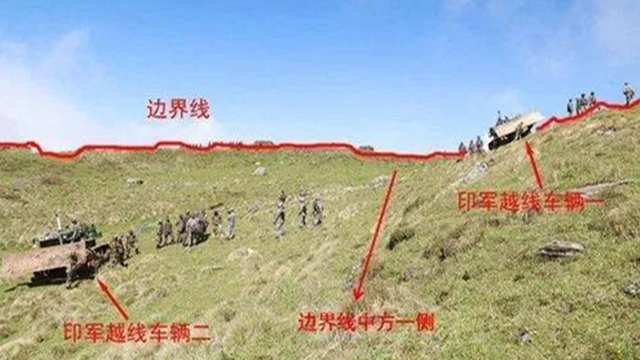
Indian army cross-border incident data map
In fact, the China-India Special Conference on Border Issues has held 20 meetings since its establishment in 2003, and has become an important institutional platform for China and India to discuss border and regional hot issues. In April this year, the leaders of China and India reached a consensus at an informal meeting in Wuhan. On the basis of respecting each other’s concerns and aspirations, they should handle their differences through peaceful consultations in a mature and wise way, seek a fair and reasonable solution to the border issue acceptable to both sides, and strive to ensure that the border issue will not affect the overall situation of China-India cooperation.
This time, Wang Yi, State Councilor and Foreign Minister, also participated in the 21st meeting of special representatives of China and India on the border issue for the first time as a representative of China. He said that at present, China-India relations have shown a strong momentum of all-round improvement and development, and the special congress should also keep up with the development trend and show a new atmosphere of cooperation and development.
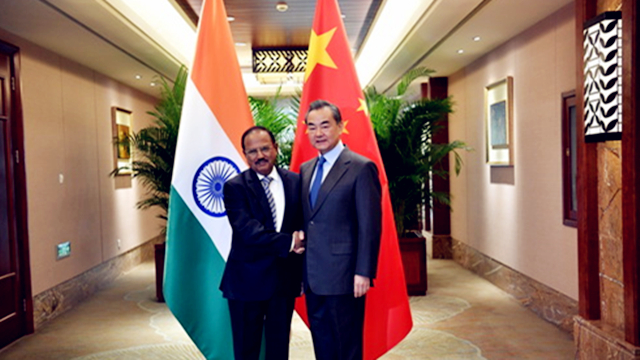
State Councilor and Foreign Minister Wang Yi (right) and Indian National Security Adviser Dorval (left)
Wang Yi made a wonderful speech on Sino-Indian relations at the press conference of the First Session of the 13th National People’s Congress on March 8th this year. At that time, in response to the "Indo-Pacific Strategy" of strengthening cooperation among the United States, Japan, India and Australia, Wang Yi said: "Some scholars and the media played up the so-called ‘ Indo-Pacific strategy ’ It was to contain China, but the officials of the four countries immediately indicated that they had no intention of targeting any country. I hope they are telling the truth, and I hope they can match their words with their deeds. In today’s era, it is out of date to provoke the Cold War again, and there is no market for engaging in small-circle confrontation. " As for how to develop Sino-Indian relations, Wang Yi put forward an image metaphor that "China and India 1+1 is not only equal to 2, but also equal to 11". He said that the urgent problem between China and India is mutual trust. Establishing political mutual trust, the Himalayas can’t stop mutual friendly exchanges. Without mutual trust, it is difficult for Ma Pingchuan to bring the two sides together.
This meeting, through the relevant news published on the website of the Indian Ministry of Foreign Affairs, can be said to have achieved many brand-new achievements, which just echoes Foreign Minister Wang Yi’s previous statement on China-China relations.
On November 26th, Geng Shuang, spokesperson of the Ministry of Foreign Affairs, held a regular press conference. When asked about the situation and achievements of this meeting, Geng Shuang responded very rarely and directly with "very good talks". He also said, "I want to remind everyone in particular that during the meeting, the two sides put forward a series of forward-looking and operational opinions and suggestions on promoting border negotiations, maintaining peace and stability in border areas and promoting cooperation in border areas. It should be said that the ideas and ideas of the two sides in many fields are generally consistent. "
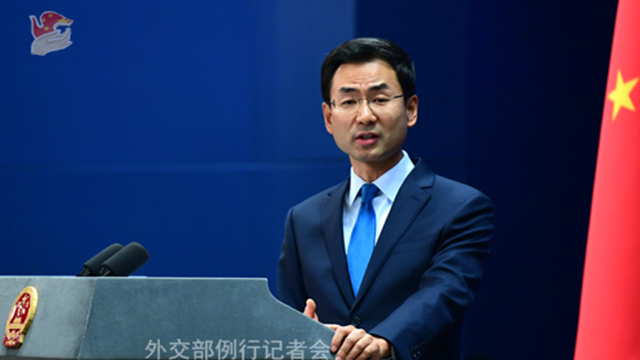
Foreign Ministry Spokesperson Geng Shuang
At the same time, in the briefing on this meeting published on the website of the Ministry of Foreign Affairs of China, the "important consensus" was mentioned at least four times, and the reference to "frontline troops" attracted people’s attention, which can be said to be the biggest highlight of many consensuses. The original words are as follows: "The two sides agreed to effectively implement the important consensus of the leaders of the two countries at all levels, including frontline troops, further improve the construction of trust measures in border areas, and continue to strengthen communication and coordination between border-related departments." This is a very pragmatic and grounded expression. Reminiscent of the Sino-Indian border confrontation incident last year, what role these four words will play, I believe everyone is looking forward to it.
In addition, at the regular press conference of the Ministry of Foreign Affairs on November 26, a reporter asked: There are some interesting statements in the news draft of this special meeting between China and India. The Indian press release said that the two sides would "redouble their efforts" to reach a solution, and the Chinese press release also said that it would "promote" this process. Are the two sides accelerating the process of resolving the border issue?
Geng Shuang responded that what I want to emphasize here is that since the leaders of China and India met in Wuhan this year, China-India relations have made comprehensive and positive progress and entered a new stage of development. Under the current international situation, the strategic significance of China-India relations is more prominent. The two sides will strengthen strategic communication, enhance political mutual trust and promote cooperation in various fields in accordance with the important consensus reached by the leaders of the two countries. At the same time, it will jointly promote the process of solving border issues and safeguard peace and tranquility in border areas.
How China-India relations will develop in the future, let us wait and see! (Text/Liu Shan)