Developing rural tourism and promoting rural revitalization: a vivid practice of three Gannan villages

  Cctv news(Reporter Wang Jiazhu) Since the 19th National Congress of the Communist Party of China formally put forward the strategy of rural revitalization, rural tourism has ushered in a brand-new development opportunity, which has not only become an important channel for people to get rid of poverty and increase income, but also an important starting point for rural revitalization.

  In recent years, Gannan Tibetan Autonomous Prefecture of Gansu Province has built more than 300 well-off villages with clean village appearance and distinctive ecological civilization relying on the natural ecology and humanistic ecological resources in Tibetan plateau areas. A few days ago, the reporter walked into three Gannan villages with demonstration significance to develop rural tourism with the off-line visit to Gansu Province.

  Gaxiu Village in luqu is 370 kilometers away from Lanzhou, the provincial capital, and is known as "the first Tibetan village of eco-tourism". Sixteen years ago, in order to facilitate children to go to school and the elderly to seek medical treatment, some party member cadres in the village took the initiative to sell their cattle and sheep and chose to settle down on both sides of National Highway 213, and developed tourism mainly focusing on Tibetan music and animal husbandry. Driven by them, since then, more and more herdsmen who used to live by weeds have chosen to settle down with the help of the local party Committee and government, and gradually formed the present Gaxiu village.
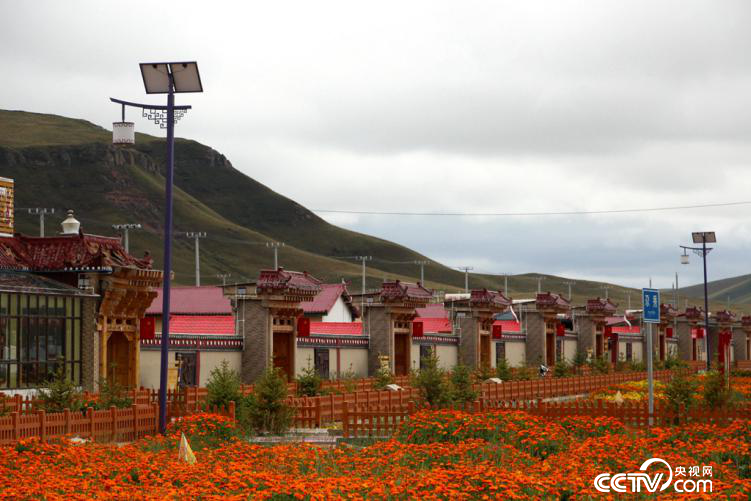
Gaxiu Village, known as "the first Tibetan village of eco-tourism" (photo by Wang Jiazhu)

Gaxiu Village, known as "the first Tibetan village of eco-tourism" (photo by Wang Jiazhu)

  There are eight people in Lamaojia, secretary of the village party branch. In the past, the source of income for the whole family was animal husbandry. In 2018, Tibetan music was started at home. Up to now, the income of Tibetan music has reached more than 40,000 yuan this year.

  In addition to developing their own Tibetan music, the village collective economy also allows village herders to continue to increase their income. In Shaiyintan Tent City, 82 poor households have a share of 15,000 yuan per household; For the shares of village collective land, 30% for ordinary households and 40% for poor households; Dongkaer National Culture Media Company has more than 80 employees, giving priority to poor households, and each household can increase its wage income by 15,000 yuan … … Today, the per capita disposable income of farmers and herdsmen in Gaxiu Village has reached 9192 yuan.

  The development of rural tourism in Gaxiu Village not only allows people to move from pasture to market, but more importantly, the pasture is recuperated and the ecology is improved, achieving a double harvest of "green mountains and green waters" and "Jinshan Yinshan".

  A good ecological environment is a precious wealth that nature has given to Gannan people. Playing ecological cards, eating ecological rice and taking the road of green development are the inevitable choices of Gannan people.

  Luqu Gongqu Hucun, 30 kilometers away from Luqu County, is located at the entrance of Zecha Shilin Scenic Area and on the bank of Taohe River. There are 12 farmers and herdsmen with 71 people. In recent years, with the county party committee and government fully promoting the eco-tourism strategy, all 12 households in Gongqu Hucun village began to develop Tibetan music.

The 53-year-old Gongbao Tashi Station is the leader in the development of Tibetan music in the village (photo by Wang Jiazhu)

The 53-year-old Gongbao Tashi Station is the leader in the development of Tibetan music in the village (photo by Wang Jiazhu)

  The 53-year-old Gongbao Tashi is a rich leader in the village. In 2016, he took the lead in developing Tibetan music in the village. With the support of the local government, he built a two-story building with more than 30 beds. Not only has a brand-new modern kitchen been built to facilitate tourists’ self-use, but it has also taken the lead in transforming the traditional dry toilet at home into a flush toilet.

  Gong Baozhaxi said that the development of Tibetan music alone can earn 30,000 to 40,000 yuan a year.

  Miaohuashan Village in Lintan County, which is three hours’ drive away from Luqu, has also been favored by more and more tourists in recent years because of the "Hualu" homestay. In 2018, at the Gansu Provincial Tourism Industry Development Conference, the villagers’ lodging industry won the "Gansu Provincial Villagers’ Accommodation Boutique Award".

  Lintan county has colorful natural scenery and rich and unique folk customs, especially Yeliguan national 4A-level tourist scenic spot in the county, which is a typical highland and hilly forest tourist resort. Relying on this, in recent years, Lintan County has actively promoted the transformation of county-wide tourism from "scenic tourism" to "global tourism".
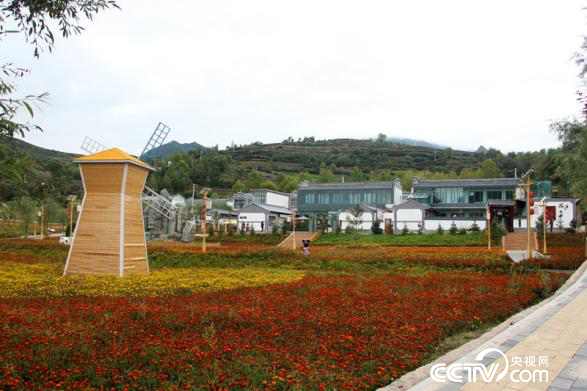
Miaohuashan Village is favored by more and more tourists because of the "Hualu" homestay (photo by Wang Jiazhu)

Miaohuashan Village is favored by more and more tourists because of the "Hualu" homestay (photo by Wang Jiazhu)

  Zhang Shuxia, 28, and the villagers benefited from this. With the help of superior units, Miaohuashan Village seized the opportunity to upgrade and transform 17 residential houses, and adopted the development model of "government guidance+professional company operation+farmers’ participation" to develop 39 sets of high-end homestays and 10 sets of main functional rooms such as bars, cafes and tea rooms. At the same time, it also optimized the supporting infrastructure such as village lanes, water supply and drainage pipes, parking lots and tourist toilets, and turned the whole village into a homestay scenic spot.

  Zhang Shuxia invested in a two-story building in his yard and was transformed into a homestay integrating accommodation and coffee shop. That alone, she can get a guaranteed income of 10 thousand yuan a year and pay dividends. Zhang Shuxia said that including her husband’s income from going out to work, her family’s annual income can reach about 50,000 yuan. "Now it is the unified management of the company. When it matures, I can be a waiter and earn another salary."

  From Gaxiu village to Gongquhu village, to Miaohuashan village, and from Gannan pastoral area to agricultural area, these small villages are dotted in this magical land of Gannan, and their rural tourism has become a beautiful landscape with distinctive characteristics in the local rural revitalization strategy.

Joint press statement of People’s Republic of China (PRC) and Malaysia (full text)

  Xinhua News Agency, Beijing, November 3rd

  People’s Republic of China (PRC)-Malaysia Joint Press Statement

  1. At the invitation of People’s Republic of China (PRC) Li Keqiang, Premier of the State Council of the People’s Republic of China, Malaysian Prime Minister Najib paid an official visit to People’s Republic of China (PRC) from October 31st to November 5th, 2016.

  2. During the visit, the Supreme Leader of President People’s Republic of China (PRC) met with Prime Minister Najib, Li Keqiang, Premier of the State Council of the People’s Republic of China held talks with Prime Minister Najib, and Chairman Zhang Dejiang of the National People’s Congress Standing Committee (NPCSC) met with Prime Minister Najib. The two sides exchanged in-depth views on promoting China-Malaysia comprehensive strategic partnership and regional and international issues of common concern.

  3. The two sides believe that since the establishment of diplomatic relations between China and Malaysia in 1974, the two countries have maintained regular exchange of visits, which has raised China-Malaysia relations to a new height. Over the past 42 years, the two countries have carried out major cooperation in many fields. The two sides reviewed the recent high-level exchange visits, including the State visit to Malaysia by Chairman of the Supreme Leader in 2013, the official visit to China by Premier Najib in 2014 and the official visit to Malaysia by Premier Li Keqiang in November 2015, and believed that the above visits further deepened the sincere and friendly bilateral relations between the two countries.

  4. Both sides agreed that China-Malaysia relations are at the highest level in history and will continue to be strengthened through regular exchanges and mutual visits between leaders, governments, political parties and enterprises. The two sides reviewed and welcomed the achievements made in bilateral relations and were determined to further enhance and strengthen China-Malaysia comprehensive strategic partnership in various fields such as politics, economy, social development and regional security cooperation.

  5. The two sides agreed to ensure that China-Malaysia relations are future-oriented, dynamic and prosperous for the benefit of the two peoples.

  6. The two sides emphasized that mutual trust and respect are the solid foundation of bilateral relations and cooperation, and once again stressed that the principles of sovereignty and territorial integrity of the two countries should be adhered to. Malaysia reiterated its firm adherence to the one-China policy and its support for the peaceful development of cross-strait relations and the peaceful reunification of China.

  7. Both sides welcome the opening of the Consulate General of Malaysia in Nanning, the Consulate General of China in Penang and the Consulate General of China in Kota Kinabalu in 2015, and the establishment of the Consulate General of Malaysia in Xi ‘an in 2016. The establishment of consulates between the two countries shows the further development of friendly relations between the two sides.

  8. Malaysia attaches great importance to its status as an important country along the Silk Road Economic Belt and the 21st Century Maritime Silk Road ("Belt and Road") proposed by the China Government in 2013.

  9. According to Chinese data, the total trade volume between China and Malaysia in 2015 was 97.29 billion US dollars, and the trade volume between the two sides from January to August 2016 was 54.28 billion US dollars. China has been Malaysia’s largest trading partner since 2009, and the trade volume between China and Malaysia accounted for 15.8% of Malaysia’s total foreign trade in 2015. Malaysia has been China’s largest trading partner in ASEAN since 2008.

  X. The two sides confirmed the achievements of the Five-Year Plan for Economic and Trade Cooperation (2013-2017) through the joint progress report. The leaders of the two countries firmly believe that China-Malaysia economic and trade cooperation will be stronger in the future with frequent high-level exchange visits and major initiatives.

  11. The two sides attach great importance to the cooperation on the railway project in southern Malaysia, welcome the proposed east coast railway project in Malaysia, and intend to explore the potential and cooperate on infrastructure construction projects, so as to promote the interconnection of relevant areas from a strategic perspective, bring potential economic development opportunities and promote economic and social development. This will include technology transfer, human resources development, local procurement and other long-term cooperation in the infrastructure industry.

  12. The two sides look forward to further strengthening bilateral trade, investment and economic exchanges. One of the initiatives is to exchange letters on the Agreement on the Avoidance of Double Taxation and the Prevention of Tax Evasion between the two governments to confirm the qualifications of state-owned enterprises in the two countries.

  13. Both sides believe that the seaport plays a key role in the development of regional infrastructure. The two sides will continue to promote port cooperation between the two countries, support the development of China-Malaysia port alliance and realize the vision of the Maritime Silk Road in the 21st century.

  14. The two sides positively evaluated the achievements of cooperation between the two countries in the fields of combating telecommunication crimes, overseas pursuit and counter-terrorism, and agreed to further strengthen law enforcement security and counter-terrorism cooperation, enhance friendly exchanges between law enforcement security departments of the two countries, and make positive contributions to maintaining regional security and stability.

  15. The two sides are pleased to see the signing of the Memorandum of Understanding on Defense Cooperation between the two countries, and believe that the continuous and gradual expansion of exchanges and close friendly cooperation between the defense agencies of the two countries will further strengthen bilateral relations. The two sides recognize the importance of enhancing cooperation in the defense field between the two countries, and welcome the signing of the Cooperation Framework Agreement on the Joint Development and Construction of Ma Haijun Coastal Task Ships by the China Defense Science and Technology Bureau and the Malaysian Ministry of National Defense.

  Both sides agreed that tourism plays an important role in promoting personnel exchanges between China and Malaysia. Since March 2016, when Malaysia implemented the e-visa and visa-free program, the number of tourists to China has greatly increased. The two sides agreed to strengthen joint marketing with airlines and travel agencies, promote them through consumer exhibitions and websites, promote more tourists from the two countries to travel to each other’s countries, and enhance the traditional friendship and understanding between China and Malaysia at the folk level. Both sides recognize that e-commerce and online marketing are playing an increasingly important role in promoting the development of tourism.

  17. The two sides reaffirmed that they will strengthen and commit themselves to achieving more comprehensive and mutually beneficial air transport cooperation between the two countries.

  18. Both sides welcome the renewal of the Memorandum of Understanding on Education Cooperation between the two countries, which will further strengthen and promote the progress of educational exchanges between China and Malaysia. Xiamen University Malaysia is a new milestone in the cooperation of higher education between the two countries, which will cultivate much-needed talents for the local society and deepen the friendship between China and Malaysia.

  19. The two sides will work together to implement the Agreement on Cultural Cooperation and the Implementation Plan for 2014-2019 between the two governments, encourage and support the exchange of visits between cultural institutions and cultural groups of the two sides, and jointly support the establishment of the China Cultural Center in Malaysia.

  20. The two sides discussed the prospect of China’s expanding imports of Malaysian products. Malaysia hopes to expand its palm oil exports to China and expand its market share in China.

  21. The two sides are willing to enhance agricultural cooperation, including agricultural products trade, promote agricultural investment and strengthen capacity building and agricultural science and technology exchanges by signing the Memorandum of Understanding on Agricultural Cooperation.

  22. Both sides believe that the signing of the Protocol on Inspection, Quarantine and Veterinary Hygiene Conditions of Maoyan exported from Malaysia to China will enhance the confidence of China consumers in Malaysian agricultural products and promote agricultural trade between the two countries. Both sides hope to give Malaysia more market access for agricultural products in the future on the premise of meeting the requirements of inspection and quarantine access.

  23. The leaders of the two countries appreciated China’s support for the construction of the ASEAN Community and its efforts to realize the ASEAN Community Vision 2025. They welcomed the positive progress in China-ASEAN cooperation and the celebration of the 25th anniversary of the establishment of dialogue relations between China and ASEAN. The two sides also discussed the progress in the implementation of the China-ASEAN Joint Declaration on Strategic Partnership for Peace and Prosperity (2016-2020).

  24. The two sides agreed to continue to strengthen coordination and cooperation in regional cooperation mechanisms such as ASEAN, China, Japan and South Korea (10+3), East Asia Summit (EAS) and ASEAN Regional Forum (ARF).

  25. The two sides exchanged views on the development of the situation in the South China Sea, stressing the importance of maintaining peace, security and stability in the South China Sea and the freedom of navigation and overflight enjoyed by all countries in accordance with international law.

  26. The two sides stressed that all sovereign countries directly concerned should resolve their differences by peaceful means through friendly consultations and negotiations in accordance with the principles of international law, including the 1982 United Nations Convention on the Law of the Sea. The two sides further stressed that all parties should exercise restraint and avoid actions that complicate or escalate the situation in the South China Sea. The two sides believe that not directly involved in the dispute will not help solve the problem.

  27. The two sides will work with other ASEAN countries to ensure the full and effective implementation of the Declaration on the Conduct of Parties in the South China Sea, promote the consultation on the Code of Conduct in the South China Sea, and strive to reach the Code on the basis of consensus at an early date.

  28. During Malaysia’s tenure as a non-permanent member of the UN Security Council, China and Malaysia carried out good and constructive cooperation and jointly fulfilled the duties of the UN Security Council. Malaysia appreciates this.

  29. The Malaysian side expressed sincere gratitude to the Chinese side for its warm welcome and friendly reception to Prime Minister Najib and the Malaysian delegation during this official visit.